

Lock Nuts
Lock Nuts

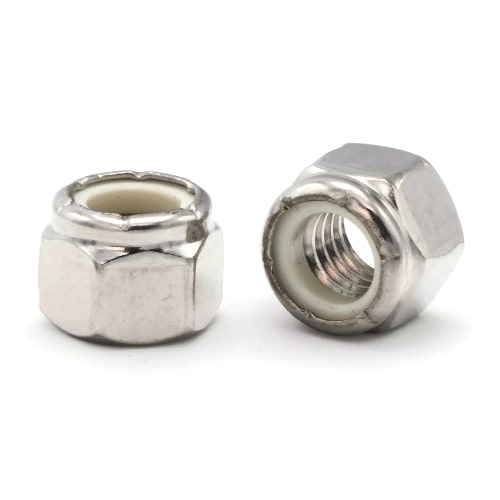
Nylon Insert Lock Nuts
Hex nuts with a nylon collar that grips the bolt threads to prevent loosening from vibration.

Nylon Insert Jam Nuts
Low-profile nylon insert lock nuts that combine the space-saving height of a jam nut with vibration-resistant locking.
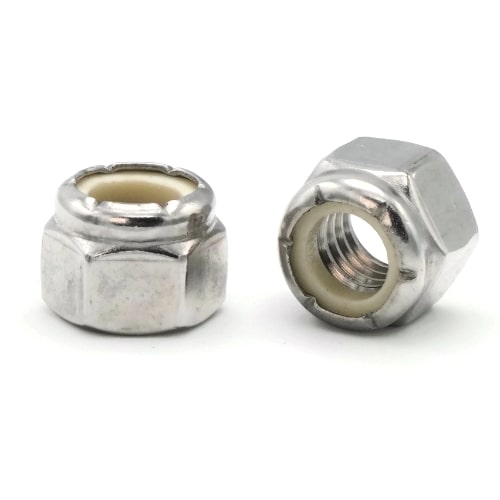
Waxed Nylon Insert Lock Nuts
Nylon insert lock nuts with a waxed interior that acts as a built-in anti-seize, adding lubricity to deter the thread galling common in stainless steel. Ideal for assembly lines and stainless projects.
.jpg?ts=1757680565 "Heavy Nylon Insert Jam Nuts")
Heavy Nylon Insert Jam Nuts
A thinner, heavy-pattern jam nut with a nylon insert for vibration resistance. The half-height profile fits tight-clearance spots and locks against another nut.
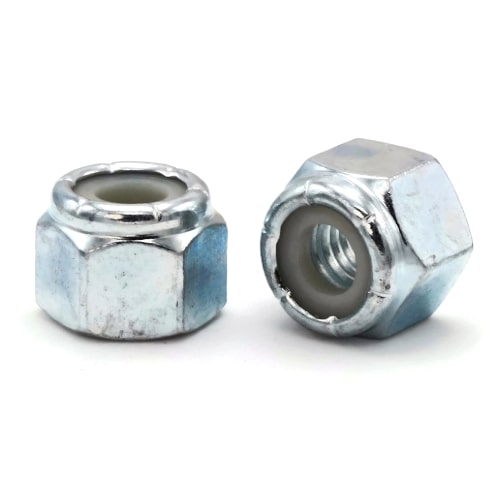
Heavy Nylon Insert Lock Nuts
Full-height nylon insert lock nuts in a heavy hex pattern, with a wider, thicker body for greater strength and wrench grip. The nylon insert resists loosening from vibration.

Keps K-Lock Nuts
Hex nuts with an attached free-spinning lock washer that speeds assembly while resisting loosening.
-min.jpg?ts=1757453413 "Two Way Lock Nuts")
Two Way Lock Nuts
All-metal lock nuts that can be threaded and locked from either side for reusable, vibration-resistant fastening.

Stover Cone Lock Nuts
All-metal prevailing-torque lock nuts with a conical top and chamfered corners that resist loosening at high temperatures where nylon would fail.
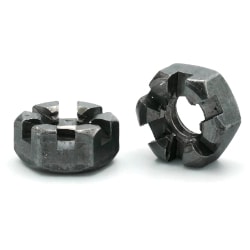
Slotted Hex Nuts
Hex nuts with slots cut into the top that accept a cotter pin through the bolt to positively lock the nut in place.
-min.jpg?ts=1757453418 "Castle Nuts")
Castle Nuts
Tall slotted nuts with a crown of notches for a cotter pin, used with a drilled bolt for positive locking in low-torque jobs like wheel bearings.
Videos
Play videoWhat Are Lock Nuts?
Lock nuts are hex or slotted nuts engineered to resist loosening from vibration, shock, and temperature cycling. They maintain clamp load using prevailing torque (nylon insert or all-metal deformation), serrations, or a positive mechanical stop like a cotter pin.
Benefits of Lock Nuts
- Vibration resistance – helps keep joints tight under dynamic loads.
- Serviceable locking – mechanical solutions without permanent adhesives.
- Multiple mechanisms – nylon insert, all-metal prevailing torque, serrated faces, or cotter-pin lock.
- Environment coverage – options for high heat, chemicals, marine/salt, or indoor use.
Lock Nuts vs Standard Nuts — What’s the Difference?
Standard nuts rely only on thread friction; lock nuts add a locking feature: nylon collars, deformed threads, serrations, or a cotter pin through slots (castle nuts) to resist back-off.
Lock Nuts Sizes, Threads & Materials
- Threads: Match diameter and pitch (e.g., 1/4"-20, 3/8"-16, M8-1.25).
- Materials: 18-8 (304) stainless for general outdoor; 316 for marine/chlorides; zinc-plated steel for indoor; all-metal styles for high temps/chemicals.
- Strength: Pair nut property class/grade with the bolt and application requirements.
Installation Tips for Lock Nuts
- Verify exact diameter and pitch; start by hand to avoid cross-threading.
- Tighten to specified torque for the bolt size/grade and material stack.
- Jam-nut method: torque the primary nut, then hold it while tightening the jam nut against it.
- Castle nuts: torque, align a slot with the bolt hole, insert a new cotter pin, and bend to secure.
Common Applications for Lock Nuts
- Machinery, conveyors, rotating equipment
- Automotive, powersports, agricultural equipment
- Construction hardware and structural assemblies
- Marine and outdoor fixtures (with stainless materials)
Maintenance & Reuse for Lock Nuts
Nylon insert nuts lose prevailing torque with reuse—replace when resistance fades or the insert is worn. All-metal prevailing-torque nuts may be reused if torque remains within spec. Castle nuts are reusable; always replace cotter pins.