




Why Choose Micro Nuts?
Micro nuts are the correct choice when the assembly requires a threaded nut to mate with a micro screw or bolt and a standard #6 or M4 nut is too large for the application. They are used in through-bolt assemblies where both sides of the material are accessible and a nut is needed to clamp and secure the joint.
This category includes micro hex nuts and micro locknuts in imperial sizes from #0-80 through #4-40 and metric sizes from M1 through M3, available in stainless steel, brass, and nylon to match the requirements of the assembly.
Common Uses for Micro Nuts
Micro nuts are commonly used in electronics enclosure assembly, circuit board and panel mounting, optical instrument housings, camera and lens assemblies, medical device construction, robotics and drone frames, precision instrument panels, RC vehicle builds, and any small mechanical assembly where a bolt-and-nut fastener system is required at very small diameters.
They are also used in repair and replacement applications when an existing micro nut has stripped, corroded, or been lost during disassembly of a small device or instrument. Always confirm the thread standard and size before ordering a replacement.
Micro Hex Nuts
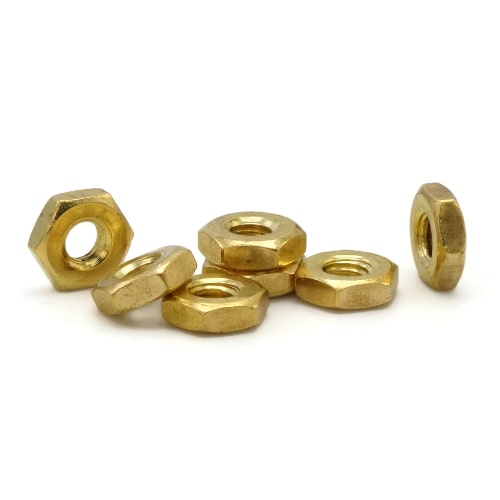
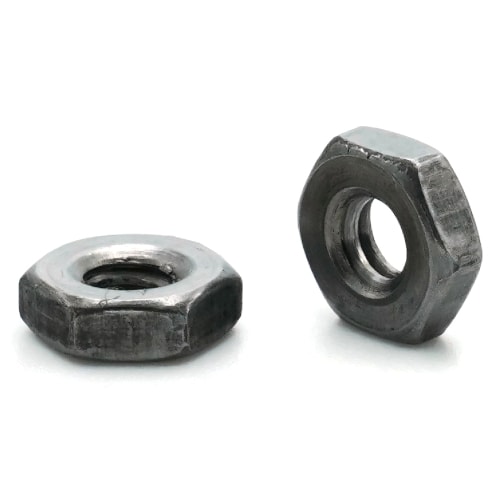
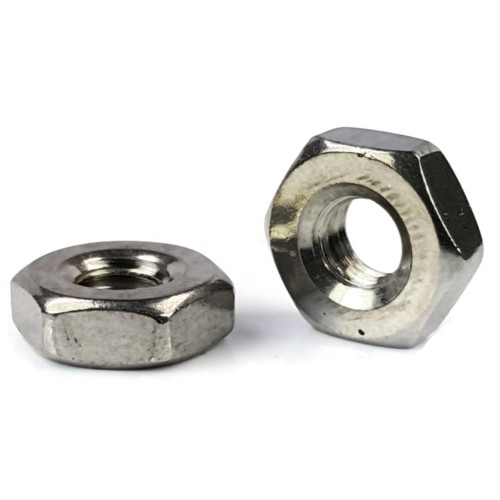
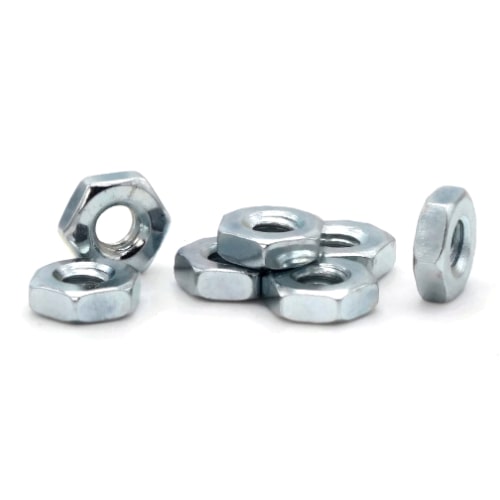
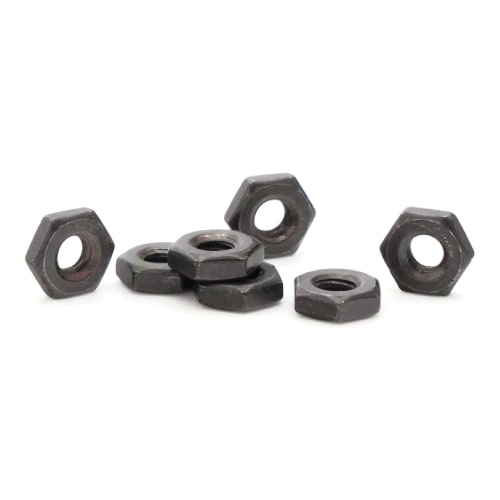
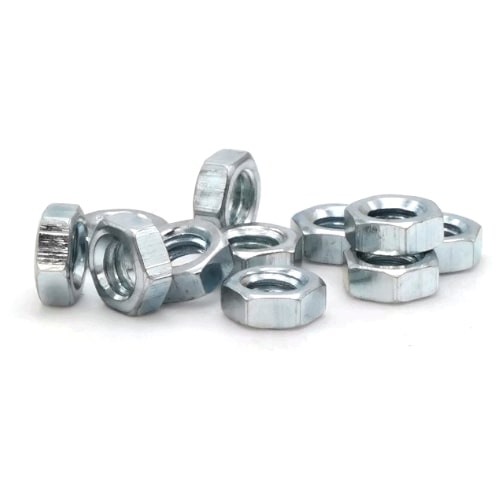
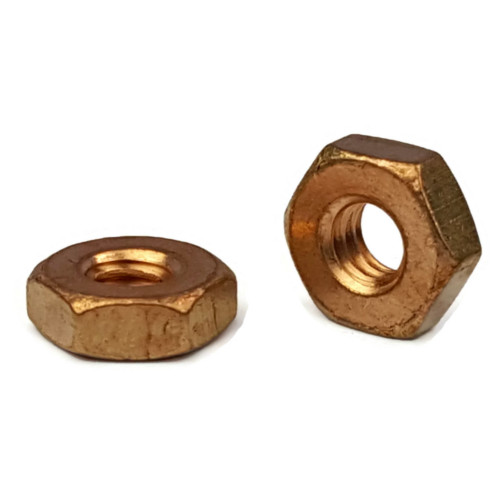
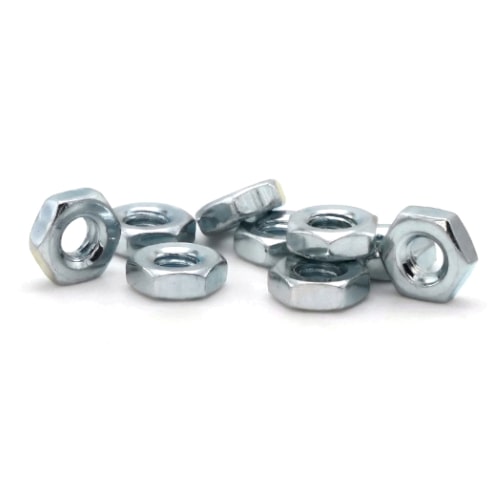
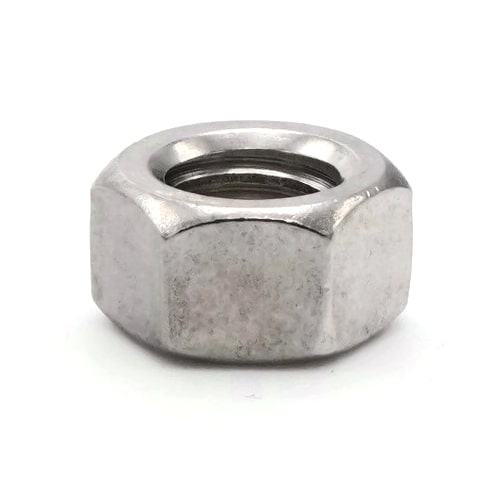
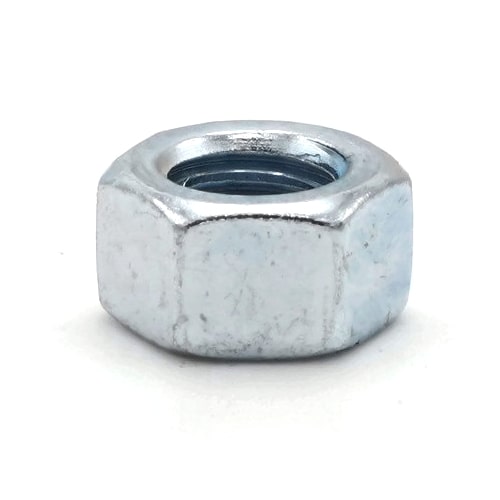
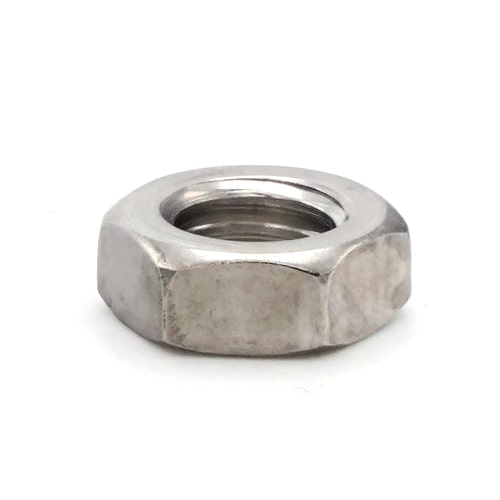
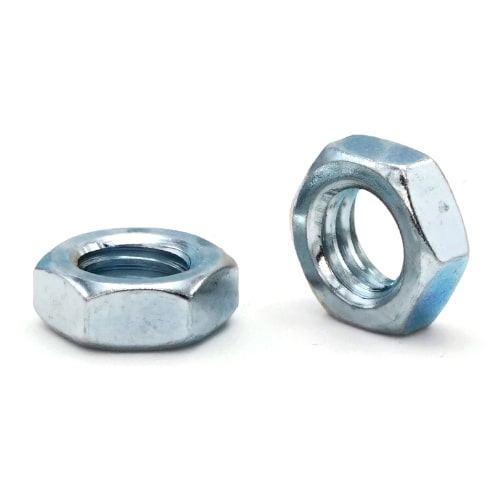
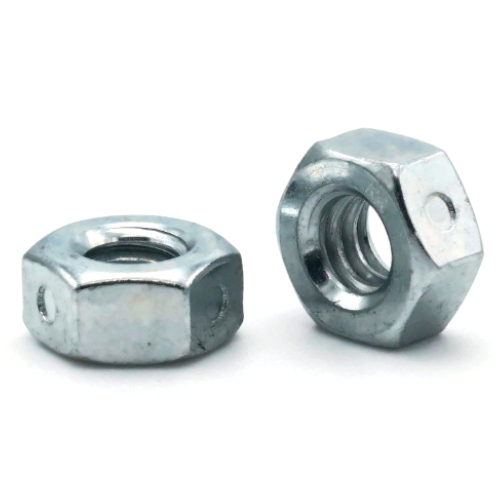
Micro hex nuts are the standard nut style for most micro fastener assemblies. They have a six-sided external profile and an internally threaded bore sized to match the mating micro screw or bolt. Micro hex nuts are installed using a small wrench, nut driver, or needle-nose pliers sized to fit the hex width across flats.
At very small diameters, the hex width across flats is extremely small. Use the correct tool for the size to avoid rounding the flats during installation or removal. For #0-80 and M1 sizes in particular, specialty micro nut drivers or precision pliers are often required.
Micro Locknuts
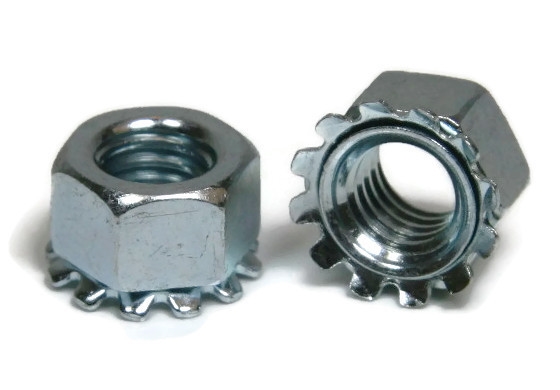
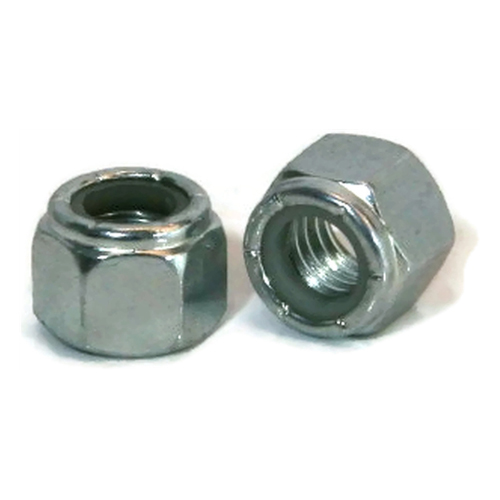
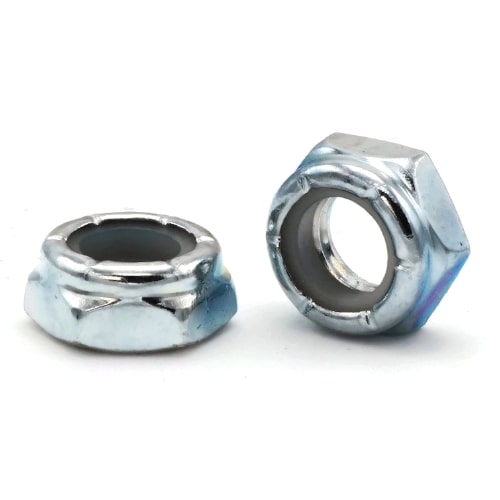
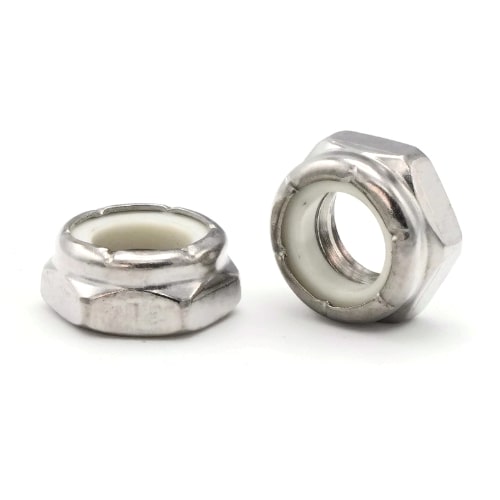
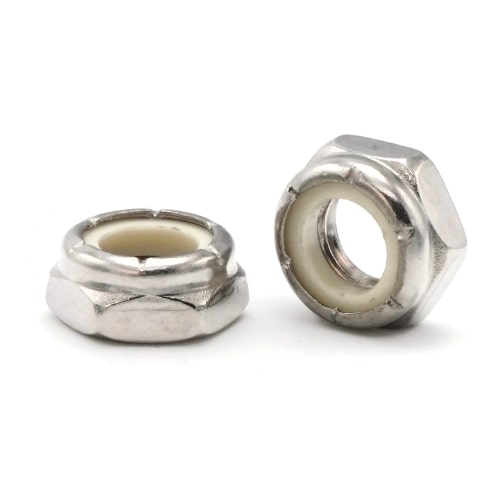
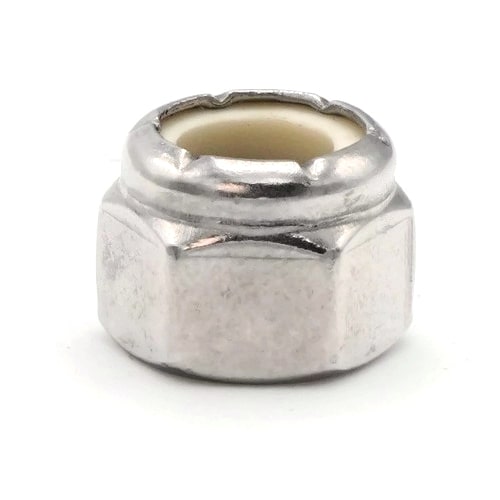
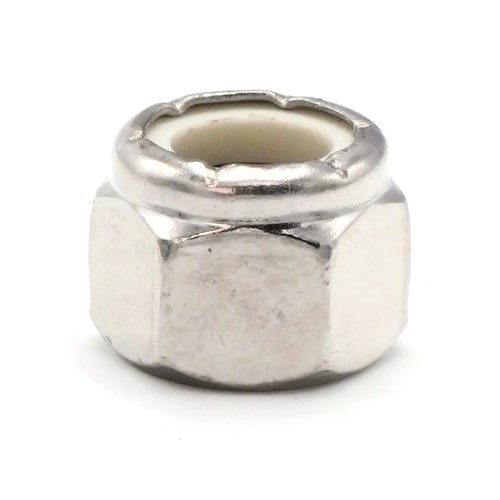
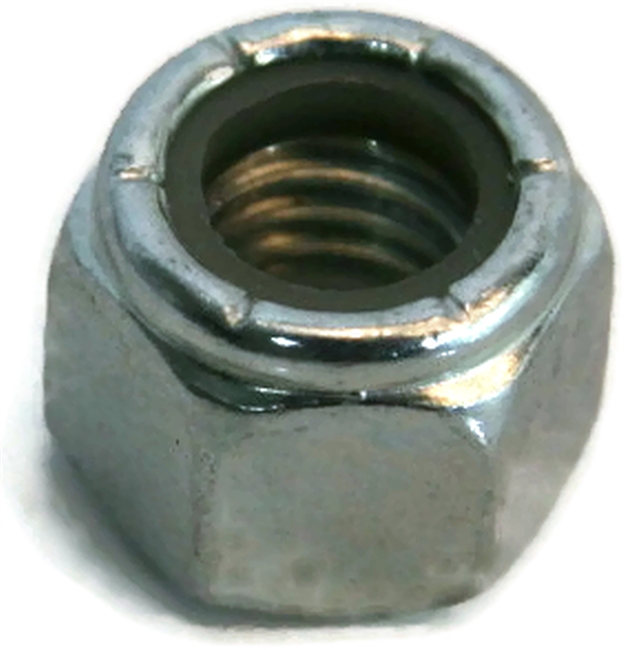
Micro locknuts are used when the assembly is subject to vibration, repeated load cycling, or any condition where a standard hex nut could loosen over time. Nylon insert locknuts (also called micro nyloc nuts) use a nylon collar at the top of the nut that deforms slightly as the screw threads through, creating prevailing torque that resists loosening without the need for a secondary locking element.
Use micro locknuts in assemblies where vibration resistance is required and the added height of the locknut can be accommodated in the joint design. Nylon insert locknuts are not suitable for applications involving continuous temperatures above approximately 250 degrees Fahrenheit, as the nylon insert can soften and lose its locking effectiveness at elevated temperatures.
Imperial Micro Nut Sizes
Imperial micro nuts use Unified National thread designations to match their mating micro screws. Available imperial micro nut thread sizes include:
- #0-80
- #1-64
- #1-72
- #2-56
- #2-64
- #3-48
- #3-56
- #4-40
- #4-48
Always match the nut thread designation exactly to the mating screw. A #2-56 nut is not compatible with a #2-64 screw, even though both are designated #2 diameter. The thread pitch must match in addition to the diameter.
Metric Micro Nut Sizes
Metric micro nuts use ISO thread designations to match their mating metric micro screws. Available metric micro nut thread sizes include:
- M1 x 0.25
- M1.2 x 0.25
- M1.4 x 0.3
- M1.6 x 0.35
- M2 x 0.4
- M2.5 x 0.45
- M3 x 0.5
Metric micro nuts are standard in European and Asian-manufactured products, imported electronics, cameras, optical instruments, and internationally designed assemblies. Do not mix metric and imperial nuts with the wrong thread standard screw. Always confirm the thread designation before ordering.
Micro Nut Materials
Micro nuts are available in 18-8 stainless steel, 316 stainless steel, brass, and nylon. Choose the material based on the corrosion environment, the mating screw material, the conductivity requirements of the assembly, and the strength needed for the joint.
18-8 stainless steel micro nuts provide good corrosion resistance and are compatible with 18-8 stainless micro screws for most general-purpose applications. 316 stainless steel offers better resistance to salt and chloride exposure for marine, coastal, and medical applications. Brass micro nuts are conductive, non-magnetic, and corrosion resistant, commonly paired with brass micro screws in electrical and optical assemblies. Nylon micro nuts are non-conductive and lightweight, used where electrical isolation is required or where metal nuts could damage sensitive components or housing materials.
Matching Micro Nuts to Micro Screws
For a correctly assembled micro fastener joint, the nut and screw must share the same thread designation and pitch, the same thread standard (both imperial or both metric), and ideally the same material grade or a compatible material pairing to avoid galvanic corrosion in corrosive environments.
Mixing a stainless steel micro screw with a brass micro nut is generally acceptable in dry indoor environments, but in marine or high-humidity conditions, keep materials consistent within a fastener assembly to minimize galvanic risk. Mixing nylon nuts with metal screws is common and does not present a galvanic concern.
How to Install Micro Nuts
Micro nuts are installed by hand-starting the nut onto the mating screw threads, then tightening with a suitable tool. In most micro nut sizes, use a precision nut driver, micro wrench, or needle-nose pliers sized to grip the hex flats without rounding them.
In very small sizes such as #0-80 and M1, the hex width across flats is less than 2mm. Use specialty micro nut drivers or precision pliers for these sizes. Do not overtorque micro nuts, especially in brass and nylon, as the internal threads can strip or the hex flats can round at very low torque values. Use a torque driver when consistent torque is critical to the assembly.
Micro Nuts vs Threaded Inserts
Micro nuts are used in through-bolt assemblies where the bolt passes completely through both materials and the nut is applied on the opposite side. Threaded inserts are used when the bolt threads into a blind hole or a tapped boss where a nut cannot be applied, or when the mating material is too soft to hold threads reliably on its own.
In plastic housings and soft metal bosses, threaded inserts often provide more reliable thread engagement than tapping the material directly and eliminate the need for a nut. Choose micro nuts for through-bolt assemblies with access to both sides of the joint. Choose threaded inserts when threading into a blind hole, a plastic boss, or a thin-wall assembly where a nut cannot be used.
Related Categories
- Micro Fasteners
- Micro Screws & Bolts
- Micro Washers
- Threaded Inserts
- Shop by Material
- Fastener Assortment Kits
Micro Nuts FAQs
What is the smallest micro nut size you carry?
The smallest imperial size is #0-80, with a nominal diameter of approximately 0.060" and 80 threads per inch. The smallest metric size is M1 x 0.25, with a 1mm nominal diameter. Both are available in stainless steel and other materials.
Do micro nuts come in metric sizes?
Yes. Micro nuts are available in metric sizes from M1 through M3, with standard ISO thread pitches for each diameter. Metric micro nuts are used to match metric micro screws in imported electronics, cameras, optical equipment, and other metric-standard assemblies.
What is the difference between a micro hex nut and a micro locknut?
A micro hex nut is a standard nut that relies on proper torque and friction to stay in place. A micro locknut, such as a nylon insert locknut, uses a nylon collar to create prevailing torque that resists loosening under vibration and cyclic loading. Use locknuts when the assembly is subject to vibration or repeated load cycles.
Can I use a stainless steel micro nut with a brass micro screw?
In most dry indoor environments this combination is acceptable. In corrosive, marine, or high-humidity environments, mixing metals can create galvanic corrosion over time. When corrosion is a concern, use matching materials throughout the fastener assembly.
What tool do I use to install micro nuts?
Use a precision nut driver, micro wrench, or needle-nose pliers sized to fit the hex flats of the specific nut. For very small sizes such as #0-80 and M1, specialty micro nut drivers are recommended to avoid rounding the flats. Use a torque driver when consistent torque is required.
Do you sell micro nuts in bulk?
Yes. Micro nuts are available in bulk quantities with competitive pricing at volume. Contact us for pricing on large or recurring micro nut orders.