

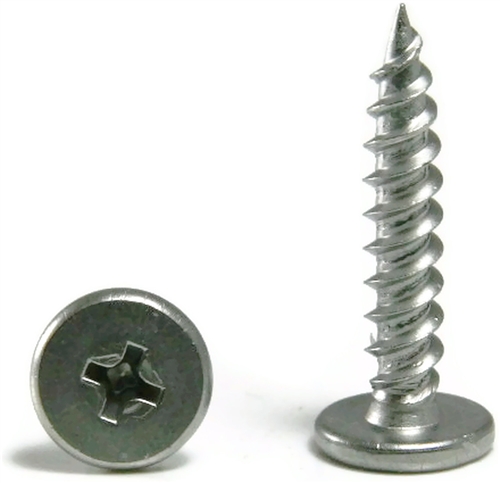
410 Stainless Steel Phillips Pancake Head Sheet Metal Screws
What are 410 Stainless Steel Sheet Metal Screws? 410 stainless steel sheet metal screws are self-piercing screws made from hardened stainless steel for fastening sheet metal, trim, panels, brackets, covers, and light-gauge materials. These Phillips pancake head screws provide a wide, very low-profile head and are commonly used where the screw needs to pierce the material, form its own mating threads, and leave a flatter finished appearance than many raised head styles.
Why Choose 410 Stainless Steel Sheet Metal Screws?
410 stainless steel sheet metal screws are a practical choice when an application needs a self-piercing fastener with added hardness compared to many general stainless steel options. The 410 stainless steel construction helps support the sharper point used for piercing and fastening into compatible light-gauge materials.
These screws are useful when a pilot hole may not be needed in certain light-gauge applications, depending on the material thickness, hardness, and installation method. They are often selected for sheet metal, trim, panels, brackets, covers, and other assemblies where a low-profile finished head is preferred.
Common Uses for 410 Stainless Steel Pancake Head Sheet Metal Screws
410 stainless steel Phillips pancake head sheet metal screws are commonly used for sheet metal panels, trim, covers, brackets, fixtures, enclosures, light-gauge metal, and general maintenance applications.
The pancake head is especially useful when the fastener head needs to stay low but a countersunk flat head is not the right fit. For applications that need a fully flush surface, a flat head or oval head sheet metal screw with a properly countersunk hole may be a better choice.
Pancake Head and Phillips Drive Benefits
Pancake head sheet metal screws have a broad, very low-profile head that provides more surface coverage than many smaller head styles. This can help spread clamping pressure across thin material, trim, panels, and light-gauge assemblies.
The Phillips drive works with common screwdrivers and driver bits, making these screws practical for installation, repair, and maintenance work. For harder materials or production use, make sure the driver bit is seated properly to reduce slipping during installation.
410 Stainless Steel Benefits
410 stainless steel is commonly used for self-piercing and self-drilling screw styles because it can be hardened more than many general-purpose stainless steel grades. This makes it useful for screws that need a sharper point or drilling/piercing ability.
While 410 stainless steel offers corrosion resistance for many applications, it is not usually the first choice for highly corrosive marine, coastal, chemical, or wet environments. For those conditions, review the application requirements carefully before choosing the final stainless steel grade and fastener style.
How to Choose the Right Size
Choose the screw diameter and length based on the material thickness, holding strength needed, and available clearance behind the workpiece. The screw should be long enough to create secure thread engagement without protruding too far through the back side of the assembly.
Because these are self-piercing screws, a pilot hole may not be required in some light-gauge materials. Test the screw in the actual material when possible to confirm proper piercing, thread engagement, and finished fit.
Sheet Metal Screws vs Machine Screws
Sheet metal screws are designed to create or cut mating threads in a prepared hole or compatible material. Machine screws are designed for use with pre-existing machine threads, such as a tapped hole, threaded insert, or matching nut.
Choose sheet metal screws when the screw needs to form threads in the material during installation. Choose machine screws when the application already has matching internal threads or will use a nut.
Related Sheet Metal Screw Categories
Browse related sheet metal screw categories to compare other head styles, materials, and drilling options for your application.
- Self Tapping & Self Drilling Sheet Metal Screws
- Sheet Metal Screws
- Phillips Pancake Head Sheet Metal Screws
- Phillips Modified Truss Head Sheet Metal Screws
- Phillips Truss Head Sheet Metal Screws
- Phillips Pan Head Sheet Metal Screws
410 Stainless Steel Sheet Metal Screw FAQs
What is a 410 stainless steel sheet metal screw?
A 410 stainless steel sheet metal screw is a stainless steel self-tapping or self-piercing screw made from a hardenable stainless steel grade.
What are 410 stainless steel pancake head sheet metal screws used for?
They are used for sheet metal panels, trim, covers, brackets, fixtures, light-gauge metal, enclosures, and general maintenance applications.
What is the benefit of a pancake head screw?
A pancake head screw provides a wide bearing surface with a very low-profile shape. This can help hold thin material while keeping the installed head flatter than many raised screw head styles.
Do self-piercing 410 stainless steel screws need a pilot hole?
Self-piercing screws may not need a pilot hole in some light-gauge materials, but the correct installation depends on the material thickness, hardness, and application. Testing the screw in the actual material is recommended.
Is 410 stainless steel corrosion resistant?
410 stainless steel provides corrosion resistance for many applications, but it is generally chosen more for hardness and piercing ability than for maximum corrosion resistance.
What is the difference between 410 stainless steel and 18-8 stainless steel screws?
410 stainless steel can be hardened and is often used for self-piercing or self-drilling screw styles. 18-8 stainless steel is commonly used when general corrosion resistance is the main priority.
What is the difference between sheet metal screws and machine screws?
Sheet metal screws form or cut threads into the material during installation. Machine screws are used with matching machine threads, such as a tapped hole, threaded insert, or nut.