

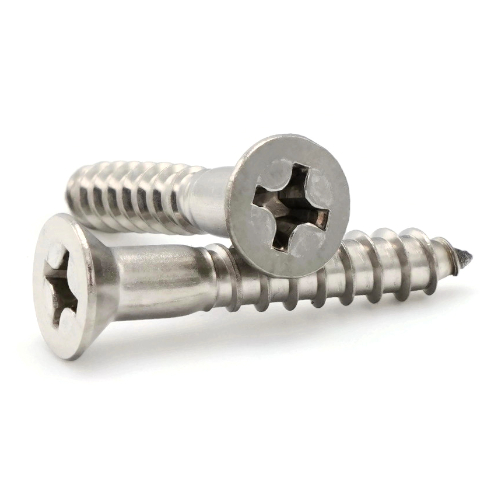
Wood Screws, Marine Grade
What are marine grade wood screws? These are traditional tapered wood screws in silicon bronze, the alloy wooden boatbuilders have relied on for centuries. The taper and coarse thread bite into timber and pull the joint tight, while the bronze does something stainless cannot reliably do in wood: resist saltwater corrosion in the deep, sealed, oxygen-starved conditions inside a timber joint, without staining or degrading the wood around it. For planking, trim, and any fastening into marine timber, silicon bronze is the gold standard. AlbanyCountyFasteners.com stocks these in silicon bronze.
Why silicon bronze for wood?
A wood screw buried in wet timber sits in exactly the condition that defeats stainless steel. 316 keeps its corrosion resistance only while its surface sees oxygen; drive it deep into a damp plank where air cannot reach and its passive layer can break down, leading to crevice corrosion out of sight. Silicon bronze has no such dependency. It resists saltwater corrosion whether exposed or sealed, which is why it has held wooden boats together for hundreds of years, some fasteners lasting over a century. It also sits close to other traditional marine metals on the galvanic scale, lowering the risk of galvanic attack, and crucially it does not react with or stain the timber the way iron and some other metals do. For wood in salt water, bronze is not a compromise, it is the correct answer.
Why choose silicon bronze wood screws
- Resists saltwater corrosion even in deep, sealed, oxygen-starved joints
- Will not stain or degrade the surrounding timber
- Centuries of proven use in wooden boat construction
- Lower galvanic risk against other traditional marine metals
- Develops a protective patina and can last for decades
Common applications
- Wooden boat planking, trim, and joinery
- Below-the-waterline and sealed timber joints
- Dock and pier woodwork
- Restoration of classic and traditional craft
- Marine cabinetry and interior fit-out
- Any wood fastening exposed to salt water or spray
Marine Wood Screw FAQs
Why not stainless wood screws for a boat?
Stainless can suffer crevice corrosion when buried in wet, oxygen-starved timber, where its passive layer cannot maintain itself. Silicon bronze does not rely on oxygen and resists corrosion in sealed joints, which is why it is preferred for wooden hulls and planking.
Should I drill a pilot hole?
Yes. Bronze is softer than steel, so a correctly sized pilot hole prevents the screw twisting off and lets it seat cleanly. Pilot and clearance holes also protect the timber from splitting, especially near edges and in hardwoods.
Will the bronze change colour?
Over time it develops a natural patina, dulling from bright to a soft brown or greenish tone. This patina is protective and many builders value the traditional look. It does not indicate corrosion.
Can I countersink these?
Yes, standard flat-head wood screws countersink flush into a matching recess. Use a countersink bit sized to the head so the screw seats without crushing the surrounding wood fibres.
Are bronze screws as strong as stainless?
Silicon bronze is strong and durable, though for a given size stainless generally carries a higher load rating. In wood fastening the timber usually governs the joint, and bronze provides ample strength alongside its unmatched corrosion behaviour in that setting.
Do I need bronze washers and bungs too?
For a fully traditional and galvanically consistent job, matching bronze hardware is ideal. In visible joinery, screws are often counterbored and covered with a wooden bung, hiding the fastener entirely and protecting the head.