

Nuts, Aluminum
-min.jpg?ts=1757453418 "Nuts, Aluminum")
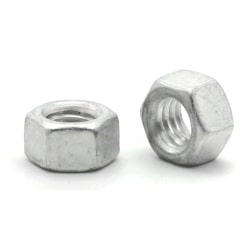
What are aluminum nuts? Aluminum nuts are lightweight nuts that pair with aluminum bolts and threaded rod to complete a same-metal joint, avoiding the galvanic corrosion a dissimilar-metal nut would introduce. They bring aluminum's light weight, non-magnetic behaviour, and corrosion resistance to the nut side of a connection. AlbanyCountyFasteners.com stocks hex finish, nylon lock, and coupling nuts in aluminum.
-min.png?ts=1757453406 "Nylon Lock Nuts, Aluminum")

Keeping the whole joint aluminum
Matching the fastener to aluminum parts only works if the whole joint matches, and the nut is part of that. Put a steel or stainless nut on an aluminum bolt in a damp environment and you reintroduce the galvanic couple you were trying to avoid, with corrosion concentrating at the nut. An aluminum nut keeps the connection same-metal from bolt to nut, so there is no galvanic difference to drive corrosion. The three patterns cover the common needs: a hex finish nut for general clamping, a nylon lock nut whose nylon collar resists vibration loosening, and a coupling nut to join two lengths of aluminum threaded rod or extend a thread. As with all aluminum fasteners, the metal is soft, so correct torque matters to avoid stripping, and an anti-seize suited to aluminum helps prevent the galling aluminum threads are prone to. Chosen to match aluminum bolts and rod, these keep a light, corrosion-consistent joint.
Why choose aluminum nuts
- Match aluminum bolts and rod for a same-metal joint
- Avoid the galvanic corrosion a dissimilar nut would cause
- Lightweight and non-magnetic
- Nylon lock version resists vibration loosening
- Coupling version joins or extends aluminum threaded rod
Common applications
- Completing aluminum bolt and rod joints
- Aluminum frames, panels, and enclosures
- Weight-critical and non-magnetic assemblies
- Vibrating aluminum joints (nylon lock)
- Joining aluminum threaded rod (coupling)
- Any nut completing an aluminum connection
Aluminum Nut FAQs
Why use an aluminum nut on an aluminum bolt?
To keep the joint same-metal so there is no galvanic difference. A steel or stainless nut on an aluminum bolt reintroduces a galvanic couple and corrosion concentrates at the nut.
Which aluminum nut do I need?
A hex finish nut for general clamping, a nylon lock nut to resist vibration loosening, or a coupling nut to join or extend aluminum threaded rod. Choose by the job the nut has to do.
Does the nylon lock nut have a temperature limit?
Yes, like any nylon insert nut the nylon softens and loses grip above roughly 250°F. Within that range it resists vibration loosening well on aluminum joints.
Will aluminum nuts strip or gall?
Aluminum is soft and its threads can gall or strip if overtightened. Use correct torque and an anti-seize suited to aluminum to protect the threads and ease later removal.
Can I use an aluminum nut with a steel bolt?
It creates a dissimilar-metal couple, and the softer aluminum is at risk. For a corrosion-consistent joint, match the aluminum nut to an aluminum bolt.
Are aluminum nuts non-magnetic?
Yes, aluminum is non-magnetic, so the nuts suit instruments, electronics, and assemblies where magnetic hardware would interfere.