

Hex Bolts
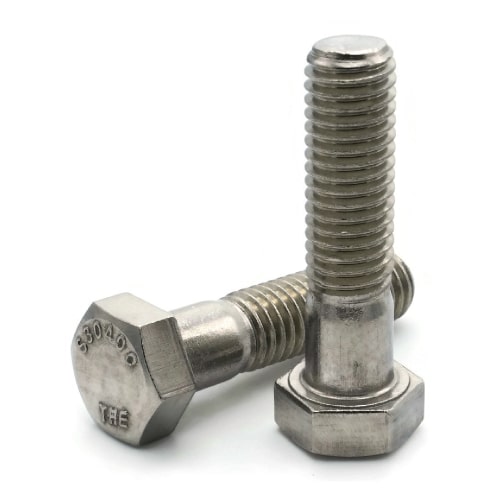
What Are Hex Bolts? Hex bolts are threaded fasteners with a six-sided hexagonal head, designed for use with a nut or in a tapped hole. Used in construction, machinery, automotive, industrial and maintenance applications, hex bolts are available in a wide range of diameters, thread sizes, lengths, materials, grades and finishes. Shop hex bolts in 18-8 and 316 stainless steel, zinc plated steel, Grade 5, Grade 8, hot dip galvanized steel, aluminum and other materials. Hex bolts and hex cap screws are closely related and the terms are often used interchangeably. Hex cap screws typically have a washer face beneath the head and tighter dimensional tolerances. Albany County Fasteners carries standard hex cap screws, fully threaded tap bolts, flange bolts and heavy hex structural bolts in inch and metric sizes.
- Hex bolts / hex cap screws: the standard choice for assemblies joined with a nut or tapped hole.
- Tap bolts (full-thread hex bolts): fully threaded for joints requiring thread along the entire grip.
- Flange bolts: hex head with an integrated flange that distributes load like a built-in washer.
- Heavy hex structural bolts: heavy-hex head, high-strength bolts for structural steel connections.
Hex Bolts
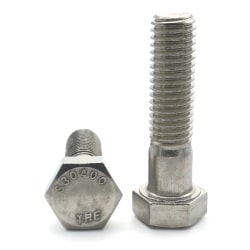
Hex Cap Screws
Precision hex-head bolts with a washer-faced head and tighter tolerances than standard hex bolts, used with a nut or in a tapped hole for machinery and structural connections.

Hex Tap Bolts (Full Thread Hex Cap Screws)
Hex cap screws threaded the full length of the shank, used in tapped holes or shallow assemblies where full thread engagement is needed.
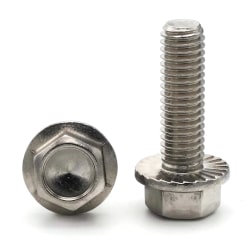
Flange Bolts
Hex bolts with a built-in washer-like flange under the head that spreads clamping load and resists loosening without a separate washer.
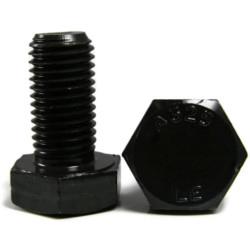
Structural Heavy Hex Bolts
Heavy-duty hex bolts with a thicker, wider head built for steel-to-steel structural connections under high load.
Shop Related Categories
.jpg?ts=1757453428)

.jpg?ts=1755907166)


What Are Hex Bolts?
Hex bolts are externally threaded fasteners with a six-sided head, used with a nut or in a tapped hole. In common practice, “hex bolt” and “hex cap screw” are closely related; cap screws typically include a washer face and tighter dimensional tolerances, while standard hex bolts are often chosen where mechanical properties are the key requirement.
Types of Hex Bolts
- Hex bolts / hex cap screws: the standard choice for assemblies joined with a nut or tapped hole.
- Tap bolts (full-thread hex bolts): fully threaded for joints requiring thread along the entire grip.
- Flange bolts: hex head with an integrated flange that distributes load like a built-in washer.
- Heavy hex structural bolts: heavy-hex head, high-strength bolts for structural steel connections.
Materials & Grades
- Inch (SAE J429): Grade 2, Grade 5, Grade 8 (increasing strength). Head marks: none, 3 radial lines, 6 radial lines.
- Metric (ISO 898-1): property classes 8.8, 10.9, 12.9 indicate strength levels.
- Stainless steel: 18-8/304 for general corrosion resistance; 316 for marine or chemically aggressive settings.
- Finishes: zinc, hot-dip galvanized, black oxide, and others—select for environment and appearance.
How to Identify Bolt Grades by Head Markings
Bolt head markings can help identify the grade and strength of many inch-series steel bolts. Watch our Fasteners 101 guide to learn what common bolt head markings mean and how to recognize different bolt grades.
Watch: Bolt Head Markings: What Do They Mean? | Fasteners 101 →
Sizing & Threads
Specify size as diameter × thread × length (e.g., 1/2″-13 × 4″). Inch bolts commonly use UNC (coarse) or UNF (fine) threads. Coarse threads are standard for most field work; fine threads are used where greater adjustment or higher clamp loads are needed. Bolt length is measured from under the head to the tip.
Common Applications
- Construction and steel fabrication (frames, base plates, equipment mounts)
- Machinery and OEM assembly
- Automotive and equipment service
- Wood framing and general repair where nut-and-bolt joints are preferred
Installation Basics
- Match nuts and washers to the bolt’s grade/material (e.g., use compatible grades and coatings).
- Use proper torque methods; for structural bolting, follow the governing standard (e.g., turn-of-nut or calibrated wrench per project spec).
- If corrosion exposure is expected, choose stainless or a protective coating appropriate for the environment.
Related Hardware
- Hex nuts (matching grade/material and thread)
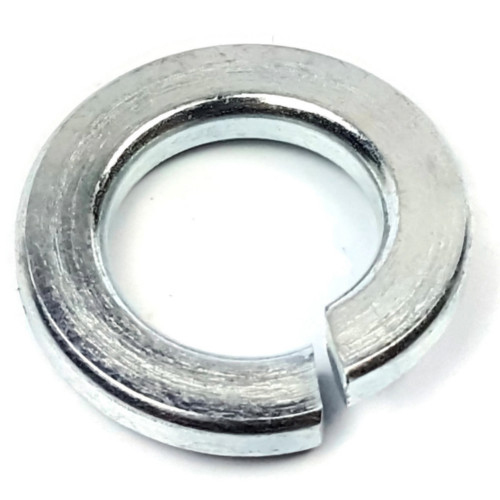
- Flat, fender, and lock washers
- Flange nuts (for flange bolts) and prevailing-torque nuts where specified