

Sleeve Anchors
What are sleeve anchors?
Sleeve anchors are versatile masonry expansion anchors designed for fastening into concrete, brick, concrete block, and other masonry materials. As the anchor is tightened, the expansion sleeve presses against the walls of the drilled hole to create a secure mechanical connection.
Albany County Fasteners carries sleeve anchors in multiple head styles, sizes, and materials for applications ranging from mounting brackets and handrails to securing equipment, fixtures, and structural components. Unlike wedge anchors, which are primarily designed for solid concrete, sleeve anchors can be an excellent choice for brick and block applications where a broader expansion area is beneficial.
Sleeve Anchors
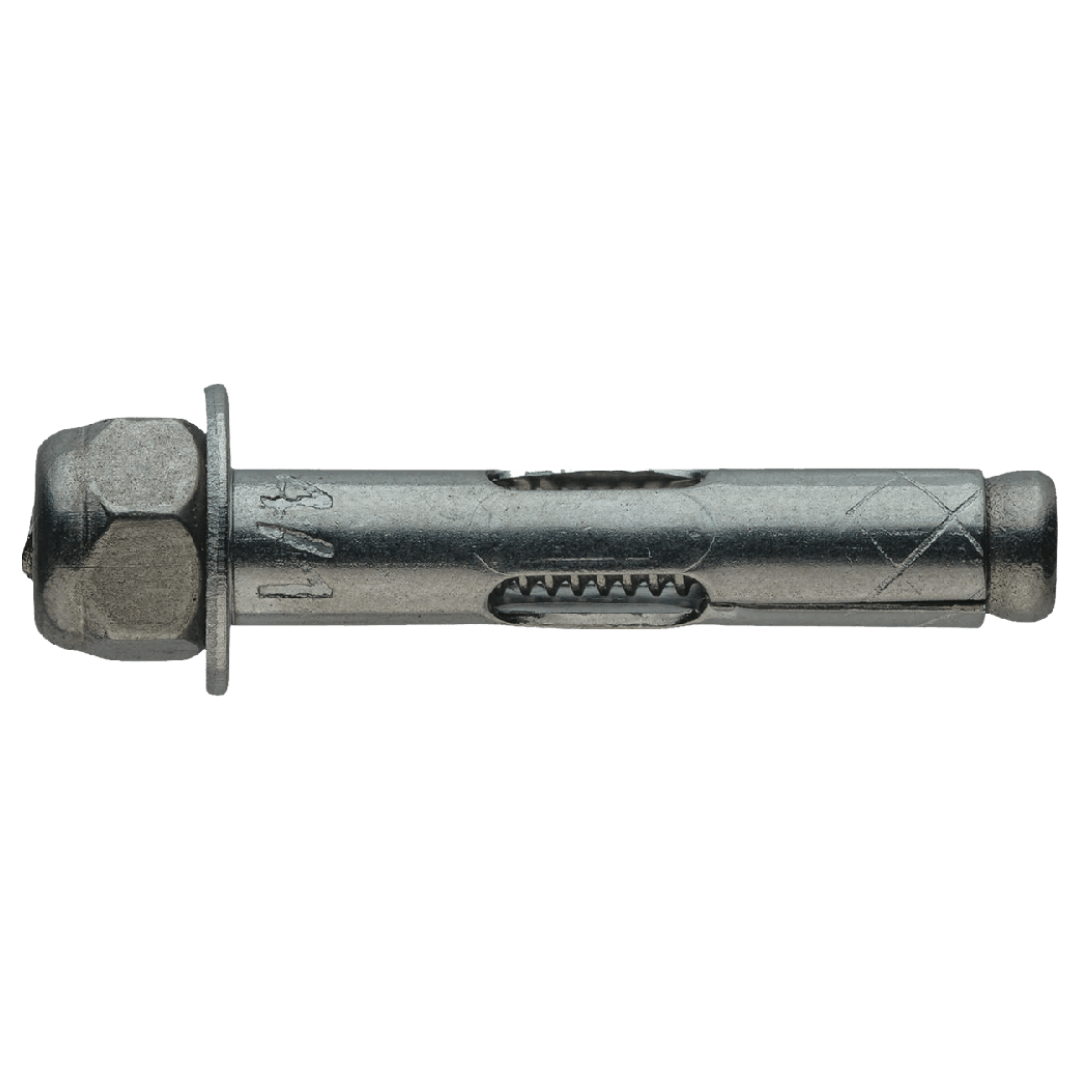
Acorn Head
Sleeve anchors with a domed acorn nut on top for a finished look that also protects the stud threads.
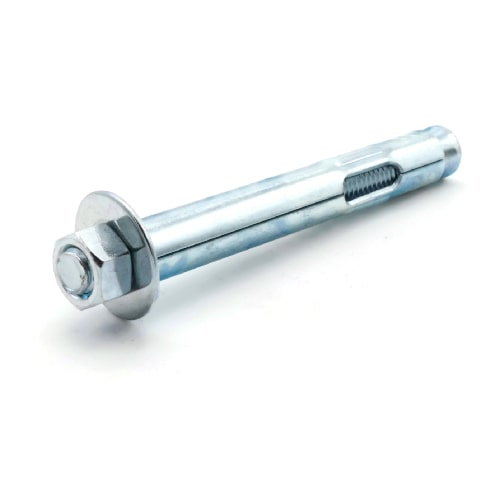
Hex Head
Sleeve anchors with a hex nut driven by a wrench for a strong, high-torque hold in concrete, brick, or block.
-min.jpg?ts=1755912045 "Phillips Flat Head")
Phillips Flat Head
Sleeve anchors with a countersunk flat head and Phillips drive that sit flush with the surface for a clean finish.
Videos
Play videoWhat Are Sleeve Anchors?
Sleeve anchors are mechanical expansion anchors used to fasten fixtures and materials to concrete, brick, concrete block, and other masonry substrates. They consist of a threaded anchor body surrounded by an expansion sleeve. As the anchor is tightened, an expander cone draws into the sleeve and forces it outward against the walls of the drilled hole.
Because the sleeve expands over a broader area than the expansion clip of a wedge anchor, sleeve anchors are a versatile choice for masonry applications where the base material may include brick or concrete block in addition to solid concrete.

Sleeve Anchor Installation Guide: Learn how sleeve anchors expand inside masonry, where they are commonly used, and how they compare with wedge anchors.
What Parts Make Up a Sleeve Anchor?
A typical sleeve anchor includes:
- Threaded anchor body: Provides the central structure of the anchor and accepts the nut or finished head.
- Expansion sleeve: Expands against the masonry as the anchor is tightened.
- Expander cone: Draws into the sleeve and forces it outward.
- Washer and nut or finished head: Clamps the fixture against the mounting surface.
Sleeve anchors are available with different head configurations, including hex head, acorn head, and flat head styles, allowing the anchor to be selected for both installation requirements and finished appearance.
What Are Sleeve Anchors Used For?
Sleeve anchors are commonly used for fastening fixtures and equipment to masonry surfaces. Typical applications include:
- Mounting handrails, brackets, shelving, and supports
- Attaching electrical boxes, conduit supports, and HVAC equipment
- Securing signs, posts, and exterior fixtures
- Mounting equipment and machinery to concrete
- Fastening fixtures to brick and concrete block walls
- General construction and masonry fastening
The appropriate sleeve anchor depends on the base material, required load, fixture thickness, anchor diameter, embedment depth, edge distance, and environmental exposure.
Can Sleeve Anchors Be Used in Brick?
Yes. Sleeve anchors are commonly used for fastening into brick and other masonry materials when the specific anchor is suitable for the application. The expanding sleeve distributes force along a larger portion of the drilled hole than some other expansion-anchor designs.
Brick condition is important. Old, soft, cracked, or deteriorated brick may not provide the same holding strength as sound masonry. Avoid placing anchors too close to the edge of a brick, and follow the anchor manufacturer's requirements for hole diameter, embedment, spacing, and edge distance.
Can Sleeve Anchors Be Used in Concrete Block?
Sleeve anchors can be used in many concrete block and hollow masonry applications, subject to the specifications of the particular anchor. Their expanding sleeve makes them useful where a wedge-style anchor designed primarily for solid concrete may not be appropriate.
Hollow block requires additional care because the anchor may encounter the face shell, hollow cavity, or internal web of the block. Anchor location, block construction, embedment, and load requirements should all be considered when selecting an anchor.
How Do Sleeve Anchors Work?
A sleeve anchor creates holding power through mechanical expansion. A properly sized hole is drilled into the masonry, and the anchor is inserted through the fixture and into the hole. As the anchor is tightened, the expander cone is drawn into the metal sleeve.
This forces the sleeve outward against the walls of the hole, creating friction and mechanical engagement with the base material. At the same time, the anchor head or nut clamps the fixture securely against the masonry surface.
How to Install Sleeve Anchors
- Choose the correct anchor: Select the diameter, length, material, and head style appropriate for the fixture and base material.
- Drill the hole: Use the drill bit diameter specified for the sleeve anchor. A carbide-tipped masonry bit and hammer drill are commonly used for concrete and masonry.
- Drill to the required depth: Make sure the hole provides sufficient depth for the required anchor embedment.
- Clean the hole: Remove drilling dust and debris using the cleaning method specified for the anchor.
- Insert the anchor: Place the sleeve anchor through the fixture and into the drilled hole.
- Tighten the anchor: Tighten the nut or head according to the manufacturer's installation requirements. As it tightens, the sleeve expands against the masonry.
Do not overtighten sleeve anchors. Excessive torque can damage the anchor or masonry, particularly when fastening into brick or hollow concrete block.
Watch How to Install Sleeve Anchors
See the installation process in action in our Fasteners 101 guide covering how to properly drill, insert, and tighten concrete masonry sleeve anchors.
Watch: How to Install Concrete Masonry Sleeve Anchors | Fasteners 101 →
How Do You Choose the Correct Sleeve Anchor Size?
Sleeve anchors are selected by diameter and length. The correct size depends on several factors:
- Base material, such as concrete, brick, or concrete block
- Required load
- Fixture thickness
- Required embedment depth
- Available hole size in the fixture
- Edge distance and anchor spacing
The anchor must be long enough to pass through the fixture while still achieving the required embedment in the base material.
Minimum Embedment Depth for Sleeve Anchors
The following values are commonly used as general reference minimum embedment depths for standard sleeve anchors:
| Diameter | 5/16" | 3/8" | 1/2" | 5/8" | 3/4" |
|---|---|---|---|---|---|
| Minimum Embedment | 1-1/16" | 1-1/2" | 2-1/4" | 2-3/4" | 3-3/8" |
Important: These values are general reference guidelines only. Minimum embedment can vary by sleeve anchor design, manufacturer, base material, application, and required load. Always verify the installation requirements and published load data for the specific anchor being used. For engineered or safety-critical applications, follow the project specifications or consult a qualified engineer.
Sleeve Anchor Materials and Finishes
The material and finish should be selected according to the installation environment and corrosion exposure.
- Zinc plated steel: An economical option commonly used for dry interior applications.
- Stainless steel: Provides increased corrosion resistance for damp, exterior, and other corrosive environments, depending on the stainless grade and exposure conditions.
Always verify that the anchor material is suitable for the environmental conditions and the other materials used in the assembly.
Sleeve Anchors vs. Wedge Anchors
Sleeve anchors and wedge anchors are both mechanical expansion anchors, but they are designed for different applications.
Sleeve anchors are versatile masonry anchors that can be used in suitable concrete, brick, and concrete block applications. Their expanding sleeve engages a relatively broad area of the drilled hole.
Wedge anchors are primarily designed for solid concrete and are frequently selected for higher-load, permanent anchoring applications. Standard wedge anchors should not be substituted for sleeve anchors in hollow brick or hollow block unless the particular anchor is specifically approved for that base material.
The correct choice depends on the substrate, required load, anchor approval, fixture dimensions, and installation requirements.
Learn About Different Types of Masonry Anchors
Sleeve anchors are only one type of masonry fastener. Watch our Fasteners 101 overview to compare common anchor types and learn how different anchoring systems are used in concrete and masonry applications.
Watch: The Types of Masonry Anchors | Fasteners 101 →
Common Sleeve Anchor Installation Problems
- Oversized hole: May prevent the sleeve from expanding properly and reduce holding strength.
- Incorrect hole depth: Can prevent the anchor from reaching its required embedment.
- Dust or debris in the hole: Can interfere with installation and expansion.
- Overtightening: Can damage the anchor or crack weaker masonry such as brick or hollow block.
- Insufficient embedment: Can significantly reduce anchor performance.
- Incorrect anchor material: May lead to premature corrosion in wet or corrosive environments.
Frequently Asked Questions About Sleeve Anchors
What is a sleeve anchor?
A sleeve anchor is a mechanical expansion anchor used to attach fixtures to concrete and masonry. Tightening the anchor causes a metal sleeve to expand against the walls of a drilled hole.
Can sleeve anchors be used in brick?
Yes, sleeve anchors can be used in suitable brick applications. The brick must be sound enough for the required load, and the anchor should be installed according to the manufacturer's requirements for diameter, embedment, spacing, and edge distance.
Can sleeve anchors be used in concrete block?
Many sleeve anchors can be used in concrete block and other masonry applications. Hollow block requires careful anchor selection because the anchor may engage a face shell or internal web rather than solid material throughout the entire embedment depth.
Can sleeve anchors be used in concrete?
Yes. Sleeve anchors can be used for many concrete fastening applications. For higher-load permanent anchoring in solid concrete, a wedge anchor may also be appropriate depending on the required load and applicable specifications.
What drill bit size is used for a sleeve anchor?
Use the drill bit diameter specified for the particular sleeve anchor. For many sleeve anchor designs, the required hole diameter corresponds to the nominal anchor diameter, but always verify the product specifications before drilling.
How deep should a sleeve anchor be installed?
The required embedment depends on the anchor diameter, design, base material, and manufacturer specifications. The minimum embedment chart above provides general reference values, but the specifications for the particular anchor being installed should always take precedence.
Are sleeve anchors removable?
The nut, screw, or fixture may be removable depending on the sleeve anchor design, but the expanded sleeve generally remains in the drilled hole. Sleeve anchors should not be assumed to retain their original rated performance if removed and reused.
What is the difference between a sleeve anchor and a wedge anchor?
Sleeve anchors expand along a sleeve surrounding the anchor body and can be suitable for concrete, brick, and concrete block. Wedge anchors use an expansion clip near the embedded end and are primarily designed for solid concrete.
Can sleeve anchors be used outdoors?
Yes, when the anchor material and finish are suitable for the environment. Stainless steel options provide increased corrosion resistance for exterior, damp, or corrosive applications. Verify suitability for the specific exposure conditions.
Can sleeve anchors be used in cracked concrete?
Only use a sleeve anchor in cracked concrete when that specific anchor has been evaluated and approved for the application. For applications requiring an anchor specifically approved for cracked concrete, see our wedge anchors approved for cracked concrete.