

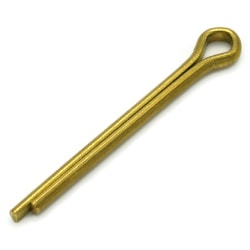
Cotter Pins, Brass
What are brass cotter pins? Brass cotter pins are split pins that pass through a drilled hole and bend open to lock a clevis pin, castle nut, or shaft fitting in place. In brass they resist corrosion, stay non-magnetic, and suit decorative and marine work where a golden pin matches brass hardware. AlbanyCountyFasteners.com stocks brass cotter pins.
A corrosion-resistant, non-magnetic locking pin
A cotter pin does a simple, essential job: pushed through a cross-drilled hole in a clevis pin, bolt, or shaft, its legs are bent apart so it cannot back out, locking the assembly and stopping a pin or nut from working loose. Choosing brass for that pin brings three benefits. It resists corrosion in most conditions and in freshwater and moderate marine settings, so the pin does not rust into place and can be removed when service is needed, unlike a corroded steel pin that seizes. It is non-magnetic, which suits instruments and compass-sensitive marine work where a steel pin would interfere. And its golden color matches brass hardware and suits visible and decorative assemblies. Being soft, brass bends easily to open and close, which makes installation clean, though for the same reason a brass pin carries less shear than steel, so it suits securing and locating rather than heavy shear duty. Where a locking pin needs corrosion resistance, non-magnetic behaviour, or a matching gold finish, brass is the choice.
Why choose brass cotter pins
- Secure clevis pins, castle nuts, and shaft fittings
- Corrosion resistant so the pin does not rust into place
- Non-magnetic for instruments and compass-sensitive work
- Golden color matches brass hardware
- Soft brass bends cleanly to install and remove
Common applications
- Securing clevis pins and castle nuts
- Marine and compass-sensitive assemblies
- Decorative and visible fittings
- Freshwater and moderate marine hardware
- Non-magnetic instrument work
- Any locking pin needing corrosion resistance or a gold finish
Brass Cotter Pin FAQs
What does a cotter pin do?
It passes through a cross-drilled hole and its legs bend apart so it cannot back out, locking a clevis pin, castle nut, or shaft fitting in place and stopping it working loose.
Why use brass cotter pins?
For corrosion resistance so the pin does not rust into place, non-magnetic behaviour for instruments and compasses, and a golden color that matches brass hardware. Brass pins stay removable where steel would seize.
Are brass cotter pins strong?
Brass is softer than steel, so it carries less shear and suits securing and locating rather than heavy shear duty. For high-shear locking, steel or stainless carries more.
Why non-magnetic pins for marine work?
Near a compass or sensitive instrument, a steel pin can interfere. Brass is non-magnetic, so it locks fittings without affecting compass readings, a real benefit in traditional marine work.
Can I reuse a cotter pin?
Bending a pin open and closed fatigues the metal, so a fresh pin is best for a reliable lock. Brass bends cleanly for installation, but replace rather than reuse a previously bent pin.
Will brass cotter pins corrode in salt water?
Brass resists corrosion in freshwater and moderate marine conditions. For aggressive salt exposure, silicon bronze or 316 stainless lasts longer; brass suits freshwater and decorative marine use.