

Flange Nuts
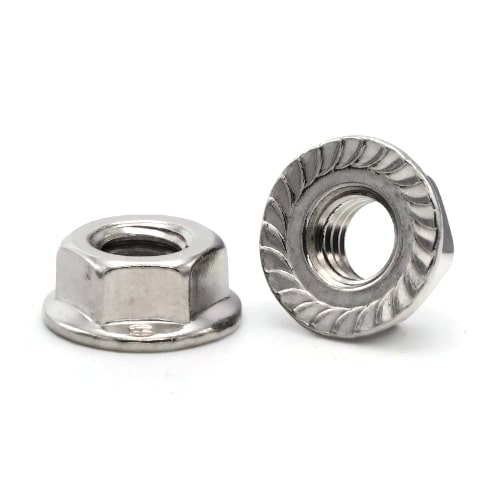
Flange Nuts
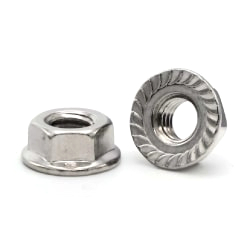
Serrated
Flange nuts with teeth under the flange that bite into the surface to create a locking action against vibration.
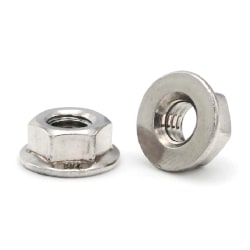
Non-Serrated
Flange nuts with a smooth flange face that spreads load without marring the surface, used where the finish must be protected.

Prevailing Torque
Flange nuts with an all-metal locking feature that resists loosening under vibration without damaging the mating surface.
Videos
Play videoWhat Are Flange Nuts?
Flange nuts are hex nuts with an integrated wide bearing surface at the base that acts like a built-in washer. The flange distributes clamp load over a larger area, speeds installation, and protects the joint surface. Flange nuts are available in serrated and non-serrated styles, in inch and metric threads, and in corrosion-resistant materials and finishes.
Serrated vs. Non-Serrated Flange Nuts
- Serrated flange nuts – locking teeth bite into the mating surface to resist loosening from vibration. Best for permanent assemblies on metal where surface marring is acceptable.
- Non-serrated flange nuts – smooth bearing surface for evenly distributed clamping without surface scoring. Ideal when you want washer-like load spread and easier removal/reuse.
Materials & Finishes
- Stainless steel (18-8 / 304) – general corrosion resistance for indoor/outdoor use.
- 316 stainless steel – enhanced resistance for marine, chemical, or coastal environments.
- Zinc plated steel – economical protection for dry indoor and light outdoor exposure.
- Hot-dip galvanized steel* – heavy zinc layer for rugged exterior/structural applications.
*Availability varies by size/series. Check product grid for current options.
Common Applications for Flange Nuts
- Automotive, powersports, and machinery assemblies subject to vibration
- Sheet-metal fastening where a separate washer is undesirable
- Racking, frames, and structural brackets that benefit from wider load spread
- HVAC, electrical, and MEP support systems
- General fabrication, maintenance, and repair work
How to Select the Right Flange Nut
- Thread system & size – match inch (UNC/UNF) or metric (coarse/fine) plus diameter and pitch.
- Locking need – choose serrated for vibration resistance; non-serrated when surface finish matters.
- Environment – pick the material/finish that meets corrosion and code requirements.
- Bearing diameter – confirm flange O.D. fits the contact area and any pocket/recess.
Installation Tips for Flange Nuts
- Hand-start to avoid cross-threading; tighten with the correct wrench or socket.
- For serrated styles, seat on clean metal; avoid use with separate washers, shims, or soft coatings you don’t want marked.
- Follow project torque specs for the bolt grade/size and lubrication condition.
- Where galling is a risk (stainless-to-stainless), consider compatible anti-seize and follow spec guidance.
Standards & Fit
Flange nuts are produced to common commercial and DIN/ISO specifications with standard internal thread classes (e.g., 2B inch / 6H metric). Always verify thread, flange O.D., and height against drawings before assembly.