

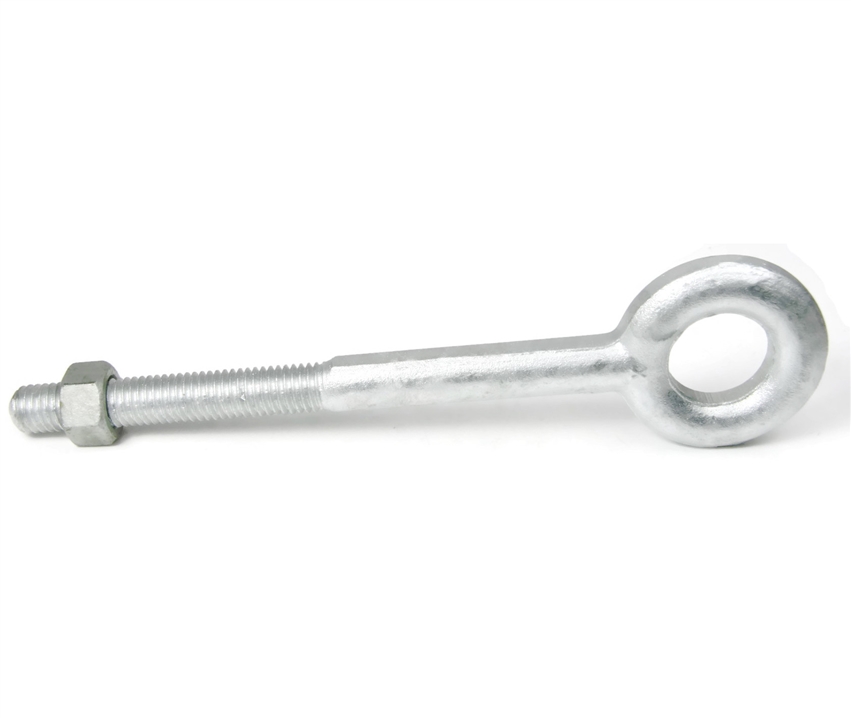
Plain Pattern with Nut Eye Bolts
What are plain pattern with nut eye bolts? Plain pattern with nut eye bolts are non-shouldered eye bolts with an extended, partly threaded shank secured by a nut from the far side. Designed for through-hole mounting where you have access to both sides, they serve vertical, in-line lifts and are not rated for angular loads.
Videos
Play videoWhen to use a nut eye bolt
A nut eye bolt is fastened by passing its extended shank through a hole and tightening a nut on the far side, so it suits mounting through a plate, beam, or panel where you can reach both sides, rather than threading into a tapped hole. Like all plain pattern eye bolts, it has no shoulder, so it is rated for vertical, in-line lifts only and must never be used for angular or side loading. About half the shank is threaded to accept the nut. Choose the material for the environment, with 304 and 316 stainless for corrosion resistance and hot dipped galvanized for outdoor use. Always confirm the rated capacity and inspect before each lift.
Material choices for plain pattern with nut eye bolts
- 304 stainless: corrosion resistance for wet and outdoor use.
- 316 stainless: marine-grade for coastal and saltwater use.
- Hot dipped galvanized: durable coating for outdoor use.
Common applications for plain pattern with nut eye bolts
- Through-hole vertical lifts and anchor points
- Mounting through plates, beams, and panels
- Cable, rope, and chain attachment
- In-line rigging with two-sided access
For threading into a tapped hole, see plain pattern eye bolts, and browse every option on the main eye bolts category.
Plain Pattern with Nut Eye Bolts FAQ
Why choose a nut eye bolt?
It mounts through a hole and secures with a nut on the far side, so it suits through-plate or through-beam mounting where you have access to both sides.
Can I use these for angular lifts?
No. Plain pattern eye bolts, including nut versions, are rated for vertical, in-line lifts only. Use a shoulder pattern for angular loads.
How much of the shank is threaded?
Typically about half the extended shank is threaded to accept the nut, with the rest plain.