

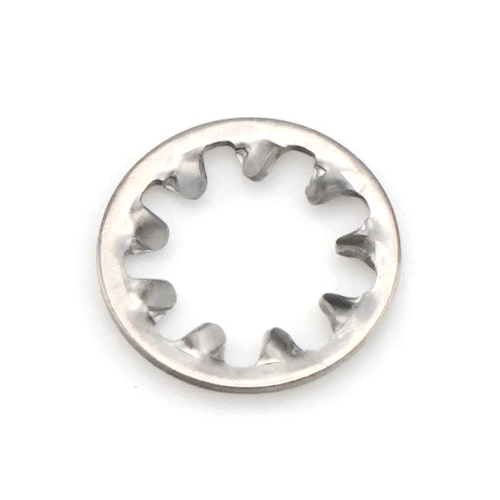
Internal Tooth Lock Washers, Marine Grade
What are marine grade internal tooth lock washers? Internal tooth lock washers have serrated teeth around the inner hole that bite into the fastener head and the surface as it tightens, creating many small locking points that resist rotation. Because the teeth sit under the head, they are hidden for a neater appearance and suit smaller heads. In marine service they come in 316 stainless, so the teeth do not corrode and lose their bite in salt. AlbanyCountyFasteners.com stocks these in 316 stainless steel.
Why internal teeth, and where they suit
A tooth washer locks by biting rather than by spring tension, and internal teeth put that bite in a tight circle around the hole. The many serrations dig into the head and the bearing surface, each one a small barrier to rotation, which resists loosening more directly than a split ring under hard vibration. Putting the teeth on the inside has two effects: they are hidden under the head for a cleaner look, and they suit smaller-diameter heads where an external tooth circle would overhang. The trade against external tooth washers is grip, since the smaller biting circle locks a little less aggressively. On neat marine hardware and electrical connections where appearance and a solid ground both matter, internal tooth washers fit well. In 316 the teeth keep their edge in salt, where a corroding washer would dull and stop biting.
Why choose marine internal tooth lock washers
- Teeth bite the head and surface to resist rotation directly
- Hidden under the head for a neater appearance
- Suit smaller-diameter fastener heads
- Bite through to bare metal for a solid electrical ground
- 316 stainless keeps the teeth sharp in salt exposure
Common applications
- Neat marine hardware connections
- Electrical grounding and bonding joints
- Smaller-head fastener connections
- Panels and fittings where appearance matters
- Vibrating joints needing a biting lock
- Any tooth-lock connection in salt exposure
Marine Internal Tooth Lock Washer FAQs
How does an internal tooth washer lock?
Its serrated teeth bite into the fastener head and the bearing surface, creating many small locking points that resist rotation directly, rather than relying on spring tension like a split ring.
Internal or external tooth, which is stronger?
External tooth washers have a larger biting circle and grip most aggressively. Internal tooth washers hide the teeth under the head for a neater look and suit smaller heads, trading a little grip for appearance.
Why are tooth washers used for electrical grounding?
The teeth cut through paint, coating, and oxide to reach bare metal, making solid metal-to-metal contact for a reliable ground or bond. 316 keeps that contact from corroding in a salt environment.
Why does 316 matter here?
The lock depends on sharp teeth biting metal. A corroding washer dulls and loses bite, and a corroded ground connection fails. 316 resists salt so the teeth keep working.
Can I reuse a tooth washer?
Once the teeth have flattened from tightening they lose bite, so tooth washers are best replaced rather than reused. A flattened washer gives false security.
Will the teeth mar the surface?
Yes, tooth washers deliberately bite and leave marks, which is how they lock and ground. Where a surface must stay unmarked, use a split ring with a flat washer or a locking nut instead.