

Stainless Steel Retaining Rings
.jpg?ts=1757453425 "Retaining Rings, Stainless Steel")
What are stainless steel retaining rings? Stainless steel retaining rings, also called snap rings, seat in a groove on a shaft or in a bore to hold parts in place and prevent axial movement. Made from stainless, they resist rust so they keep their spring tension and hold in wet and outdoor machinery.
Retaining Rings, Stainless Steel
Stainless Steel External Bowed E-Rings
E-style rings with a bowed profile that adds spring tension against the retained part to take up end play.
Stainless Steel External E-Rings
Flat E-style rings that snap onto a shaft groove from the side for a low-cost external retainer.
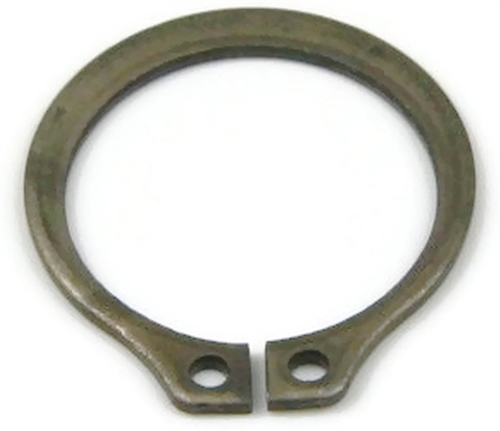
Stainless Steel External Retaining Rings
Corrosion-resistant rings in stainless that seat in a groove around the outside of a shaft to hold parts against axial movement.

Stainless Steel Internal Retaining Rings
Corrosion-resistant rings in stainless that seat in a groove inside a bore or housing to retain parts within it.
Internal vs external vs E-style retaining rings
Retaining rings are named for where they seat. External rings fit a groove around the outside of a shaft, internal rings fit a groove inside a bore or housing, and E-style rings snap onto a shaft groove from the side where axial space is tight. Choosing the right style comes down to whether you are retaining a part on a shaft or inside a bore, and how much room you have to install the ring. Stainless keeps the spring tension reliable over time.
Why choose stainless steel retaining rings
- Reliable retention: seats in a groove to lock parts against movement.
- Corrosion resistance: keeps spring tension in wet and outdoor use.
- Multiple styles: internal, external, and E-style for different grooves.
- Grade options: 18-8 for general use, 316 for salt and chloride exposure.
Common applications for stainless retaining rings
- Holding bearings and gears on shafts
- Retaining parts inside bores and housings
- Pulleys, rollers, and pivot assemblies
- Marine and outdoor machinery (use 316)
Stainless Steel Retaining Rings FAQ
What is the difference between an internal and external retaining ring?
An external ring seats in a groove around the outside of a shaft. An internal ring seats in a groove inside a bore or housing. The two are not interchangeable.
Do retaining rings need special pliers?
Yes. Retaining ring pliers expand or compress the ring to fit it into its groove without overstressing or deforming it.
What is an E-style retaining ring?
An E-ring snaps onto a shaft groove from the side rather than over the end, which is useful where axial clearance is limited.