

Sealing Washers, Marine Grade
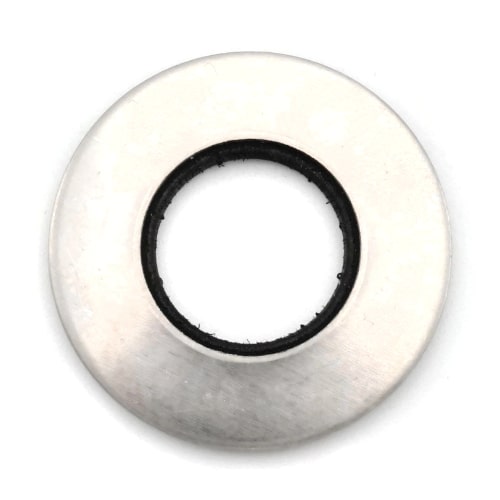
What are marine grade sealing washers? Sealing washers combine a metal washer with a bonded rubber layer that compresses as the fastener tightens, closing the gap around the shank and sealing the hole against water. On a boat, dock, or coastal roof, that turns an ordinary fastener penetration into a watertight one. The marine version bonds EPDM rubber, which resists weather, UV, and salt, to a 316 stainless washer so neither the seal nor the metal degrades in service. AlbanyCountyFasteners.com stocks these with EPDM on 316 stainless.
Sealing Washers, Marine Grade
Neoprene EPDM Washers, Marine Grade
The bonded EPDM sealing washer on a 316 stainless backing, for watertight fastener penetrations.
How a bonded sealing washer keeps water out
Every fastener through a surface is a potential leak, and in a marine or coastal setting water will find it. A sealing washer answers that by carrying a rubber layer bonded to the metal: as the fastener draws down, the rubber compresses and flows slightly around the shank and against the surface, filling the gap that would otherwise let water through. The metal washer behind it spreads the clamp and stops the fastener pulling through. The material pairing is what makes it marine grade. EPDM rubber is chosen because it resists weathering, UV, ozone, and salt far better than ordinary rubber, so the seal stays elastic instead of hardening and cracking, and the washer behind it is 316 stainless so it does not corrode and break the seal from the metal side. Together they hold a watertight, corrosion-resistant penetration over years of exposure.
Why choose marine sealing washers
- Bonded rubber compresses to seal the hole against water
- Turns an ordinary fastener penetration watertight
- EPDM resists weather, UV, ozone, and salt without hardening
- 316 stainless backing will not corrode and break the seal
- Metal washer spreads clamp and prevents pull-through
Common applications
- Sealed penetrations on boat decks and cabins
- Dock box, locker, and hatch fixings
- Coastal roofing and cladding fasteners
- Enclosure and panel penetrations that must not leak
- Hardware mounted through a watertight surface
- Any fastener hole needing a weatherproof seal in salt
Marine Sealing Washer FAQs
How does a sealing washer seal?
Its bonded rubber layer compresses as the fastener tightens, flowing around the shank and against the surface to fill the gap and block water. The metal washer behind spreads the clamp and prevents pull-through.
Why EPDM rubber specifically?
EPDM resists weathering, UV, ozone, and salt far better than ordinary rubber, so the seal stays elastic rather than hardening and cracking. That durability is what keeps a marine penetration watertight over years.
Why a 316 stainless backing?
If the metal washer corroded, it would streak, weaken, and break the seal from behind. 316 resists salt so the backing stays sound and the rubber keeps sealing. The pairing protects both sides of the joint.
How tight should I run a sealing washer?
Enough to compress the rubber and form the seal, without crushing it so hard it splits or extrudes away. Tighten to seat the rubber firmly, then stop; overtightening destroys the seal it is meant to make.
Can I reuse a sealing washer?
Once the rubber has taken a compression set it seals less reliably, so fitting new is best when remaking a watertight joint. A previously compressed washer may not reseal fully.
Will it seal on an uneven surface?
The rubber accommodates minor irregularity, but a badly uneven or damaged surface compromises any seal. Seat it on sound, reasonably flat material, and pair with bedding compound where the surface is rough.