

Tri-Fold, Aluminum
What are aluminum tri-fold rivets? Tri-fold rivets, also called tri-petal or split rivets, split into three legs on the blind side as they set, folding back to spread their grip over a wide area. That makes them the answer for soft, thin, or brittle materials that a standard rivet would simply pull through. In aluminum they match aluminum panels and keep the joint corrosion consistent. AlbanyCountyFasteners.com stocks these in shave head, recessed crown dome head, dome head, and low profile flat head styles.
Tri-Fold, Aluminum
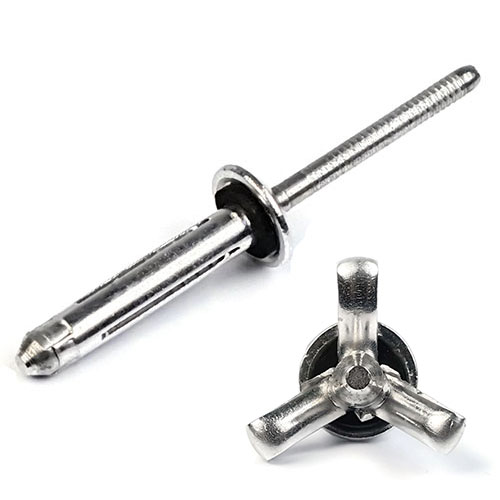
Shave Head
Tri-fold rivets with a low shave head for a near-flush finish while spreading load on soft material.
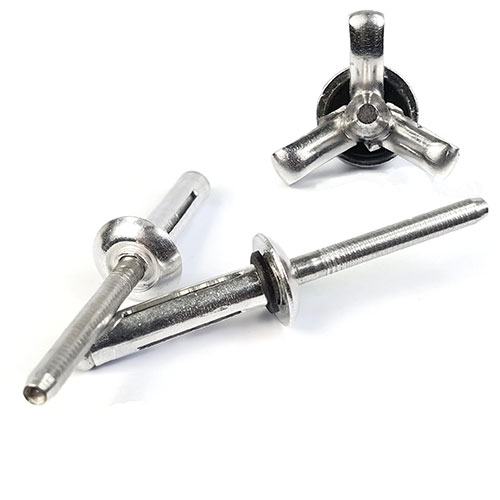
Recessed Crown Dome Head
Tri-fold rivets with a recessed crown dome head for a controlled, load-spreading set on soft or composite material.
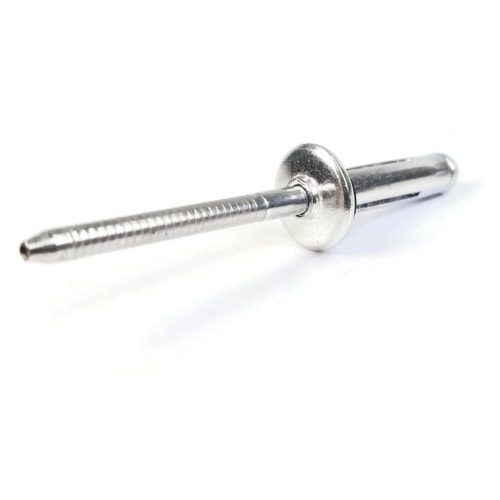

Low Profile Flat Head
Tri-fold rivets with a low flat head that sits close to flush while forming the three-pronged blind-side anchor.
How the tri-fold grip works
A standard rivet forms a small set head on the blind side, which concentrates its clamp on a little ring of material, and in soft plastics, thin sheet, or brittle board that small area can tear or pull straight through. A tri-fold rivet solves this by splitting: as it is set, the body divides into three legs that fold back against the blind face, spreading the clamp over a much larger footprint. That distributed grip lets it hold materials a normal rivet cannot, foam board, soft plastics, thin or fragile panels, and honeycomb, without crushing or tearing them. In aluminum the rivet also matches an aluminum base for corrosion consistency, and the soft body folds its legs cleanly with modest tool force. The head styles set the finished look and seating: shave head for a low trimmed finish, recessed crown dome and dome head for a rounded proud head, and low profile flat head for a near-flush neat seat. Choose the head for appearance and the tri-fold body for grip in difficult materials.
Why choose aluminum tri-fold rivets
- Split into three legs to spread grip on the blind side
- Hold soft, thin, and brittle materials without pull-through
- Match aluminum panels for corrosion consistency
- Soft aluminum body folds cleanly with modest force
- Head styles for trimmed, rounded, or near-flush finishes
Common applications
- Soft plastics and foam board
- Thin and fragile aluminum panels
- Honeycomb and sandwich materials
- Trim and lightweight paneling
- Any material a standard rivet would pull through
- Aluminum assemblies needing a spread blind-side grip
Aluminum Tri-Fold Rivet FAQs
How is a tri-fold rivet different from a standard rivet?
It splits into three legs on the blind side as it sets, folding back to spread grip over a wide area, where a standard rivet forms a small set head. That spread lets it hold soft or brittle materials without pull-through.
What materials are tri-fold rivets for?
Soft plastics, foam board, thin sheet, brittle panels, and honeycomb, anything a standard rivet would tear or pull through. The spread legs distribute the clamp so fragile materials hold.
Which head style should I choose?
Shave head for a low trimmed finish, recessed crown dome and dome head for a rounded proud head, and low profile flat head for a near-flush neat seat. Choose by the finished look you want.
Why aluminum for these?
To match an aluminum base for corrosion consistency, and because the soft aluminum body folds its three legs cleanly with modest tool force.
Do they need a backing washer?
Usually not, since the folding legs already spread the load, which is the point of the design. On extremely soft material, test the grip to confirm it holds without additional backing.
Are they as strong as a solid rivet?
They are designed for grip in difficult materials rather than maximum shear strength. Where high load is needed in sound material, a standard structural rivet carries more; the tri-fold's strength is spreading grip.