
Resources
Colored Rivets
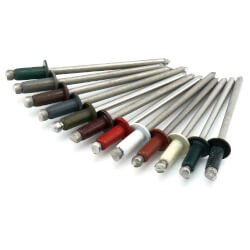
What are colored rivets? Colored rivets are painted blind rivets, finished in a durable coating so the head matches the panel it fastens instead of standing out as bare metal. They exist because on exposed architectural work, a row of bright rivet heads across a colored panel is visually obvious and reads as unfinished. Matching the rivet to the panel makes the fastener disappear. AlbanyCountyFasteners.com stocks painted rivets on 304 stainless steel and aluminum bodies in twelve colors, including white, ivory, black, brown, burgundy, crimson red, evergreen, hartford green, slate gray, charcoal, and antique bronze.
Videos
Play videoWhy choose colored rivets for exterior panels?
Because the fastener is the most repeated visual element on a panel job. A metal building wall might carry hundreds of rivets in regular rows, and if each one is bright metal against a colored panel, the eye reads the fastener pattern before it reads the building. Matching the head color makes the joint recede. There is a practical benefit too: the paint layer adds a small amount of protection at the head, which is the part of the rivet exposed to weather and UV. What matters most for longevity is still the body material underneath, which is why these are built on stainless and aluminum rather than plain steel.
Why choose colored rivets
- Head color matches the panel so the fastener line disappears visually
- Painted finish adds a layer of protection at the exposed head
- Built on 304 stainless and aluminum bodies for genuine corrosion resistance
- Twelve stocked colors covering common panel and trim finishes
- Sets with any standard blind rivet tool, no special handling required
Colors stocked
- Neutrals, white, ivory, slate gray, charcoal, and black
- Earth tones, brown, antique bronze, and burgundy
- Greens, evergreen and hartford green
- Reds, red and crimson red
- Match to the panel manufacturer's color name where possible, since finish names vary between suppliers
Common applications
- Metal building panels, siding, and wall systems
- Roofing, trim, ridge caps, and flashing
- Gutters, downspouts, and fascia
- Soffit and architectural cladding
- Signage and display work where the fastener should not be visible
- Repair and matching work on existing colored panel installations
Where appearance is not a factor, open end rivets do the same structural job. For panel work that also needs to seal, look at closed end rivets or tri-fold rivets with sealing washers.
Related Categories
Colored Rivet FAQs
Will the paint chip when I set the rivet?
The head coating is applied to survive setting, and the tool nosepiece bears on the head without scraping the visible face. Chipping usually comes from a worn or wrong-size nosepiece, or from over-travel that lets the tool grind against the head. Check your nosepiece if you see damage across a run.
How do I match a rivet color to my panel?
Match to the panel manufacturer's color name and compare a sample in daylight if you can. Color names are not standardized between suppliers, so two products called the same green can differ noticeably. For a critical match, order a small quantity first.
Will the color fade outdoors?
Painted finishes weather over time, like any exterior coating, and darker colors typically show fading sooner in high UV exposure. Because the panel is fading at the same time, a matched rivet generally ages alongside it rather than becoming conspicuous.
Are colored rivets as strong as plain ones?
Yes. The paint is a surface finish, not a structural element. Strength comes from the body material, so a painted 304 stainless rivet performs like an unpainted 304 stainless rivet of the same size.
Can I paint standard rivets myself?
You can, but factory painted heads hold up far better. Paint applied after installation sits on a bare metal surface without proper preparation, chips at the mandrel break, and rarely matches cleanly. Factory finishing is applied before the rivet is formed and bonded properly.
Which body material should I choose?
304 stainless for maximum corrosion life on long-term exterior work. Aluminum where you are fastening aluminum panels and want galvanic compatibility. Both are stocked painted, so the color choice does not force the material choice.