

Sheet Metal Screws
.jpg?ts=1757453415 "Sheet Metal Screws")
Resources
What are sheet metal screws?
Sheet metal screws are self-tapping fasteners with sharp points and machine-style threads that create their own mating threads in a pre-drilled pilot hole. They provide strong, reliable attachment to thin steel, aluminum, stainless, plastics, and composites where a nut or tapped hole isn’t available. Designed to create their own mating threads in a pre drilled pilot hole, eliminating the need for a tapped hole or nut. While originally developed for fastening thin sheet metal, they are also commonly used with aluminum, stainless steel, plastic, fiberglass, wood, and other materials that can support thread forming. Their sharp point and precision threads provide excellent holding power, making them one of the most widely used fasteners in construction, manufacturing, HVAC, electrical work, automotive applications, and general repairs.
Sheet Metal Screws
.jpg?ts=1755909156 "Phillips Pan Head")
Phillips Pan Head
Sheet metal screws with a rounded pan head and Phillips drive, the general-purpose choice for fastening sheet metal and thin materials.
.jpg?ts=1755909131 "Phillips Flat Head")
Phillips Flat Head
Countersunk sheet metal screws with a Phillips drive that sink flush into the material for a clean finish.
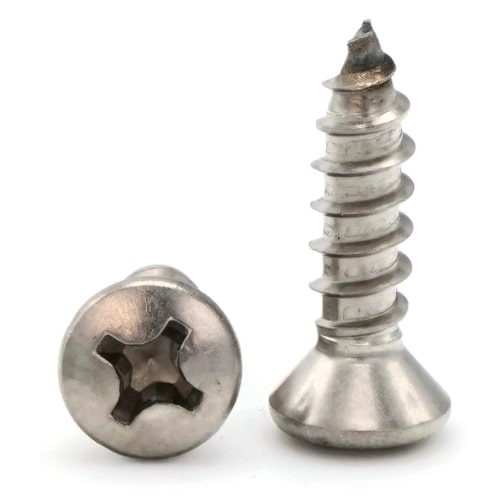
Phillips Oval Head
Countersunk sheet metal screws with a Phillips drive and slightly raised decorative dome.
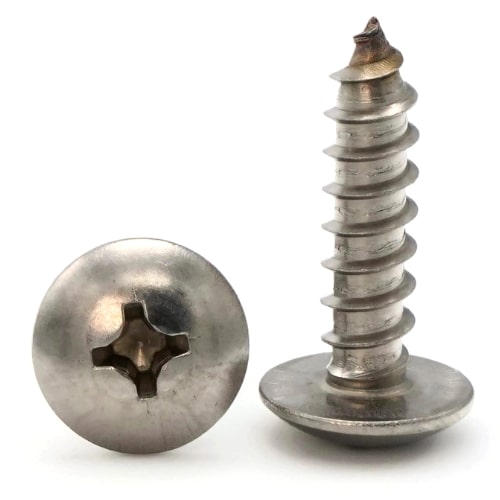
Phillips Truss Head
Sheet metal screws with a wide, low-profile head and Phillips drive that spread load across thin or slotted material.
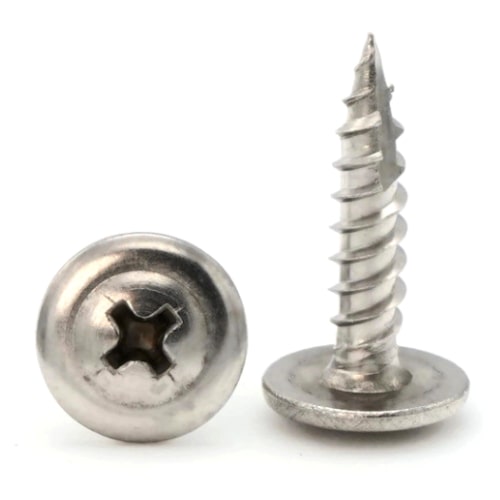
Phillips Modified Truss Head
Sheet metal screws with an extra-wide truss head and Phillips drive for maximum bearing surface on soft or thin material.
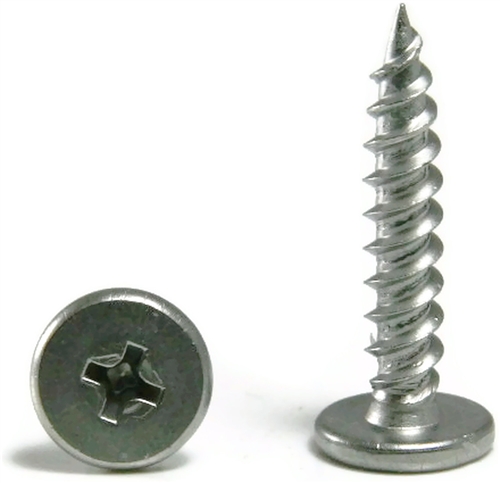
Phillips Pancake Head
Sheet metal screws with a very thin, wide flat head and Phillips drive, low enough to sit nearly flush under overlapping material.
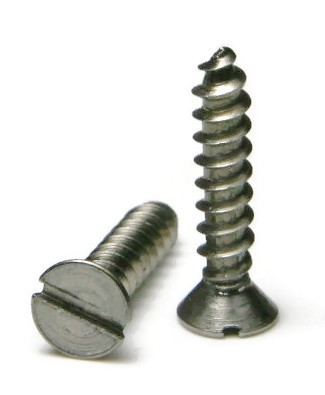
Slotted Flat Head
Countersunk sheet metal screws with a single slot for a flush finish, driven with a flat blade
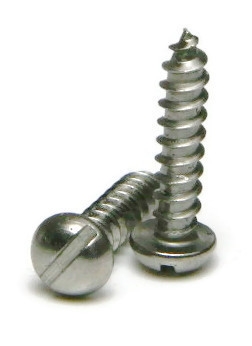
Slotted Round Head
Sheet metal screws with a rounded head that sits above the surface and a single slot for a wide bearing face.
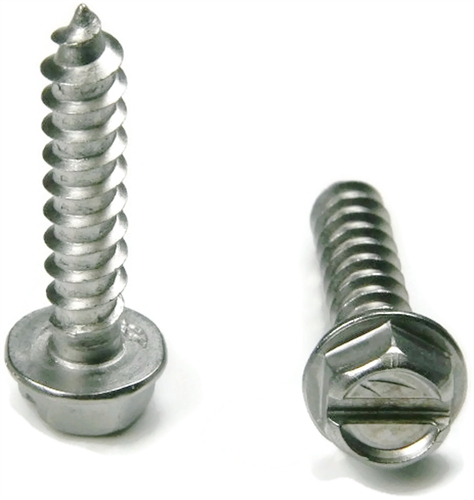
Slotted Hex Washer Head
Sheet metal screws with an integrated washer under a hex head and a slot, driven with a nut driver or flat bit for high torque and wide clamp.
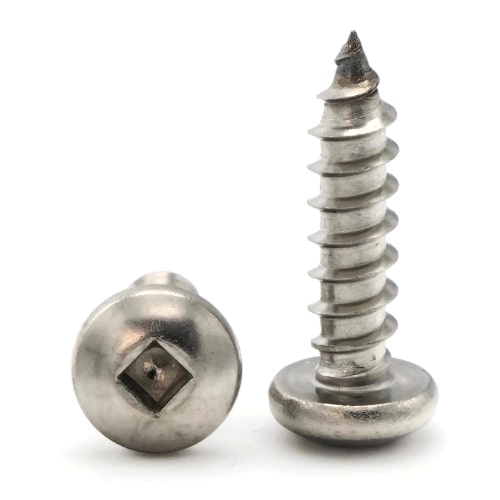
Square Drive Pan Head
Pan-head sheet metal screws with a square drive that resists cam-out under higher torque.

Square Drive Flat Head
Countersunk sheet metal screws with a square drive for cam-out resistance and a flush finish.

Square Drive Truss Head
Wide truss-head sheet metal screws with a square drive combining high bearing area and cam-out resistance.
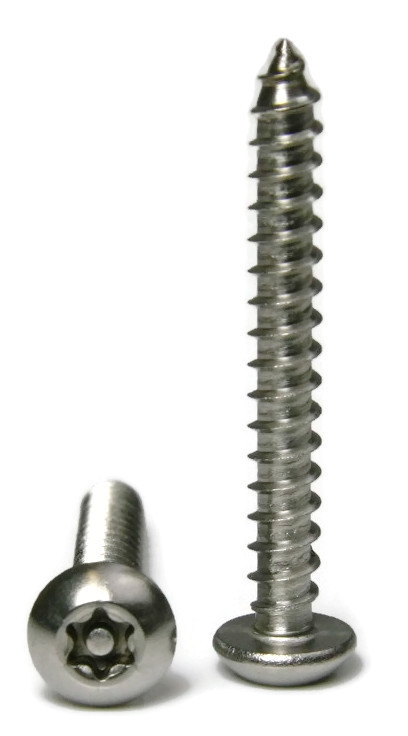
Button Head Torx Star Pin-In
Security drilling/tapping screws with a low domed button head and a center-pin Torx recess that blocks a standard bit.
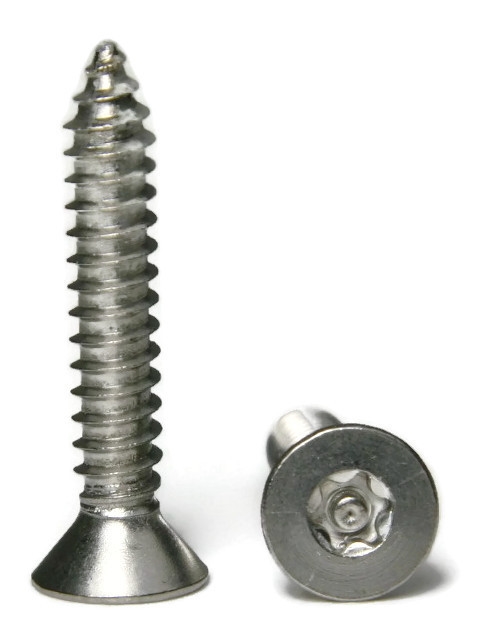

Flat Head Spanner
Countersunk security drilling/tapping screws with a two-hole spanner drive for a flush, tamper-resistant finish.

Oval Head Spanner
Countersunk security drilling/tapping screws with a two-hole spanner drive and raised decorative dome.

Pan Head Spanner
Pan-head security drilling/tapping screws with a two-hole spanner drive that requires a special bit.

Truss Head Spanner
Wide truss-head security drilling/tapping screws with a two-hole spanner drive for high bearing area.

One Way
Drilling/tapping screws with a one-way slot that installs with a flat driver but resists back-out.
Videos
Play videoWhich types of sheet metal screws are there?
- Type A / Type AB — general-purpose sharp-point styles; AB has a finer pitch for better grip in thin sheet and aluminum.
- Type B — blunt point for pre-tapped or thicker materials where a sharp point isn’t required.
- Thread-forming / thread-cutting — specialty points for plastics or thin metals when lower drive torque or chip control is needed.
What head and drive options do sheet metal screws have?
- Pan, button, truss — wide bearing on thin sheet.
- Flat (countersunk) — sits flush for a smooth finish.
- Hex-washer — high torque and large bearing area for exterior panels.
- Drives — Phillips, combination, Torx/6-lobe, slotted, hex-socket, and security drives.
Which materials and finishes are best for sheet metal screws?
- Zinc-plated steel — economical for dry interiors.
- 18-8 / 304 stainless — dependable outdoor/indoor corrosion resistance.
- 316 stainless — enhanced resistance for coastal or chemically aggressive settings.
- Black phosphate — low-glare indoor finish and good paint bond.
How do I size and specify sheet metal screws?
Order by diameter × threads per inch × length (e.g., #8-18 × 1″, #10-16 × 3/4″). Length is measured from under the head; flat heads are measured overall. Metric options follow ISO pitch (e.g., M4-0.7 × 20 mm).
Do I need a pilot hole for sheet metal screws?
Yes. Drill the recommended pilot slightly smaller than the screw’s major diameter so the threads form properly. Deburr holes to reduce drive torque and improve thread quality. For no-pilot installs in steel, use self-drilling screws instead.
Common applications for sheet metal screws
- HVAC ducting, enclosures, brackets, and electrical panels
- Automotive, appliance, and equipment assembly
- Roofing, siding, and architectural panels (use sealing washers where required)
- General fabrication in thin steel, aluminum, and stainless sheet
Installation tips for sheet metal screws
- Use the correct pilot size; keep the driver square and apply steady pressure.
- Select head/drive to match tools and needed bearing area; avoid over-torque that can strip thin sheet.
- Use sealing or finish washers for weather-tightness or surface protection.
- Consider compatible anti-seize on stainless-to-stainless joints to reduce galling.