

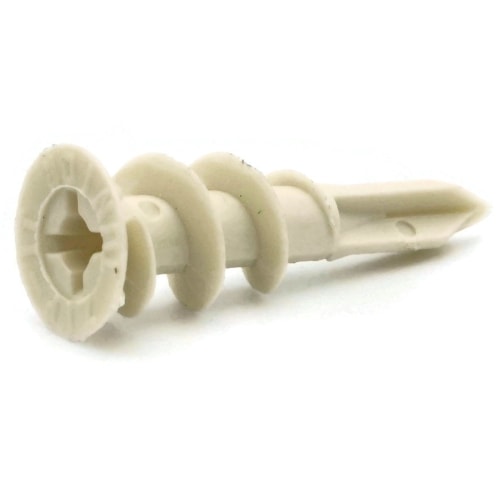
Nylon (Plastic) Self Drilling Drywall Anchors
What are Nylon (Plastic) Self Drilling Drywall Anchors? Nylon (plastic) self drilling drywall anchors are wall anchors designed to install into drywall or compatible plasterboard and create a stronger fastening point than a screw alone. They are commonly used for mounting shelves, brackets, fixtures, signs, pictures, wall hardware, and other light to medium-duty items where a plastic anchor is suitable.
Types:
Why Choose Nylon Plastic Self Drilling Drywall Anchors?
Nylon plastic self drilling drywall anchors are useful when a wall-mounted item needs extra holding support in drywall and there is no wall stud available at the fastening location. The anchor cuts into the drywall as it is installed, creating a threaded anchor point for the matching screw.
This category includes nylon plastic self drilling drywall anchors for drywall and compatible plasterboard fastening. These anchors are commonly selected for indoor wall mounting where quick installation, easy alignment, and a non-metal anchor body are preferred.
Common Uses for Nylon Self Drilling Drywall Anchors
Nylon self drilling drywall anchors are commonly used for installing shelves, curtain rod brackets, small wall-mounted fixtures, pictures, lightweight mirrors, signs, towel bars, cable clips, wall plates, decorative items, and general wall hardware into drywall.
They are often selected for indoor wall fastening projects where the fastener does not line up with a stud. Match the anchor size, screw size, wall thickness, and load rating to the item being mounted before installation.
How Nylon Self Drilling Drywall Anchors Work
Nylon self drilling drywall anchors have a pointed tip and coarse outside threads that help the anchor cut into drywall as it is driven into the wall. Once the anchor is seated, the screw is installed into the anchor to hold the mounted item in place.
Proper installation matters. The anchor should be driven straight and seated flush with the wall surface without being overdriven. Overdriving can damage the drywall, strip the anchor hole, or reduce holding strength.
Nylon Plastic vs Zinc Plated Steel Self Drilling Drywall Anchors
Nylon plastic self drilling drywall anchors are commonly used for general indoor wall-hanging applications where a plastic anchor is suitable. They are lightweight, easy to install, and practical for many household, office, maintenance, and commercial wall-mounting jobs.
Zinc plated steel self drilling drywall anchors may be preferred when a metal anchor body is needed for the application. Choose between nylon plastic and zinc plated steel based on the wall material, fixture type, load requirement, installation preference, and project specifications.
Nylon Self Drilling Drywall Anchors vs Toggle Bolts
Nylon self drilling drywall anchors are commonly used for light to medium-duty wall mounting where the anchor threads into the drywall. They are often easier to install than toggle bolts because they do not require the same large wall opening.
Toggle bolts use wings or toggles that open behind the wall, which can provide stronger holding support in hollow wall applications depending on the wall material and fastener size. Choose toggle bolts for heavier wall-mounted items or when the project requires a hollow-wall anchor with support behind the drywall.
Nylon Self Drilling Drywall Anchors vs Hollow Wall Anchors
Nylon self drilling drywall anchors grip the drywall with outside threads and are installed from the front of the wall. They are commonly used for quick drywall fastening where the mounted item is not too heavy for the anchor rating.
Hollow wall anchors expand behind the wall surface to provide support in hollow wall cavities. They may be preferred for certain fixtures, wall thicknesses, or heavier applications where an expanding anchor behind the wall is needed.
Nylon Self Drilling Drywall Anchors vs Concrete Anchors
Nylon self drilling drywall anchors are designed for drywall, plasterboard, and compatible hollow wall materials. They are not the correct choice for solid concrete, brick, block, or masonry.
For concrete, brick, block, or masonry fastening, choose an anchor made for that base material, such as sleeve anchors, wedge anchors, concrete screws, or other masonry anchor styles.
When to Use a Stud Instead of a Nylon Drywall Anchor
A wall stud is usually the better fastening point for heavier fixtures, shelves, cabinets, safety-related hardware, grab bars, TV mounts, and other high-load applications. Drywall anchors are useful when a stud is not available, but they are limited by the drywall strength and anchor rating.
Before mounting heavier items, confirm the load, wall condition, stud location, anchor rating, and fixture requirements. When the item is heavy, frequently handled, or safety-related, fasten into framing or use the hardware recommended by the fixture manufacturer.
How to Choose the Right Nylon Plastic Self Drilling Drywall Anchor
Choose the nylon plastic self drilling drywall anchor based on the wall material, wall thickness, screw size, load rating, fixture type, and whether the mounted item will be static or frequently handled. The anchor should match both the wall and the item being mounted.
After confirming the application, choose nylon plastic when a lightweight, non-metal self drilling drywall anchor is suitable for the project. For applications that need a metal anchor body, compare zinc plated steel self drilling drywall anchors. For heavier hollow wall applications, compare toggle bolts, hollow wall anchors, or other drywall and plaster anchor options.
Related Anchor Categories
Browse related anchor categories to compare nylon plastic self drilling drywall anchors, zinc plated steel self drilling drywall anchors, toggle bolts, hollow wall anchors, concrete anchors, sleeve anchors, wedge anchors, and concrete screws.
- Anchors
- Anchors for Drywall & Plaster
- Self Drilling Drywall Anchors
- Nylon Plastic Self Drilling Drywall Anchors
- Zinc Plated Steel Self Drilling Drywall Anchors
- Toggle Bolts
- Hollow Wall Anchors
- Sleeve Anchors
- Wedge Anchors
- Concrete Screws
Nylon Plastic Self Drilling Drywall Anchor FAQs
What are nylon plastic self drilling drywall anchors?
Nylon plastic self drilling drywall anchors are wall anchors with a pointed tip and outside threads that install into drywall to create a stronger fastening point than a screw alone.
When should I use nylon self drilling drywall anchors?
Use nylon self drilling drywall anchors when mounting light to medium-duty items into drywall where a stud is not available and the item is within the anchor’s rated capacity.
Do nylon self drilling drywall anchors need a pilot hole?
Many self drilling drywall anchors are designed to install without a pilot hole in drywall, but installation requirements can vary by anchor type, wall material, and manufacturer instructions.
What is the difference between nylon and zinc plated steel self drilling drywall anchors?
Nylon self drilling drywall anchors use a plastic anchor body for general wall mounting, while zinc plated steel self drilling drywall anchors use a metal anchor body. Choose based on the wall material, fixture type, and load requirement.
Can nylon self drilling drywall anchors be used in concrete?
No. Nylon self drilling drywall anchors are for drywall, plasterboard, and compatible hollow wall materials. For concrete, brick, or block, use a masonry anchor, concrete screw, wedge anchor, or sleeve anchor.
Are nylon self drilling drywall anchors good for heavy items?
Nylon self drilling drywall anchors are generally used for light to medium-duty wall mounting. For heavy shelves, cabinets, TV mounts, grab bars, or safety-related hardware, fastening into a wall stud or using manufacturer-recommended hardware is usually the better choice.
What is the difference between nylon self drilling drywall anchors and toggle bolts?
Nylon self drilling drywall anchors grip the drywall with outside threads. Toggle bolts use wings or toggles that open behind the wall, which can provide more support for certain hollow wall applications.
How do I choose the right nylon plastic self drilling drywall anchor?
Choose the anchor based on the wall material, wall thickness, screw size, fixture type, load rating, and whether the mounted item will be static or frequently handled.