

How do I choose the right snap ring pliers?
Start with the ring, not the tool. Three things decide the pliers: whether the ring sits in a bore or on a shaft, the diameter of the lug holes in the ring, and how much room you have to get at it. Ring location sets internal versus external, and that is not negotiable. Lug hole size sets the tip diameter, and this is where most people go wrong. A tip that is undersized rocks in the hole and cams out under pressure, which is how rings get launched across a shop and lug holes get elongated. A tip that is oversized simply will not enter. Common tip diameters run 0.038, 0.047, 0.070, and 0.090 inch, and matching the tip to the hole is the single biggest factor in whether the job goes cleanly.
Internal or external pliers
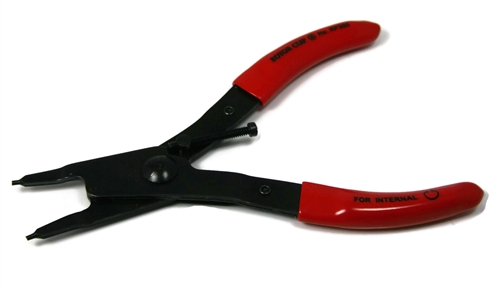
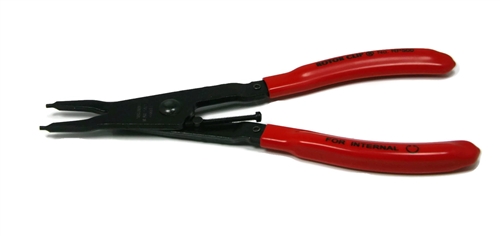
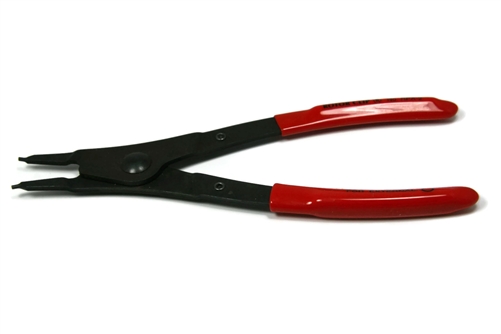
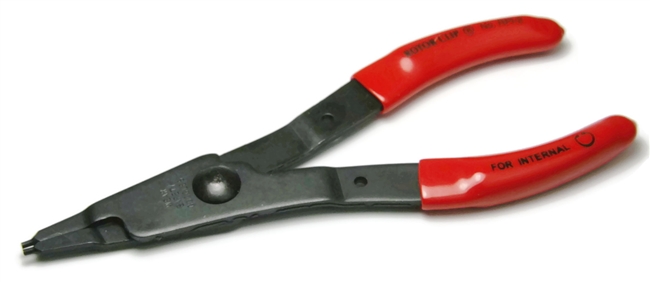
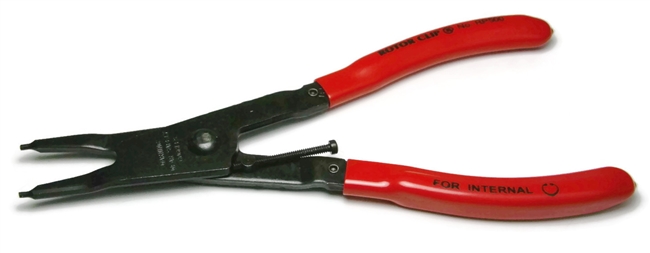
- Internal pliers close the tips when you squeeze, compressing a ring so it clears the bore and springs outward into a housing groove
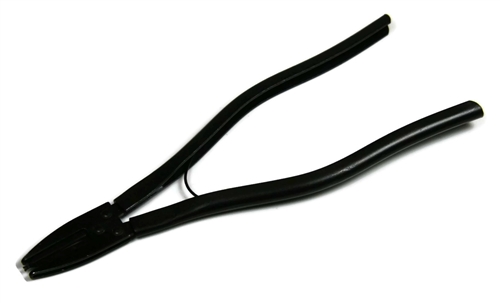
- External pliers open the tips when you squeeze, expanding a ring so it passes over a shaft and springs inward into a shaft groove
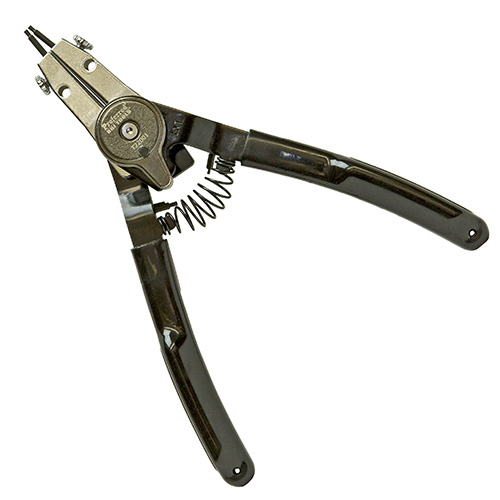
- Convertible pliers switch between both actions, useful for service work where you meet both ring types in one job
- The action is counterintuitive on external pliers, since squeezing the handles spreads the tips, which is a mechanical necessity rather than a design quirk
Pliers matched to our retaining rings
- RP-100, RP-300, and RP-500 internal pliers, standard internal sets covering common bore ring sizes
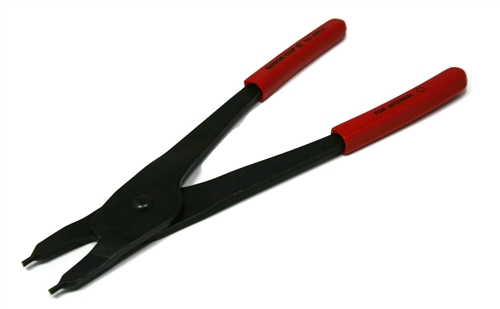
- RPL-100 internal pliers, long reach for recessed bores and deep housings
- RPI-2, RPI-3, and RPI-4 internal pliers, sized to specific ring series, with RPI-2 covering DHO-18 through DHT-30 rings
- RP-15 external pliers, standard external set for shaft rings
- RPL-200 external pliers, long reach for shaft grooves set back behind other components
- RPA-2 external pliers, matched to SHR and SHF ring series
- Internal and external quick-switch set, one tool that converts between both actions with interchangeable tips
Tip style, angle, and reach
- Straight tips give the best control when you can approach the ring head on
- 45 degree tips handle offset work where the ring sits at an angle to your approach
- 90 degree tips reach into tight spaces and vertical bores where nothing else fits
- Fixed tips are more robust and better suited to repetitive or heavy duty use
- Replaceable tips cover a range of ring sizes with one tool body and can be swapped when worn
Troubleshooting common problems
- Ring slips off the tips, move up a tip diameter or switch to forged fixed tips for a more positive grip
- Ring comes out distorted, you are over-travelling. Open or close only enough to clear the groove and keep the pliers square to the ring
- Cannot reach the groove, use 45 or 90 degree tips, or a long reach body like the RPL series
- Tips wearing quickly, move to hardened or replaceable tips if you are doing this work regularly
- Lug holes elongating, the tip is undersized for the hole and is loading one edge instead of the full bore
These pliers are sized to the rings we stock, so if you are ordering both, check the ring series first. Our internal retaining rings pair with the RP and RPI internal sets, and our external retaining rings pair with the RP-15, RPL-200, and RPA-2 external pliers.
Related Categories
- Internal Retaining Rings
- External Retaining Rings
- E-Style Retaining Rings
- Retaining Ring Kits
- Retaining Rings & Snap Rings
Retaining Ring Pliers FAQs
What is the difference between internal and external snap ring pliers?
The direction the tips travel. Squeeze internal pliers and the tips come together, compressing a ring small enough to enter a bore. Squeeze external pliers and the tips spread apart, opening a ring wide enough to pass over a shaft. They are not interchangeable, and trying to substitute one for the other will bend the ring or slip out under load.
What size tips do I need?
Measure the lug hole in the ring and choose the nearest tip that fills it without forcing. Common sizes are 0.038, 0.047, 0.070, and 0.090 inch. Too small and the tip rocks and cams out, which elongates the hole and can send the ring flying. Too large and it will not enter the hole at all.
Can I use one tool for both internal and external rings?
Yes, with convertible pliers. A quick-switch set changes between compressing and expanding action, which is convenient for maintenance work where you encounter both. Dedicated pliers give slightly better feel and durability if you work mostly with one ring type.
Do I need pliers for E-clips?
Usually not. E-style rings push on radially from the side and have no lug holes, so a flat blade screwdriver, a small socket, or a dedicated E-clip applicator handles them. Retaining ring pliers are for rings with lug holes that install along the shaft axis.
Why do my rings keep getting damaged during installation?
Almost always over-travel or tip mismatch. Open or compress the ring only enough to clear the groove, since going past the elastic limit leaves a permanent set and the ring will never seat tight again. Keep the pliers aligned with the ring rather than cocked to one side, and confirm the tip diameter matches the lug holes.
What safety precautions should I take?
Wear eye protection every time. A retaining ring under plier pressure is a loaded spring, and a tip that cams out of a lug hole will launch it with real force. Keep a firm grip through the full release, and keep your other hand or a rag over the ring as it seats.
How do I know which pliers match my rings?
Several of our pliers are matched to specific ring series, so the ring part number points you to the tool. The RPI-2 covers DHO-18 through DHT-30 rings, and the RPA-2 is built for SHR and SHF series rings. If you are unsure, contact us with the ring part number or the bore and shaft dimensions.