

Stainless Steel Nuts
.jpg?ts=1757453411 "Nuts, Stainless Steel")
What are stainless steel nuts? Stainless steel nuts are corrosion-resistant internally threaded fasteners that pair with stainless bolts and studs to clamp parts together. Made from 18-8, 304, or 316 stainless, they hold up in wet, humid, coastal, and outdoor conditions where plated nuts would rust.
Nuts, Stainless Steel
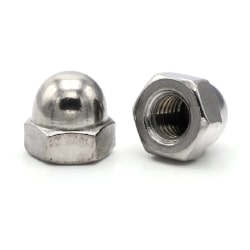
Stainless Steel Cap Nuts
Corrosion-resistant domed nuts in 18-8, 304, 316, and metric A2/A4 stainless that cover exposed threads for a clean, safe finish.
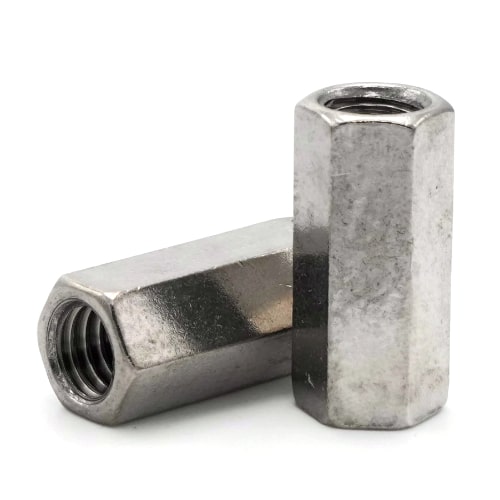
Stainless Steel Coupling Nuts
Corrosion-resistant long hex nuts in 304, 316, and A2 stainless that join two lengths of threaded rod or bolt end to end.
Stainless Steel Flange Nuts
Corrosion-resistant nuts in 304, 316, and metric A2/A4 stainless with a built-in flange that spreads load and can lock against loosening.
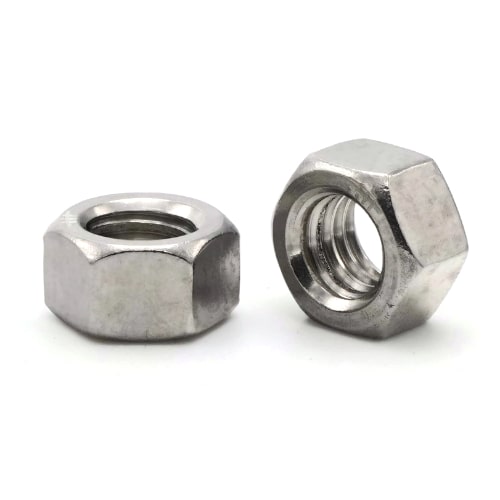
Stainless Steel Hex Nuts
Corrosion-resistant six-sided nuts in 304, 316, and metric A2/A4 stainless for general fastening with bolts and screws.

Stainless Steel Lock Nuts
Corrosion-resistant nuts in 18-8, 304, 316, and metric A2/A4 stainless that resist loosening from vibration by nylon insert, distorted threads, or washer.
-min.jpg?ts=1757453419 "Stainless Steel Square Nuts")
Stainless Steel Square Nuts
Corrosion-resistant four-sided nuts in 304 and 316 stainless with extra surface area, used with carriage bolts and in wood and strut.
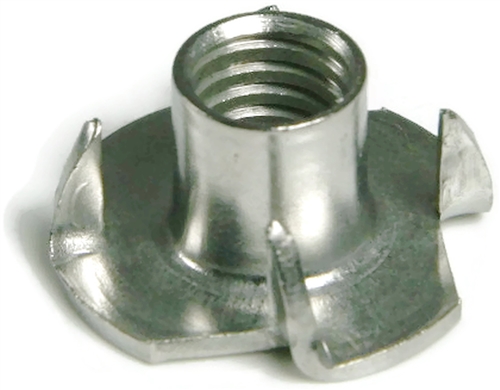
Stainless Steel T-Nuts
Corrosion-resistant pronged, flanged nuts in stainless that press into wood or composite to create a strong internal thread.

Stainless Steel Tamper Proof Nuts
Corrosion-resistant 316 stainless security nuts that resist removal by standard tools, used to deter tampering and theft.
-min.jpg?ts=1757453411 "Stainless Steel Thumb Nuts")

Stainless Steel Wing Nuts
Corrosion-resistant nuts in 304, 316, and metric A2/A4 stainless with winged tabs for hand tightening without tools.
How to match nut grade to your bolt
For a joint to last, the nut and bolt should share the same stainless grade. Pair 18-8 nuts with 18-8 bolts for indoor and general outdoor work, and 316 nuts with 316 bolts for coastal or saltwater exposure. Mixing grades in a corrosive setting makes the lower grade the weak point where corrosion starts.
Why choose stainless steel nuts
- Corrosion resistance: will not rust in wet, humid, or coastal use like plated nuts do.
- Grade match: pair the nut grade to your bolt for consistent performance.
- Wide selection: locking, sealing, decorative, and heavy styles for every job.
- Clean look: bright finish suited to visible hardware.
Stainless grades for nuts
- 18-8 / 304: general-purpose corrosion resistance for indoor, freshwater, and most outdoor use.
- 316: molybdenum-enhanced resistance for coastal, saltwater, and chloride environments.
Common applications for stainless steel nuts
- Marine and dock hardware paired with stainless bolts
- Deck, fence, and railing connections
- Food-grade and wash-down equipment
- Outdoor machinery and general wet-environment assembly
Tips for using stainless steel nuts
- Use anti-seize on threads. Stainless is prone to galling (cold welding) under high torque.
- Match washers and bolts in the same grade to avoid galvanic corrosion.
- For vibration, choose a nylon-insert or all-metal lock style.
- Do not over-torque. Stainless is softer than hardened carbon steel.
Stainless Steel Nuts FAQ
Why do stainless steel nuts seize on the bolt?
Stainless is prone to galling, where the threads cold-weld together under friction and high torque. A dab of anti-seize and slower driving prevents it.
Can I use an 18-8 nut on a 316 bolt?
It works mechanically, but in a corrosive or marine setting it is best to match grades so the weaker 18-8 nut does not become the point of failure.
Are stainless steel nuts strong enough for structural use?
Standard stainless nuts are weaker than hardened carbon steel. For structural loads, verify the grade rating or step up in size.