

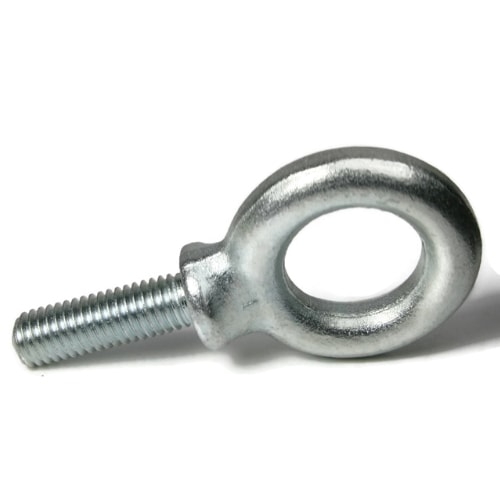
Shoulder Pattern Eye Bolts
What are shoulder pattern eye bolts? Shoulder pattern eye bolts are eye bolts with a shoulder where the eye meets the shank. When the shoulder is seated flush against the load, it reduces bending stress and allows both vertical and angular lifts, making them the choice wherever a sling or pull could be at an angle.
Videos
Play videoShoulder pattern vs plain pattern eye bolts
The shoulder is what allows angular lifting. A shoulder pattern eye bolt has a collar where the eye meets the shank that seats against the surface of the load, reducing the bending stress that side loads put on the shank, so it can be used for both vertical and angular lifts. A plain pattern eye bolt has no shoulder and is for vertical, in-line lifts only. Two rules matter with shoulder eye bolts: the shoulder must be seated completely flush to work, and the rated capacity drops sharply as the load angle increases, reaching about 25% of the vertical rating at a 45-degree angle, which is the maximum acceptable angle. Always apply the manufacturer's angle derating and inspect before each lift. Choose the material for the environment and load.
Material choices for shoulder pattern eye bolts
- 304 stainless: corrosion resistance for wet and outdoor use.
- Zinc plated: economical corrosion resistance for dry use.
- Hot dipped galvanized: durable coating for outdoor use.
- Carbon and 8620 alloy steel: strength for demanding lifts.
Common applications for shoulder pattern eye bolts
- Angular and vertical lifts
- Bridle slings and multi-point picks
- Machinery and equipment lifting points
- Rigging where side loads are possible
For vertical-only lifts, see plain pattern eye bolts, and browse every option on the main eye bolts category.
Shoulder Pattern Eye Bolts FAQ
Can shoulder pattern eye bolts be used for angular lifts?
Yes, if the shoulder is seated completely flush against the load and the rated capacity is derated for the load angle. At 45 degrees, capacity drops to about 25% of the vertical rating.
What is the maximum load angle?
45 degrees is the maximum acceptable angle, at which capacity is reduced to about 25%. Avoid angular lifts where possible and never load perpendicular to the shank.
Does the shoulder need to be flush?
Yes. The shoulder must seat completely flush against the load surface to reduce bending stress and function safely under angular loads.