

Thread Inserts

Resources
What are thread inserts? Thread inserts are fasteners that put a durable machine thread where the parent material cannot hold one on its own. They solve two different problems with the same idea. In soft material like wood, plastic, or aluminum, a tapped hole strips after a few assembly cycles, so an insert gives you a hardened steel or brass thread instead. In a hole whose threads have already failed, an insert restores the original size rather than forcing you to drill oversize or scrap the part. AlbanyCountyFasteners.com stocks wire coil inserts, solid bushings, hex drive inserts for wood, rivet nuts, and well nuts.
Thread Inserts

Helicoil Inserts
Coiled wire inserts that thread into a tapped hole to form a strong, wear-resistant thread or repair a stripped one.
-min.jpg?ts=1757453414 "Hex Drive Inserts For Wood")
Hex Drive Inserts For Wood
Threaded inserts driven into wood with a hex key to create a strong, reusable machine thread for bolts.
-min.jpg?ts=1755912603 "Well Nuts")
Well Nuts
Rubber-bodied rivet nuts that expand as the screw tightens, sealing the hole and isolating vibration in thin or fragile material.
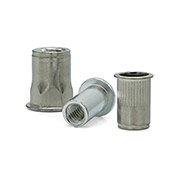
Rivet Nuts
Internally threaded inserts installed from one side of the material to create a strong machine thread in sheet metal, tube, and panels where you can't reach the back.
.jpg?ts=1757453414 "Thread Inserts for Metal")
Thread Inserts for Metal
Threaded inserts that create or repair a machine thread in metal parts for a durable, reusable hole.
-min_255x255.jpg?ts=1758393081 "Thread Inserts for Wood")
Thread Inserts for Wood
Threaded inserts that create a strong machine thread in wood for bolts and knobs that will be removed and reinstalled.
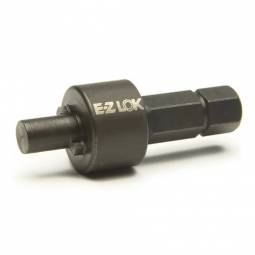
Thread Insert Installation Tools
Tools that drive and set thread inserts to the correct depth without damaging the thread.
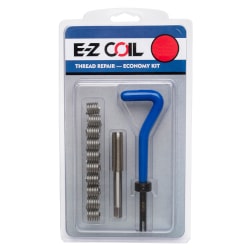
Thread Repair Kits
Kits with inserts, a tap, and tools to restore a stripped or damaged thread to its original size.
Videos
Play videoWire coil or solid insert: which do I need?
This is the decision that matters most, and it comes down to load and access. A wire coil insert, the type most people call a Helicoil, is a diamond section wire wound into a spring. It goes into a slightly oversized tapped hole and adds very little wall thickness, which makes it the right answer in thin bosses and tight spaces where there is not much material to work with. A solid insert is a machined bushing, threaded inside and out. It needs a larger hole, so you remove more parent material, but it delivers noticeably higher pull-out and torque-out strength and stands up better to repeated assembly and disassembly. For general repair work, wire inserts handle the large majority of jobs. Solid inserts are the step up when wire is not enough.
Insert types we stock
- Helicoil wire inserts, coiled stainless wire for thread repair and reinforcement in metal, from #2-56 through 1-1/8
- Thread inserts for metal, solid 303 stainless bushings for higher strength and repeated service
- Thread inserts for wood, brass bushings that thread into wood to give a reusable machine thread
- Hex drive inserts for wood, zinc alloy inserts driven with a hex key in flange and flush styles
- Rivet nuts, threaded inserts set from one side into sheet metal and tube
- Well nuts, rubber bodied inserts with a brass thread that seal and absorb vibration
When to use a thread insert
- Repairing threads stripped by over-torquing, cross-threading, or wear
- Reinforcing threads in aluminum, magnesium, and other soft metals prone to galling
- Creating durable machine threads in wood, plywood, and furniture components
- Adding threads to sheet metal or tube too thin to tap
- Assemblies that come apart repeatedly, where a tapped hole would wear out
- Converting a hole between inch and metric thread sizes
For thread repair in metal, most jobs start with Helicoil inserts, and you will need the matching installation tools to fit them. For furniture and woodworking, see our thread inserts for wood.
Related Categories
- Helicoil Inserts
- Thread Inserts for Metal
- Thread Inserts for Wood
- Hex Drive Inserts for Wood
- Thread Insert Installation Tools
Thread Insert FAQs
What is the difference between a Helicoil and a threaded insert?
Helicoil is a brand name for a helically wound wire insert, and it has become the generic term for that style. Threaded insert is the broader category, covering wire coils, solid bushings, rivet nuts, wood inserts, and more. Every Helicoil is a threaded insert, but not every threaded insert is a Helicoil.
Do I need a special tap for a thread insert?
For wire coil inserts, yes. They require an STI tap, which cuts a slightly oversized thread sized specifically for the insert, not a standard tap in the nominal size. Solid inserts are tapped to their own external thread size, and some wood and hex drive inserts cut their own threads as they go in.
Which insert is strongest?
Solid bushings outperform wire coils in pull-out and torque-out strength, and key-locking inserts sit above both. That said, any insert is ultimately limited by the parent material around it, so a very strong insert in a thin or weak boss does not buy you as much as the specification suggests.
Can I remove a thread insert once installed?
Wire coil inserts are generally considered permanent. Removal requires an extraction tool and often damages the surrounding threads, so the insert is not reusable. Solid inserts vary by type, with some being removable and key-locking styles being firmly permanent by design.
Will an insert fix a hole that is badly damaged?
Within limits. An insert needs sound material around it to hold, so if the boss is cracked, the wall is too thin, or the hole has been drilled well oversize already, the insert has nothing to grip. In those cases a larger solid insert or a different repair approach is the better route.
Which material should I choose?
Stainless is the general purpose answer for metal repair, giving corrosion resistance and a hardened thread surface. Brass suits wood and softer applications, and is easier to install without splitting the workpiece. Zinc alloy is the economical choice for wood inserts in non-critical furniture and cabinet work.