

Tri-Fold Rivets
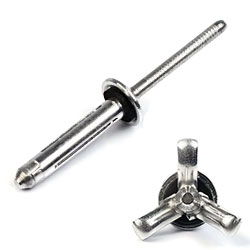
What are tri-fold rivets? Tri-fold rivets, also sold as tri-bulb rivets, are blind rivets whose body splits into three legs as it sets, folding outward into a wide three-point footprint on the blind side instead of a tight compressed ring. That spread dramatically increases the bearing area behind the panel, which is what lets them hold in soft, brittle, or thin material that a standard rivet would simply pull through. Many are supplied with a sealing washer under the head. AlbanyCountyFasteners.com stocks tri-fold rivets in aluminum and steel, in dome head, recessed crown, low profile flat head, and shave head styles.
Tri-Fold Rivets
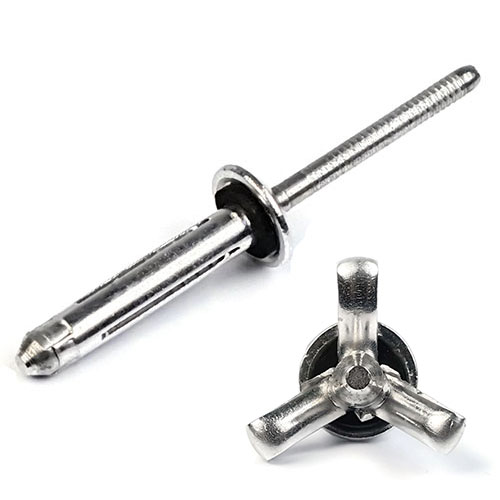
Shave Head
Tri-fold rivets with a low shave head for a near-flush finish while spreading load on soft material.

Dome Head
Tri-fold rivets with a standard dome head that spreads clamping load on the blind side of lightweight material.
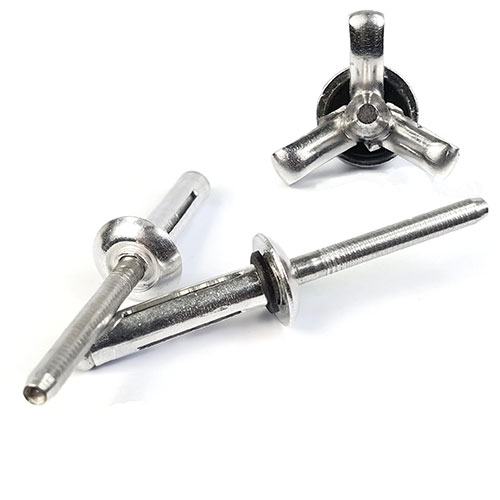
Recessed Crown Dome Head
Tri-fold rivets with a recessed crown dome head for a controlled, load-spreading set on soft or composite material.

Low Profile Flat Head
Tri-fold rivets with a low flat head that sits close to flush while forming the three-pronged blind-side anchor.
Videos
Play videoHow do tri-fold rivets work in soft material?
A standard blind rivet forms by compressing the body into a tight bulge right behind the panel, and all the holding force concentrates on that small ring. Put that into fiberglass, plastic, thin sheet, or a soft composite and the ring crushes into the material or tears straight through it. A tri-fold body is scored so it splits into three legs under the mandrel pull, and those legs fold outward flat against the back surface, spreading the same load across a much larger footprint. The result is a rivet that grips soft material without destroying it, and one that tolerates an oversized or irregular hole better than any conventional style.
Why choose tri-fold rivets
- Three folding legs spread load over a much larger blind side area
- Holds in soft, brittle, and thin material without pull-through
- Tolerates oversized and irregular holes better than standard rivets
- Many versions include a sealing washer for weather resistant joints
- Available in multiple head styles including shaveable versions for body repair
Head styles stocked
- Dome head with sealing washer, the standard weather resistant option for panel work
- Recessed crown dome head, with a seat that helps retain the sealing washer
- Low profile flat head, for a lower finished profile without countersinking
- Shave head with EPDM or sealing washer, designed to be shaved flush after setting, common in trailer body repair
Common applications
- Trailer body repair and metal building panel work
- Fiberglass, composite, and plastic panels
- Thin gauge sheet metal and soft alloy stock
- Wood, laminate, and rubber joints
- Oversized or previously damaged holes in repair work
- Weather exposed panel joints where the sealing washer adds protection
For soft material without the folding action, large flange rivets spread load on the head side, and rivet washers can be added behind any standard rivet. Where a full seal is the priority, see closed end rivets.
Related Categories
Tri-Fold Rivet FAQs
What is the difference between tri-fold and tri-bulb rivets?
They are the same fastener under different trade names. Tri-fold describes the three legs folding outward, tri-bulb describes the bulged formation they create. You will also see bulb-tite used for similar products in the trailer and metal building trades.
What is a shave head rivet?
One with a head designed to be shaved or ground flush after setting, leaving a smooth surface ready for filler and paint. They are standard in trailer body and vehicle panel repair, where the finished surface has to look unbroken.
Do tri-fold rivets seal?
Many are supplied with a sealing washer under the head, which seals at the front face. The body itself is not a closed end design, so for a fully sealed joint through the rivet, use a closed end rivet. For exterior panel work the sealing washer is usually sufficient.
Can I use them in fiberglass or plastic?
Yes, that is one of their main purposes. The folding legs spread load across a wide area of the back face instead of concentrating it in a ring, which is exactly what brittle and soft materials need to avoid cracking or pull-through.
What is EPDM and why is it on the washer?
EPDM is a synthetic rubber with excellent UV and weather resistance, which is why it is used for sealing washers on exterior panel fasteners. It stays flexible through temperature cycling and does not break down in sunlight the way many rubbers do.
Do tri-fold rivets need a special tool?
Standard blind rivet tools set them, though the larger formation means a longer pull, so a full stroke riveter is worth using. Larger diameters in steel benefit from a lever or pneumatic tool.