

Screws and Bolts
-min.jpg?ts=1758393079 "Bolts & Screws")
Resources
What Are Screws and Bolts?
Screws and bolts are threaded fasteners used to securely join two or more materials in construction, manufacturing, automotive, marine, woodworking, electrical, HVAC, and industrial applications. Although the terms are often used interchangeably, screws and bolts are designed for different fastening methods and applications. In general, bolts are installed with a matching nut or threaded component to create a high strength, removable connection, making them ideal for structural, machinery, and heavy duty assemblies. Screws are designed to thread directly into a material, pre tapped hole, or threaded insert, or to create their own threads in certain materials, making them well suited for wood, sheet metal, plastic, drywall, masonry, and general purpose fastening.Bolts & Screws
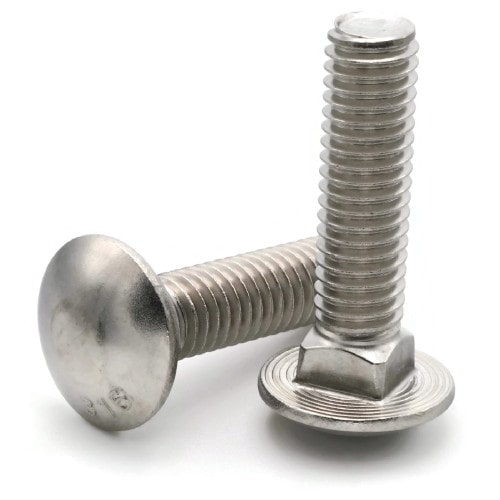
Carriage, Plow & Timber Bolts
Round-head bolts with a square or ribbed neck under the head that locks into wood to stop the bolt spinning as you tighten the nut.
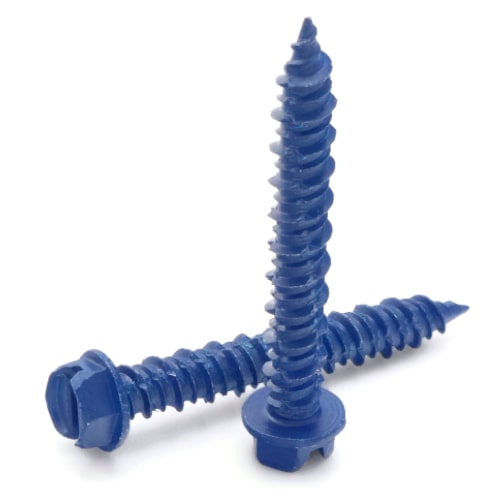
Concrete Screws
Self-tapping masonry screws that cut their own threads into a pre-drilled hole in concrete, brick, block, or mortar for a removable, anchor-free hold.
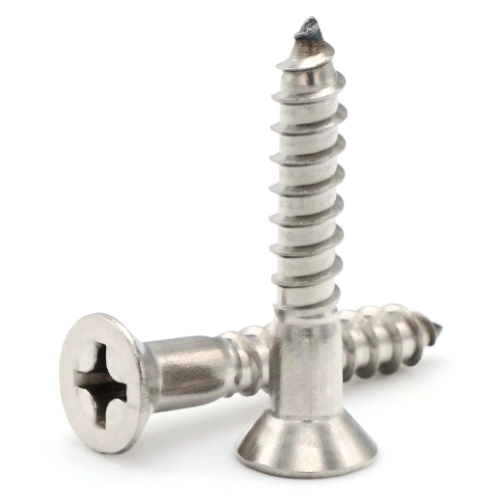
Deck & Wood Screws
Screws with a smooth or partially threaded shank and tapered point designed to pull tight into wood for decks, framing, and general carpentry.
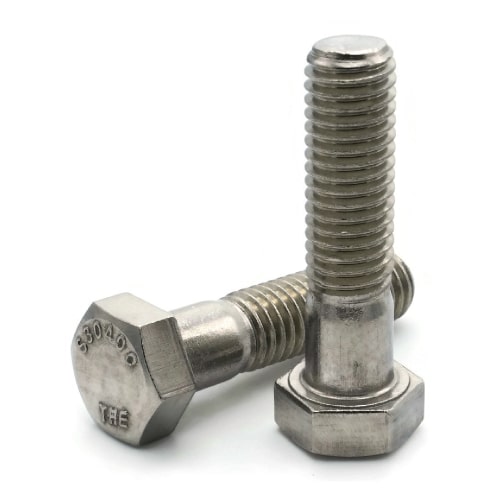
Hex Bolts
Externally threaded fasteners with a six-sided head, driven with a wrench or socket for use with a nut or in a tapped hole.
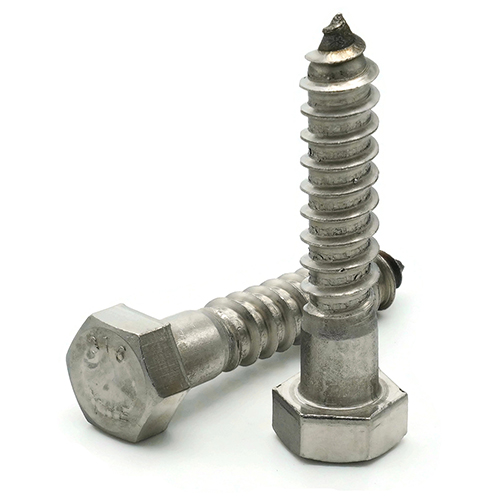
Hex Lag Bolts
Heavy-duty wood screws with a hex head and coarse threads, driven with a wrench or socket to fasten wood to wood or wood to masonry with an anchor.
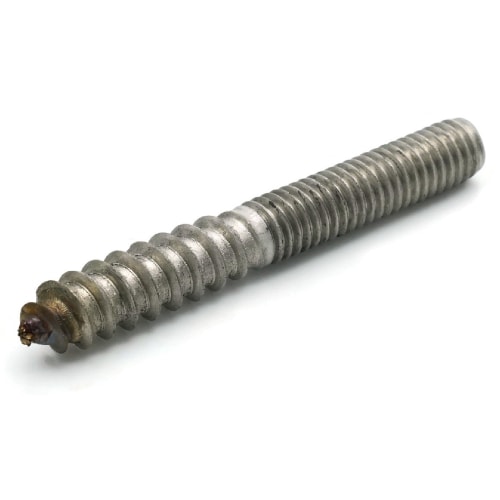
Hanger Bolts & Dowel Screws
Double-ended fasteners that add an external machine or wood thread to a wood application for concealed, stud-style connections.
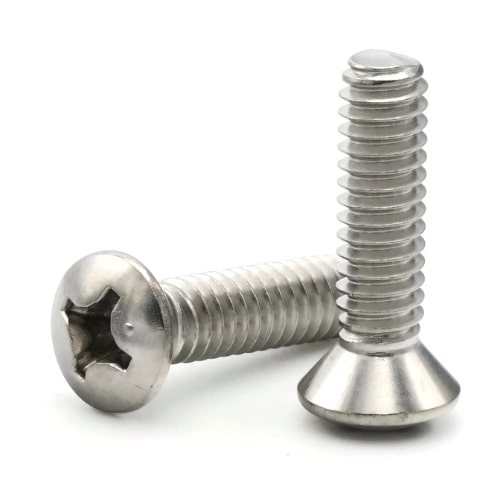
Machine Screws
Screws with uniform machine threads and a blunt end for use with a nut or in a tapped hole, common in machinery, electronics, and metal assemblies.
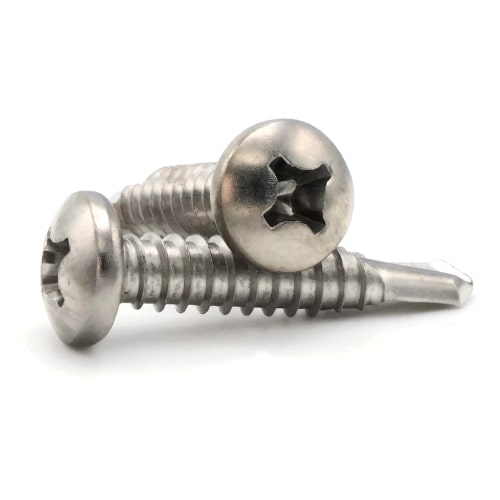
Self Tapping Screws & Self Drilling Sheet Metal Screws
Screws with sharp, high threads that cut their own mating threads in sheet metal, plastic, and similar materials, some with a drill point to pierce without a pilot hole.
-min.jpg?ts=1757453408 "Set Screws")
Set Screws
Headless machine-threaded screws driven with an internal wrench, used to lock a collar, gear, or knob against a shaft or in a tapped hole.
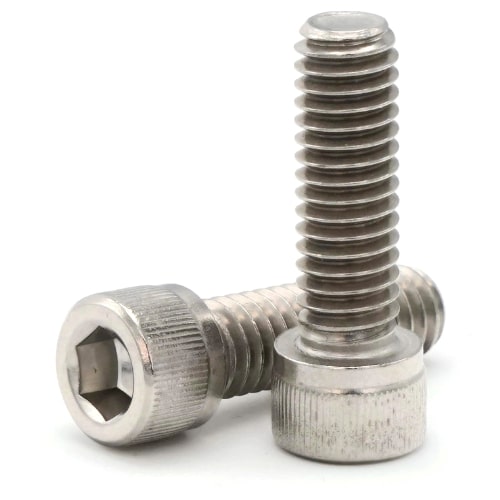
Socket Cap Screws
Machine screws with a cylindrical head and internal hex (Allen) drive that deliver high torque in a compact head, used in machinery and tooling.

Roofing Screws & Nails
Fasteners engineered for metal, wood, and membrane roofing, many with sealing washers and coatings that resist weather and corrosion.
.jpg?ts=1757453412 "Shoulder Bolts")
Shoulder Bolts
Bolts with a smooth, precise unthreaded shoulder between the head and threads, used as a shaft, pivot, or bearing surface for rotating parts.
.jpg?ts=1757453412 "Square Head Bolts")
Square Head Bolts
Bolts with a four-sided head that gives a wrench a strong grip, common in older machinery, farm equipment, and industrial applications.
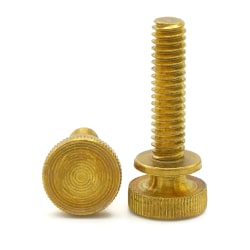
Thumb Screws
Screws with a flat or knurled head for hand tightening and loosening without tools, used where frequent adjustment is needed.
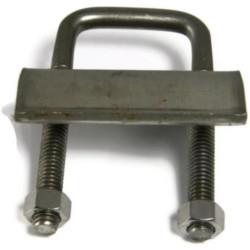
U-Bolts Beam Clamps
U-shaped bolts and clamp fittings that wrap around beams, pipe, or rod to support and secure them without drilling.
Common Types of Screws & Bolts
- Deck & Wood Screws – Coated or stainless for exterior lumber; sharp wood threads for pull-out resistance.
- Machine Screws – Uniform machine threads for tapped holes or nuts; pan, flat, button, and socket heads.
- Hex Head Bolts / Cap Screws – General assembly and structural use; available in SAE grades and metric property classes.
- Lag Bolts (Lag Screws) – Heavy-duty wood-to-wood or wood-to-masonry connections.
- Socket Head Cap Screws – Internal-hex drive for machinery, fixtures, and tight clearances.
- Set Screws – Headless screws that lock collars, pulleys, and shafts (cup, cone, flat, dog points).
- Roofing Screws – Self-sealing washers for metal roofing and siding.
- Hanger Bolts & Dowel Screws – Wood thread on one end, machine thread on the other for mounting studs and hardware.
Materials & Finishes
- Stainless Steel (304/18-8) – General corrosion resistance; 316 for marine/coastal or chemical splash.
- Carbon Steel, Zinc Plated – Economical indoor protection.
- Hot-Dip Galvanized – Thick zinc layer for harsh outdoor exposure and treated lumber hardware.
- Silicon Bronze & Brass – Non-magnetic, good corrosion resistance; common in marine/architectural work.
- Coated Exterior Screws – Polymer/ceramic coatings formulated for deck framing and outdoor projects.
Threads, Grades & Strength
- Coarse (UNC) vs. Fine (UNF) – Coarse assembles quickly and holds well in softer materials; fine offers higher tensile capacity and better adjustment in hard materials.
- SAE Grades – Grade 2 (general), Grade 5 (medium/high strength), Grade 8 (high strength). Metric equivalents: 8.8, 10.9, 12.9.
- Wood / Tapping Threads – Deep, spaced threads for timber and sheet metals; self-drilling points eliminate pre-drilling in thin metals.
Head & Drive Styles
- Head – Hex, socket (internal hex), pan, button, flat/countersunk, truss, flanged.
- Drive – Phillips, square, internal-hex (Allen), slotted, and star drive (generic). Choose a drive that matches your tools and access.
How to Choose the Right Fastener
- Define the joint – Nut-and-bolt clamp, tapped hole, or direct wood fastening.
- Match material to environment – Stainless or hot-dip galvanized for outdoors; coated deck screws for treated lumber; zinc plated for dry interior use.
- Select diameter & length – Diameter for strength and thread engagement; length to pass through materials and fully seat with washers if used.
- Pick thread & grade – Coarse vs. fine; choose the grade/property class that meets load requirements.
- Choose head & drive – Based on clearance, appearance, tool access, and needed clamping area.
Sizing & Fit
- Measuring length – From the bearing surface under the head to the tip (except countersunk heads, which measure overall).
- Thread pitch – Imperial (TPI) vs. metric (mm pitch). Ensure the nut or tapped hole matches.
- Pilot holes – Wood screws and lag bolts require a pilot sized near the root diameter to prevent splitting and ensure proper torque.
- Washers & spacers – Use flat and lock washers as specified to distribute load and help resist loosening.
Corrosion & Compatibility
- Avoid mixing dissimilar metals in wet or coastal environments (e.g., copper with plain steel) to reduce galvanic corrosion.
- For treated lumber, use hot-dip galvanized or stainless fasteners and hardware rated for the preservative chemistry.
Installation Tips
- Use the correct driver size; apply steady pressure to prevent cam-out and head damage.
- Tighten in stages and in a cross pattern where applicable to seat parts evenly.
- Verify torque or snug-tight requirements from your design/spec; re-check high-vibration joints with mechanical locking where needed.
Practical Selection Examples
Decking & Outdoor Framing
Coated deck screws or stainless (304 for most builds, 316 near salt or pool water). Lag bolts for ledger and heavy connections where code allows.
Machinery & Fixtures
Socket head cap screws (metric 12.9 or SAE Grade 8 when specified) with fine threads in hard materials; set screws for collars and pulleys.
Roofing & Exterior Panels
Self-drilling roofing screws with sealing washers sized to the panel and purlin thickness; hot-dip galvanized or stainless in corrosive atmospheres.