

Hanger Bolts and Dowel Screws
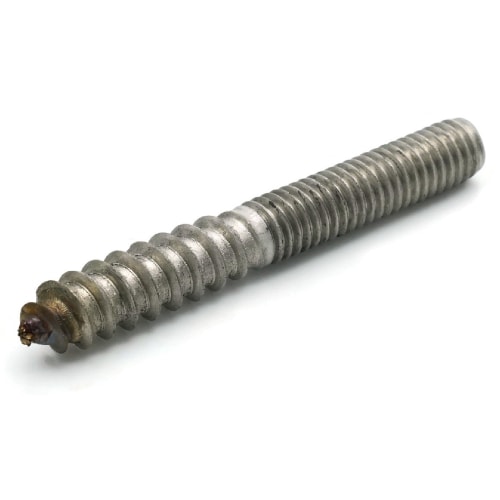
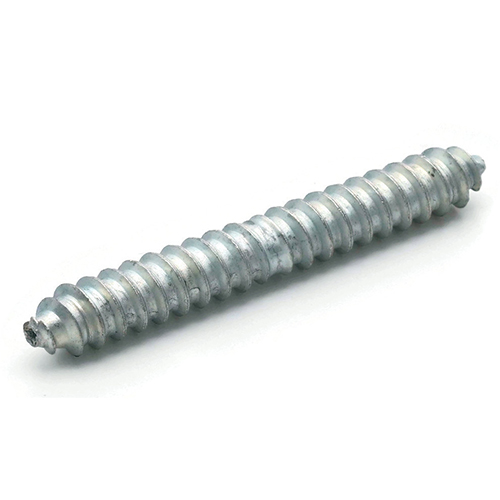
What Are Hanger Bolts and Dowel Screws? Hanger bolts and dowel screws are double ended threaded fasteners designed to create strong, concealed connections in wood and wood based materials. While both fasteners feature threads on each end, they are engineered for different applications. Hanger bolts combine wood screw threads on one end with machine screw threads on the other, allowing wood components to be securely attached to metal hardware using nuts, washers, or threaded brackets. Dowel screws, also known as double ended wood screws or double ended lag screws, feature wood screw threads on both ends and are used to create hidden wood to wood joints without exposing a fastener head. These versatile fasteners are commonly used in furniture manufacturing, cabinetry, woodworking, railing systems, sign mounting, shelving, architectural millwork, and other applications where a clean appearance and strong connection are important. Available in a variety of diameters, lengths, materials, and thread configurations, hanger bolts and dowel screws provide reliable fastening solutions for both residential and commercial projects. Hanger Bolts Hanger bolts feature wood threads on one end and machine threads on the other, making them ideal for attaching wood to metal components, mounting hardware to wooden surfaces, or creating a removable threaded stud in wood. Dowel Screws Dowel screws feature wood screw threads on both ends and are designed to permanently join two pieces of wood together while keeping the fastener completely hidden from view, resulting in a clean, professional finished appearance.
Hanger Bolts & Dowel Screws
Videos
Play videoShop Related Categories
.jpg?ts=1755907166)
What Are Hanger Bolts & Dowel Screws?
Hanger bolts are double-ended fasteners with wood-screw threads on one end and machine-screw threads on the other. They install into wood and provide a machine-thread stud for nuts, washers, brackets, and metal hardware. Dowel screws (double-ended lag screws) have wood-screw threads on both ends and are used to join wood-to-wood with a concealed connection.
What Are They Used For?
- Mounting legs and hardware on furniture, cabinetry, and architectural millwork.
- Suspending pipe straps, electrical/AV fixtures, and sign brackets from wood members.
- Joining wood components end-to-end (dowel screws) without a visible bolt head or nut.
- Wood-to-metal interfaces where the wood side needs a stud and the metal side is secured with a nut/washer.
Benefits of Hanger Bolts & Dowel Screws
- Clean, headless connection: no bolt head showing on finished faces.
- Versatile joining: mix wood, metal hardware, and accessories using the machine-thread end (hanger bolts) or two wood members (dowel screws).
- Field friendly: install with common tools using jam-nuts, driver sockets, or specialty drivers.
Sizes & Threads
Hanger bolts are specified by their machine-thread size × overall length (e.g., 1/4"-20 × 3" or M8-1.25 × 60 mm). Common machine threads are UNC (1/4"-20, 5/16"-18, 3/8"-16) and metric (M6, M8, M10). Dowel screws are specified by diameter × length with wood threads on both ends. Choose a length that provides adequate embedment in the wood member and enough projection for nuts/washers or the mating part.
Materials & Finishes
- 18-8 / 304 Stainless: general outdoor corrosion resistance.
- 316 Stainless: enhanced resistance for coastal/marine or chemical exposure (availability varies by size).
- Zinc-Plated Steel: economical choice for dry interior use.
Installation Basics
- Layout & pilot holes: Mark centers accurately. Drill a pilot hole in the wood sized near the fastener’s root (minor) diameter; increase slightly in dense hardwoods. For through-mounted parts, drill a clearance hole in the fixture.
- Driving methods:
- Hanger bolts: Thread two nuts onto the machine end and jam them together, then drive the wood-thread end into the pilot using a wrench; or use a dedicated hanger-bolt driver socket.
- Dowel screws: Use a dowel-screw driver, locking pliers with soft jaws, or a clamp-style driver to avoid marring threads. Install into the first piece, then align and drive into the second pilot.
- Hardware on the machine end (hanger bolts): Secure brackets with flat/lock washers and matching nuts. For frequent removal, consider using a threaded insert or T-nut in the mating part.
- Do not overtighten: Excess torque can strip wood fibers. If withdrawal resistance is critical, follow engineered guidance for embedment, edge/end distances, and species.
Note: These fasteners are intended for wood. They are not driven directly into concrete or metal; use appropriate anchors, inserts, or nuts as required.
Related Hardware
- Hex nuts, jam nuts, flange nuts, and washers (to match machine thread and material)
- Threaded inserts for wood, T-nuts, and coupling nuts (for extensions)
- Pipe/strap clamps, angle brackets, and hangers that mount to the machine-thread end