

Aluminum
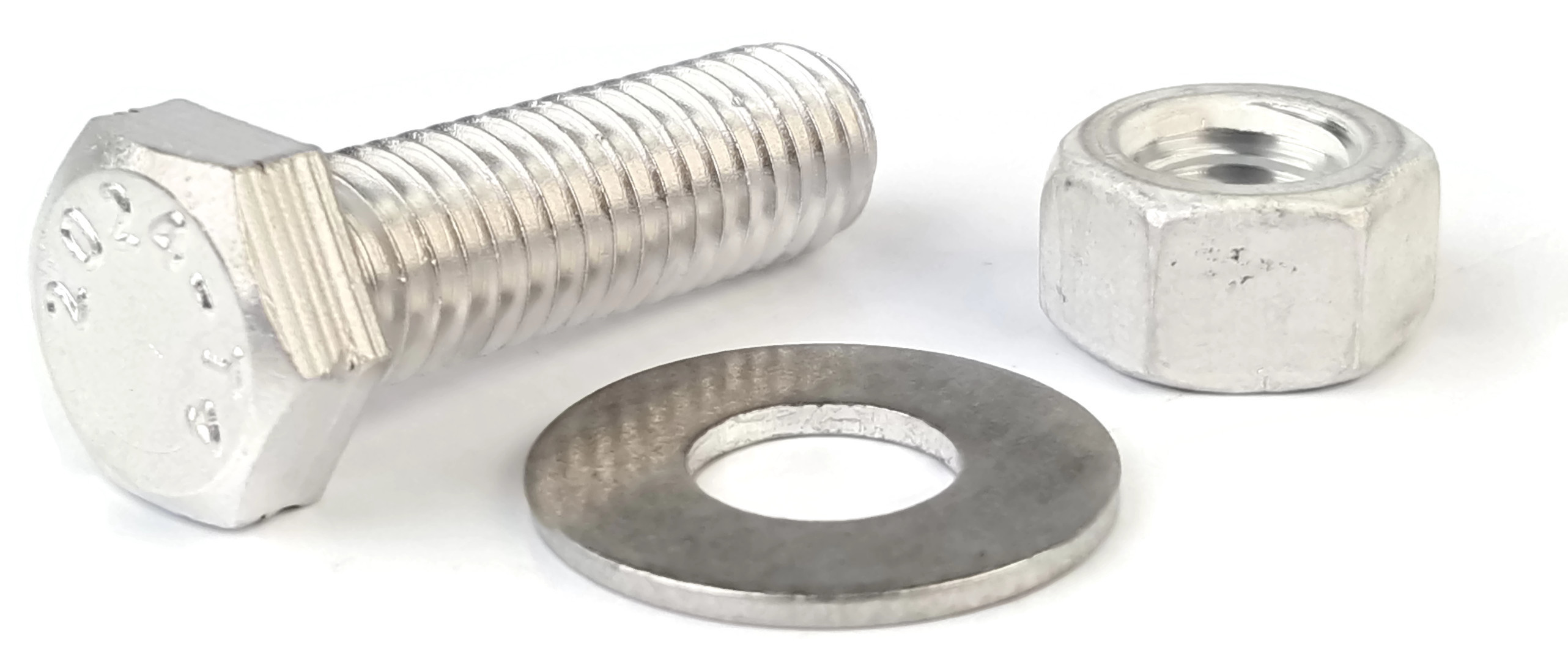
What are aluminum fasteners? Aluminum fasteners are lightweight fasteners, about a third the weight of steel, that resist corrosion through the thin self-healing oxide layer aluminum forms in air. They are non-magnetic, non-sparking, and highly conductive, and their biggest advantage is matching aluminum parts: a same-metal joint avoids the galvanic corrosion you get when dissimilar metals meet in moisture. Aluminum is softer and lower in strength than steel, so it is chosen for weight, corrosion match, and its special properties rather than raw load. AlbanyCountyFasteners.com stocks screws, bolts, nuts, rivets, threaded rod, studs, and kits in aluminum.
Aluminum
-min.jpg?ts=1757453418 "Rivets, Aluminum")
Rivets, Aluminum
Lightweight aluminum rivets for permanent one-sided joints in aluminum sheet and panel. Full range of styles.
-min.jpg?ts=1757453418 "Nuts, Aluminum")
Nuts, Aluminum
Lightweight aluminum nuts that match aluminum joints. Hex finish, nylon lock and coupling styles.
-min.jpg?ts=1761849484 "Screws & Bolts, Aluminum")
Screws & Bolts, Aluminum
Lightweight aluminum screws and bolts that match aluminum parts and resist corrosion. Includes hex cap screws.
-min.png?ts=1757453418 "Washers, Aluminum")
Threaded Rod, Aluminum
Fully threaded aluminum rod cut to length for custom aluminum fasteners. Lightweight and corrosion resistant.

Threaded Studs, Aluminum
Aluminum studs threaded for fixed two-end connections in aluminum. Lightweight and corrosion resistant.

Fastener Kits, Aluminum
Assortment kits of aluminum fasteners in a range of sizes, boxed and ready to grab.
When aluminum is the right fastener
The strongest reason to choose an aluminum fastener is that you are fastening aluminum. When two dissimilar metals meet in the presence of moisture they form a galvanic couple, and the more active metal corrodes; aluminum is quite active, so a steel or stainless fastener in an aluminum part sets up exactly that cell. Worse is the reverse, an aluminum fastener holding steel or stainless parts, because then the small fastener is the anode against a large cathode and it corrodes fast. Matching aluminum fasteners to aluminum parts sidesteps the whole problem: same metal, no galvanic difference, no preferential corrosion. Beyond the corrosion match, aluminum brings its own advantages, light weight where every gram counts, non-magnetic behaviour for electronics and instrumentation, non-sparking safety around flammable atmospheres, and good electrical and thermal conductivity. The trade is strength: aluminum is softer and weaker than steel, so it is not the choice for high-load structural joints, and it needs care not to strip on overtightening. Chosen for the right reasons, it is the correct fastener where steel would be wrong.
Why choose aluminum fasteners
- Lightweight, roughly one third the weight of steel
- Naturally corrosion resistant through a self-healing oxide layer
- Matches aluminum parts to avoid galvanic corrosion
- Non-magnetic and non-sparking for sensitive and hazardous work
- Good electrical and thermal conductivity
What we stock
- Screws and bolts including hex cap screws
- Nuts in hex finish, nylon lock, and coupling patterns
- Rivets in a full range of styles including tri-fold
- Threaded rod and threaded studs for custom-length aluminum fastening
- Fastener kits assembling aluminum hardware by the range
Common applications
- Fastening aluminum frames, panels, and extrusions
- Weight-critical assemblies in transport and aerospace-adjacent work
- Non-magnetic electronics and instrumentation
- Non-sparking work near flammable atmospheres
- Marine and outdoor aluminum structures
- Any joint where matching the aluminum base metal matters
Aluminum Fastener FAQs
Why use aluminum fasteners instead of stainless?
Mainly to match aluminum parts and avoid galvanic corrosion, and for aluminum's light weight, non-magnetic, and non-sparking properties. Stainless is stronger, but in an aluminum joint it can drive galvanic corrosion of the aluminum unless isolated.
Can I put an aluminum fastener into steel parts?
It is not advisable. An aluminum fastener holding steel or stainless parts is a small anode against a large cathode, so the fastener corrodes quickly. Aluminum fasteners belong in aluminum, not the reverse.
How strong are aluminum fasteners?
Softer and lower in strength than steel or stainless, so they suit light and moderate loads, not high-strength structural joints. Choose aluminum for weight, corrosion match, and special properties rather than maximum load.
Do aluminum fasteners corrode?
Aluminum forms a self-healing oxide layer that resists general corrosion well. Its vulnerability is galvanic: paired with more noble metals in moisture it corrodes, which is why matching it to aluminum parts is ideal.
Are they really non-magnetic and non-sparking?
Yes, aluminum is non-magnetic, useful around electronics and instruments, and non-sparking, useful near flammable atmospheres. These properties are common reasons to choose aluminum beyond weight and corrosion.
Will aluminum fasteners strip easily?
Being softer, aluminum threads are easier to strip if overtightened, so use correct torque and avoid overdriving. In softer joints, thread care and correct tool speed protect the threads.