

Flat Washers, Marine Grade
-min.png?ts=1757453408 "Flat Washers, Marine Grade")
Flat Washers, Marine Grade
.jpg?ts=1755907166 "Standard Flat Washers, Marine Grade")
Standard Flat Washers, Marine Grade
Wider washer with a larger hole to spread load on soft or rough material. In 316 stainless, bronze and metric.
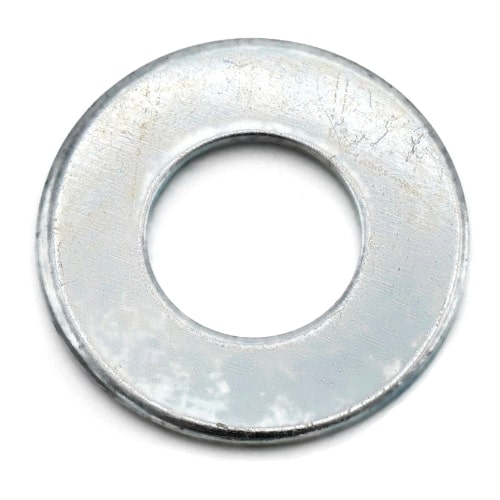
SAE Flat Washers, Marine Grade
Smaller, tighter-fitting flat washer for a neat seat on machined connections. In 316 stainless.
Standard or SAE flat washer?
They look alike and are not quite the same, and the difference matters when you are spreading load. An SAE flat washer has a smaller outside diameter and hole for its bolt size, giving a tighter fit and a neater look on machined connections. A standard, sometimes called USS, flat washer is wider with a larger hole, spreading load over more area and tolerating a looser fit, which suits softer or rougher material. On a marine joint into timber or soft alloy, the wider standard washer spreads the clamp and resists pull-through; on a precise metal fitting, the SAE washer sits neatly and centers the bolt. Both come in 316 so the washer never becomes the corroding weak link.
Why choose marine flat washers
- Spread clamping load and protect the surface under the fastener
- 316 stainless resists the chloride pitting that destroys plated washers
- Standard and SAE patterns for load spread or neat fit
- Silicon bronze option for wood and traditional joints
- Metric 316 (A4) option for metric assemblies
Common applications
- Under nuts and bolt heads in marine hardware
- Spreading load on timber, alloy, and soft material
- Boat fittings, railings, and brackets
- Dock and pier connections
- Metric marine equipment (A4)
- Any load-spreading washer in salt exposure
Marine Flat Washer FAQs
What is the difference between standard and SAE flat washers?
SAE washers are smaller in outside diameter and hole for a given bolt, for a tighter fit and neat look. Standard (USS) washers are wider with a larger hole, spreading load over more area. Choose SAE for precise metal joints, standard for soft material and load spread.
Why does a flat washer matter in a marine joint?
It spreads clamp load and protects the surface, and in salt it must not corrode, or it streaks the joint and becomes the weak link. 316 keeps the washer as corrosion resistant as the fastener it serves.
When should I use silicon bronze flat washers?
For wooden construction and to match a bronze fastener, keeping the joint galvanically consistent. Bronze resists saltwater corrosion and suits traditional marine work.
Can a flat washer stop a fastener loosening?
No, a flat washer spreads load but does not lock. To resist vibration loosening, add a lock washer or use a locking nut. The flat washer and lock washer often work together in one joint.
Do I need a washer under both the head and the nut?
Often yes, especially into soft material, so both bearing surfaces are protected and load is spread at each end. On hard, machined faces a washer may only be needed where the surface must be protected or the hole spanned.
Is the metric option the same grade?
Yes, metric flat washers are 316-equivalent A4 stainless, matching the corrosion resistance of the inch 316 option. Only the sizing standard differs.