

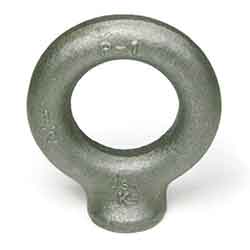
Pad Eyes
What are pad eyes? Pad eyes are flat steel plates with a hole, welded to a surface to create a permanent attachment point for rigging. A D-shackle or sling connects through the hole, giving a strong anchor for lifting, tie-downs, and securing on equipment, structures, and marine vessels.
How is a pad eye different from an eye bolt?
Pad eyes serve a similar function to eye bolts and eye nuts, but instead of threading onto a stud or into a tapped hole, a pad eye is welded in place to create a permanent fastening point. That makes it ideal where you want a fixed, robust attachment that will not loosen, such as farm machinery, trucks, steel-hulled boats, and material handling equipment. The plate has a hole, often with a radius on one side, that a D-shackle or sling connects through, and cheek plates can reinforce the hole. Because pad eyes are welded structural items, weld quality and load rating are critical, so use proper welding procedures and confirm the intended capacity for the application. Forged carbon steel gives strength and excellent welding qualities.
Why choose pad eyes
- Permanent attachment: welded in place for a fixed anchor point.
- Shackle ready: hole accepts a D-shackle or sling.
- Strong and weldable: forged carbon steel welds cleanly.
- Versatile: for lifting, tie-downs, and securing.
Common applications for pad eyes
- Welded lifting and rigging points
- Tie-downs on trucks and trailers
- Marine vessels and deck hardware
- Machinery and material handling equipment
For threaded lifting points, see eye nuts, and browse every option on the main lifting hardware category.
Pad Eyes FAQ
How is a pad eye attached?
It is welded to the surface to create a permanent attachment point, unlike eye bolts and eye nuts that thread onto a bolt or stud.
What connects to a pad eye?
A D-shackle or sling connects through the hole in the plate, providing the link to your rigging.
Does weld quality matter?
Yes. Pad eyes are welded structural items, so proper welding procedures and confirming the load rating are critical for safe use.