

Stainless Steel Pins
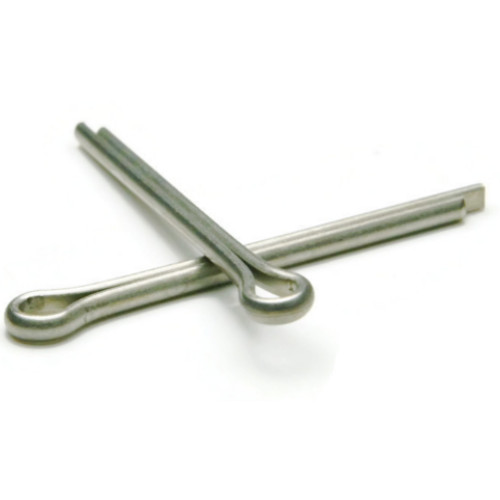
What are stainless steel pins? Stainless steel pins are corrosion-resistant fasteners used to align, pivot, or lock parts together without threads. Made from 18-8 or 316 stainless, they resist rust in wet, humid, and outdoor conditions where a plated pin would seize or corrode in place.
Pins, Stainless Steel
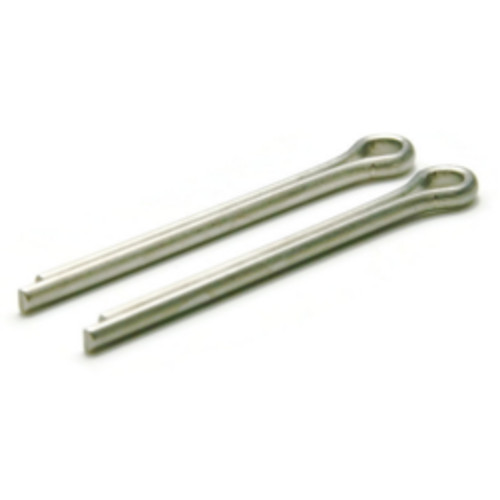
Stainless Steel Cotter Pins
Corrosion-resistant split pins in stainless that spread open to lock a nut, clevis, or shaft and keep it from backing off.

Stainless Steel Dowel Pins
Precision-ground solid pins pressed into matching holes to align two parts accurately and carry shear load.
Choosing between cotter pins and dowel pins
The two main pin styles do different jobs. Cotter pins are split and bendable, pushed through a hole and spread open to keep a nut or clevis from backing off. Dowel pins are solid and precision-ground, pressed into matching holes to align two parts and carry shear load. Pick the cotter pin for a removable safety lock and the dowel pin for accurate, fixed alignment. Stainless keeps both free of rust so they stay easy to remove later.
Why choose stainless steel pins
- Corrosion resistance: will not seize or rust in wet and outdoor use.
- Clean removal: cotter pins stay bendable and dowel pins slide free.
- Multiple styles: split cotter pins and precision dowel pins.
- Grade options: 18-8 for general use, 316 for salt and chloride exposure.
Common applications for stainless steel pins
- Securing castle and slotted nuts (cotter pins)
- Aligning machine and tooling parts (dowel pins)
- Clevis, linkage, and equipment connections
- Marine and outdoor assemblies (use 316)
Stainless Steel Pins FAQ
What is the difference between a cotter pin and a dowel pin?
A cotter pin is a split pin that spreads open to lock a nut or clevis in place. A dowel pin is a solid, precision pin pressed into a hole to align parts and carry shear.
Are stainless dowel pins precision ground?
Yes. Dowel pins are ground to a close diameter tolerance so they press into a matching hole for accurate alignment.
Can I reuse a stainless cotter pin?
It is best to use a fresh cotter pin each time. Bending fatigues the metal, and a new pin ensures a reliable lock.