

Why Choose Rivet Kits?
Rivet kits are useful when you need multiple rivet sizes or styles available in one organized assortment. Instead of ordering one rivet size at a time, a rivet kit keeps common sizes together so installers, maintenance teams, and fabricators can choose the right rivet for the thickness and material being fastened.
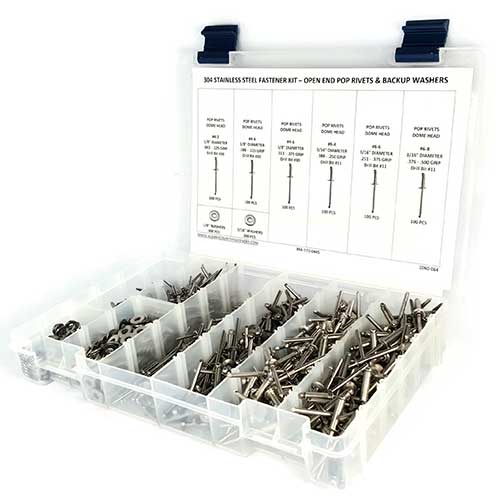
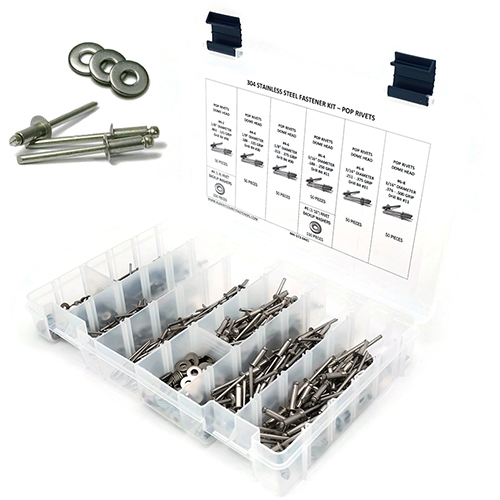
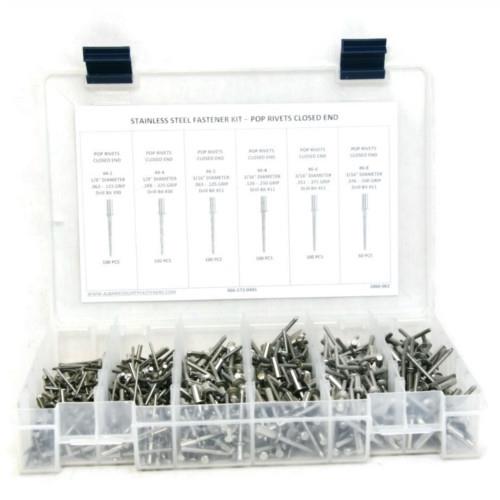
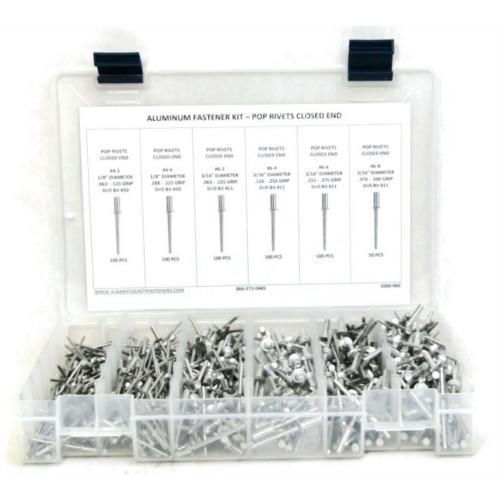
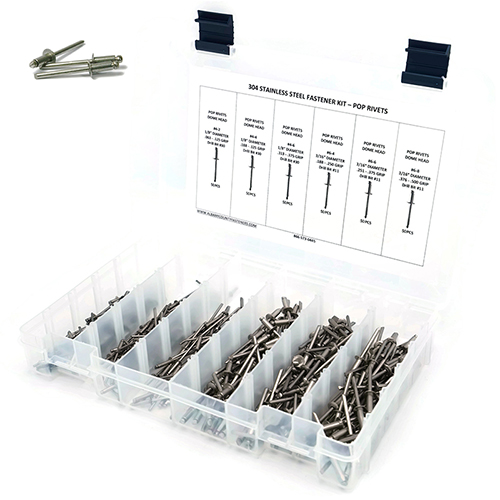
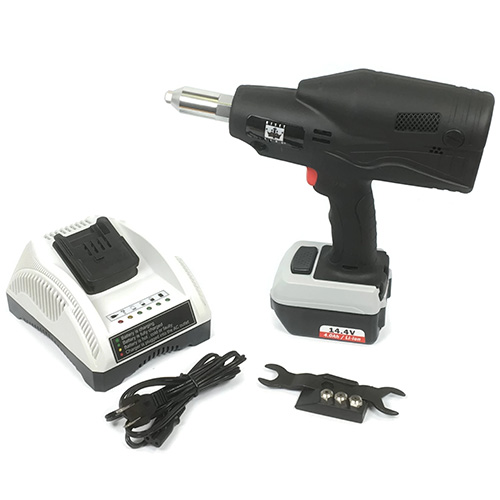
This category includes POP rivet assortment kits, rivet kits with washers, open end rivet kits, closed end rivet kits, large flange rivet kits, stainless steel 304 rivet kits, all-aluminum rivet kits, and rivet tool kit options. These kits are commonly selected for sheet metal fastening, panel repair, shop use, and general maintenance.
Common Uses for Rivet Kits
Rivet kits are commonly used for fastening sheet metal, panels, signs, brackets, guards, enclosures, trim, light fabrication parts, equipment covers, trailers, HVAC components, and repair panels.
They are especially helpful when the exact grip range or rivet length may vary from job to job. Keeping an assortment of rivet sizes on hand makes it easier to match the rivet diameter, grip range, material, and head style to the application.
Types of Rivet Kits Available
Rivet kits may include open end POP rivets, closed end POP rivets, large flange rivets, rivets with washers, stainless steel 304 rivets, all-aluminum rivets, or related rivet tools depending on the kit.
Choose the kit type based on the material being fastened, the grip range needed, the environment, and the finished appearance required. Open end rivets are common for general fastening, closed end rivets are useful when the application needs a sealed end, and large flange rivets are useful when a wider bearing surface is preferred.
POP Rivet Kits for Sheet Metal and Panel Fastening
POP rivet kits are commonly used for one-sided fastening where the back side of the workpiece is difficult or impossible to access. The rivet is installed with a rivet tool, which pulls the mandrel and forms the rivet body behind the material.
This makes POP rivets useful for sheet metal, signs, panels, brackets, trim, equipment covers, and many repair applications. Choose the rivet size and grip range based on the total thickness of the materials being joined.
Open End vs Closed End Rivet Kits
Open end rivet kits are commonly used for general-purpose blind riveting where a standard POP rivet is suitable. They are practical for many sheet metal, panel, bracket, and repair applications.
Closed end rivet kits are used when the back end of the rivet needs to be sealed after installation. They may be preferred for applications where reducing moisture, dirt, or air passage through the rivet body is important.
Large Flange Rivet Kits
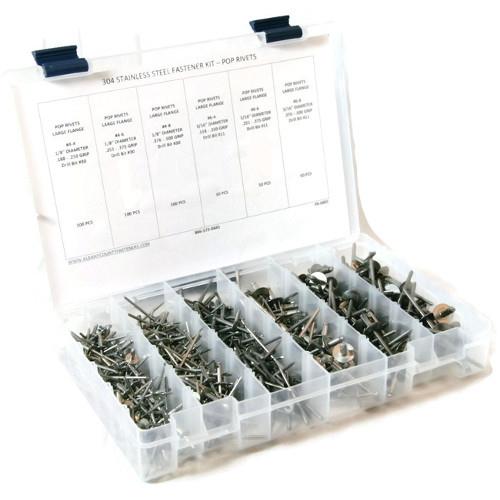
Large flange rivet kits include rivets with a wider head than standard dome head rivets. The larger flange helps spread the load over more surface area on the front side of the material.
Large flange rivets are often used with thin sheet metal, softer materials, oversized holes, panels, plastics, or applications where a larger bearing surface is useful. Match the rivet size, grip range, and material to the job before installation.
Rivet Kits with Washers
Rivet kits with washers are useful when the application needs additional bearing surface or support on one side of the joint. Rivet washers can help spread load and may be used in applications involving thin material, softer material, or oversized holes.
Choose a rivet and washer combination that matches the rivet diameter, material thickness, and project requirements. The washer should be compatible with the rivet size and the materials being fastened.
Stainless Steel vs Aluminum Rivet Kits
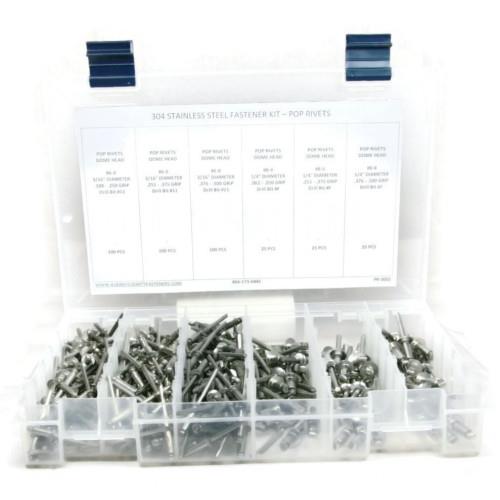
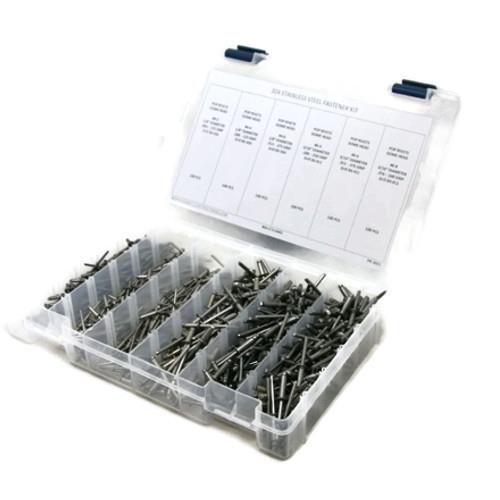
Stainless steel 304 rivet kits are commonly selected when strength, stainless material, or corrosion resistance is important. They are useful for many maintenance, repair, equipment, and outdoor applications where stainless steel is suitable.
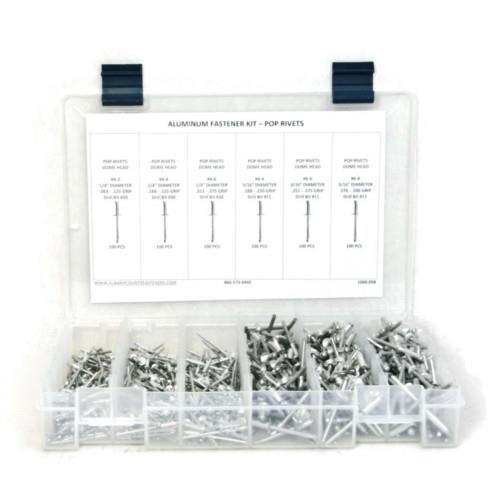
All-aluminum rivet kits are often selected when lightweight fastening, aluminum material compatibility, or easier installation is preferred. Choose the rivet material based on the materials being joined, exposure environment, corrosion concerns, and installation tool capacity.
Rivet Kits vs Buying Individual Rivets
Rivet kits are useful when you need a variety of common rivet sizes ready for different material thicknesses and repairs. They are practical for maintenance shops, service trucks, field work, and general repair areas where the exact rivet size may change by job.
Buying individual rivets may be the better choice when you already know the exact diameter, grip range, material, head style, and quantity needed for a specific project or repeat production work.
Rivet Tools and Rivet Gun Kits
Rivets require the correct installation tool. Hand riveters, cordless rivet tools, and other rivet guns are used to pull the mandrel and set the rivet properly.
Before choosing a rivet tool kit, confirm the rivet diameter capacity, rivet material compatibility, nosepiece sizes, access requirements, and how often the tool will be used. Stainless steel rivets may require more installation force than aluminum rivets.
How to Choose the Right Rivet Kit
Choose the rivet kit based on the rivet type, diameter range, grip range, material, head style, washer needs, tool compatibility, piece count, organizer style, and the materials being fastened.
If you need general shop or repair coverage, choose a POP rivet assortment with common sizes. If you need more corrosion resistance or stronger rivets, compare stainless steel 304 rivet kits. If you need lighter fastening or aluminum material compatibility, compare all-aluminum rivet kits.
Related Fastener Kit Categories
Browse related fastener kit categories to compare rivet kits, metric kits, nut and washer kits, socket screw kits, machine screw kits, sheet metal screw kits, self drilling screw kits, hex bolt kits, tamper proof kits, anchor kits, retaining ring kits, hurricane hardware kits, E-Z Coil kits, socket driver kits, measuring kits, and DIY kits.
- Fastener Assortment Kits
- Rivet Kits
- Metric Kits
- Nut and Washer Kits
- Socket Screw Kits
- Machine Screw Kits
- Sheet Metal Screw Kits
- Self Drilling Screw Kits
- Hex Bolt Kits
- Tamper Proof Kits
- Anchor Kits
- Measuring & Gauge Kits
Rivet Kit FAQs
What are rivet kits?
Rivet kits are organized assortments of rivets, POP rivets, rivet washers, or related riveting tools used for fastening sheet metal, panels, brackets, signs, equipment, and repair materials.
When should I use a rivet kit?
Use a rivet kit when you need multiple rivet sizes available for repairs, maintenance, fabrication, or panel fastening where the required grip range may vary by job.
What is the difference between open end and closed end rivet kits?
Open end rivet kits are used for general blind riveting. Closed end rivet kits are used when the installed rivet needs a sealed end to help reduce moisture, dirt, or air passage through the rivet body.
What are large flange rivet kits used for?
Large flange rivet kits are used when the application needs a wider bearing surface on the front side of the material. They are often useful for thin sheet metal, panels, plastics, softer materials, or oversized holes.
What is the difference between stainless steel and aluminum rivet kits?
Stainless steel rivet kits are often chosen for strength and corrosion resistance. Aluminum rivet kits are often chosen for lightweight fastening, aluminum material compatibility, and easier installation.
Do rivet kits require a special tool?
Yes. Blind rivets and POP rivets require a rivet tool or rivet gun to pull the mandrel and set the rivet properly.
Are rivet kits better than buying individual rivets?
Rivet kits are useful when you need multiple sizes on hand for varied repair and maintenance work. Individual rivets are better when you already know the exact diameter, grip range, material, head style, and quantity needed.
How do I choose the right rivet kit?
Choose the rivet kit based on the rivet type, diameter range, grip range, material, head style, washer needs, tool compatibility, piece count, organizer style, and the materials being fastened.