

Socket Cap Screws, Marine Grade
What are marine grade socket cap screws? Socket cap screws are high-strength screws with an internal hex drive, tightened with an Allen key to deliver strong, precise clamping force in a compact head that fits where a wrench cannot swing. In 316 stainless they bring that clean, high-clamp fastening to marine machinery, fittings, and precision assemblies, resisting salt corrosion so the socket stays usable for future service. AlbanyCountyFasteners.com stocks button head, standard socket head, and flat head styles in 316 stainless.
Socket Cap Screws, Marine Grade
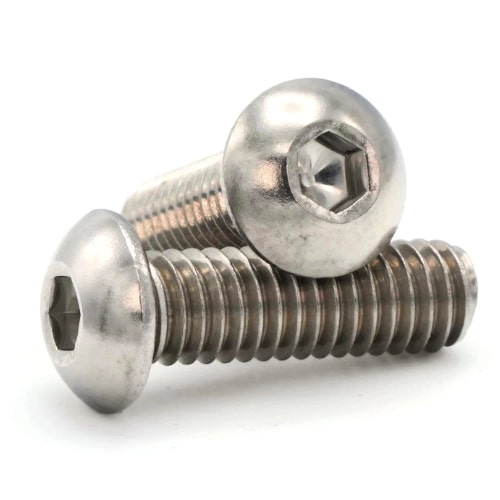
Button Head Socket Cap Screws, Marine Grade
Low rounded head with a hex socket, for a finished look where clearance is tight.
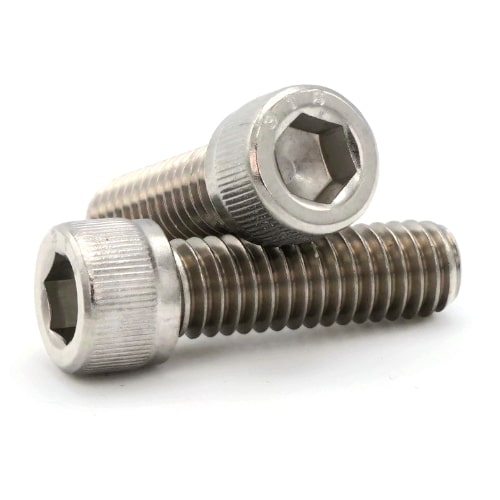
Standard Socket Head Cap Screws, Marine Grade
Cylindrical hex-drive head delivering the highest clamping force, in 316 stainless.
Which socket cap head?
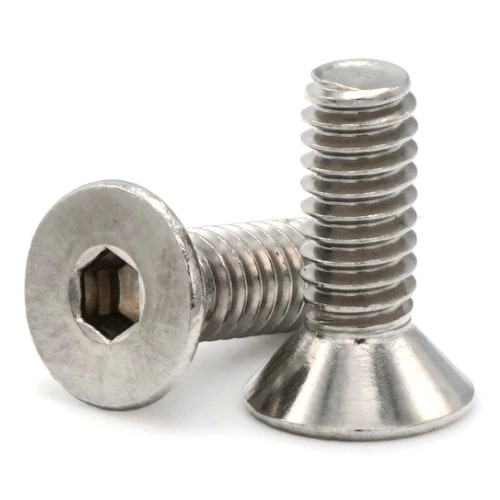
All three drive with an Allen key and all three resist salt in 316, so the choice is about how the head sits and how much clamp you need. The standard socket head cap screw is the strongest and highest-clamping of the three, its cylindrical head delivering full torque for structural and machine connections. The button head trades some strength for a low, rounded profile that finishes neatly and clears obstructions, ideal where the fastener is visible or space above it is tight. The flat head countersinks flush into a matching recess, leaving a smooth surface with nothing proud, which suits sliding parts and clean-faced fittings. The internal drive on all three is a marine advantage in itself: it seats below the head, so there is less exposed recess to hold salt water than an external head, and it drives cleanly in confined spaces aboard.
Why choose 316 stainless socket cap screws
- Internal hex drive delivers high, precise clamping force
- Compact head fits where a wrench cannot swing
- 316 stainless resists salt corrosion so the socket stays usable
- Button, standard, and flat heads for finish and strength needs
- Recessed drive holds less standing water than an external head
Common applications
- Marine machinery and mechanical assemblies
- Precision fittings and instrument mounts
- Boat hardware where a clean head finish matters
- Confined connections needing an Allen-key drive
- Sliding and flush-faced parts (flat head)
- Any high-clamp connection in a salt environment
Marine Socket Cap Screw FAQs
Which head style is strongest?
The standard socket head cap screw carries the highest strength and clamping force of the three. Button heads trade some capacity for a low profile, and flat heads countersink flush; choose the standard head where clamp load is the priority.
Why choose an internal drive for marine use?
The recessed hex seats below the head, so there is less open recess to trap salt water than on an external head, and it drives cleanly in tight spaces aboard. It also gives high torque in a compact head.
Will the socket corrode and become unusable?
That is exactly why 316 matters. A corroded socket packs with product and rounds out, and you cannot torque or release the screw. 316 resists the salt corrosion that causes this, keeping the drive serviceable.
When should I use a flat head socket cap screw?
Where the surface must be flush, such as sliding parts, mating faces, or a clean visible panel. It countersinks into a matching recess so nothing protrudes, combining a smooth finish with socket-screw strength.
How do I avoid galling on assembly?
Socket cap screws generate high clamp, and stainless galls under load, so use anti-seize, keep the threads clean, and tighten smoothly. A rounded or seized fastener defeats the purpose of the clean socket drive.
Can I use these below the waterline?
For deep, sealed, or permanently submerged joints, consider silicon bronze, since stainless can suffer crevice corrosion without oxygen. For topside machinery and fittings, 316 socket cap screws are well suited.