

Carriage, Plow and Timber Bolts
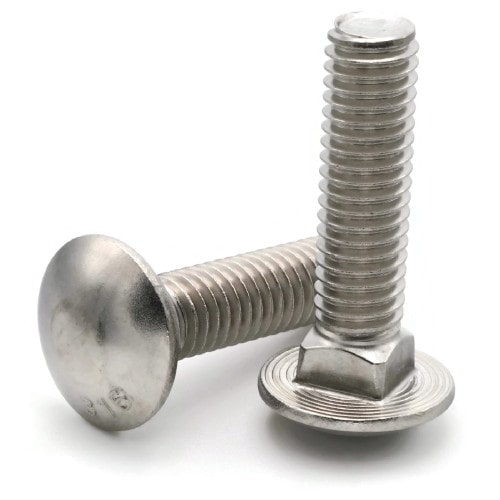
What are carriage, plow, and timber bolts? Carriage, plow and timber bolts are specialized fasteners designed for applications ranging from wood construction and structural timber connections to agricultural and heavy equipment. Carriage bolts feature a smooth domed head and square neck that helps prevent rotation during installation. Plow bolts use a countersunk head designed to sit flush in wear surfaces, while timber bolts feature an oversized domed head and anti-rotation fins or nibs for heavy wood connections. Choose from stainless steel, hot-dip galvanized, zinc-plated and plain steel options for indoor, outdoor and demanding applications.
Carriage, Plow & Timber Bolts
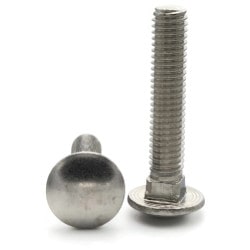
Carriage Bolts
Round, domed-head bolts with a square neck that grips wood or soft metal, letting you tighten from the nut side while leaving a smooth, tamper-resistant head.
.png?ts=1757453414 "Plow Bolts")
Plow Bolts
Flat, countersunk-head bolts with a square or ribbed neck that sit flush with the surface, used on plows, buckets, and heavy equipment exposed to abrasion.
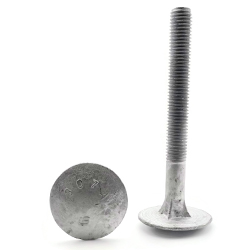
Timber Bolts
Large domed-head bolts with wide bearing surface and a square neck, used in heavy timber, dock, and landscape construction where the head resists pulling through wood.
Shop Related Categories
.jpg?ts=1757453428)
.jpg?ts=1755907166)


Carriage Bolts, Plow Bolts and Timber Bolts
Carriage bolts, plow bolts and timber bolts are designed for different fastening applications, from wood construction and structural timber connections to agricultural machinery and heavy equipment. Although these fasteners share anti-rotation features that help keep the bolt from turning during installation, their head designs, materials and intended applications are different.
Types of Carriage, Plow and Timber Bolts
Carriage Bolts
Carriage bolts feature a smooth, rounded head with a square neck directly beneath it. The square neck grips wood or fits into a corresponding opening to help prevent the bolt from spinning while the nut is tightened. They are commonly used for decks, docks, fences, framing, outdoor furniture, playground equipment and other wood-to-wood or wood-to-metal connections.
Plow Bolts
Plow bolts are heavy-duty fasteners designed primarily for agricultural machinery, construction equipment and replaceable wear parts. Unlike the domed head of a carriage bolt, a plow bolt uses a countersunk head designed to sit flush with the working surface. This helps reduce interference and exposure to abrasion on plows, cutting edges, blades and other ground-engaging equipment.
Timber Bolts
Timber bolts are designed for large wood and heavy timber connections. Their oversized rounded head provides a broad bearing surface, while fins, lugs or nibs beneath the head help prevent rotation as the nut is tightened. Timber bolts are commonly used in timber framing, bridges, utility structures, docks and other heavy wood construction.
Carriage Bolts vs. Plow Bolts vs. Timber Bolts
The primary differences between carriage, plow and timber bolts are their head design, anti-rotation features and intended application. Choosing the correct style helps provide proper seating, clamping and installation for the material being fastened.
- Carriage bolts – best for general wood construction and wood-to-metal fastening where a smooth domed head is preferred.
- Plow bolts – designed for heavy equipment and wear surfaces where the bolt head should sit flush and resist interference or abrasion.
- Timber bolts – designed for heavy wood connections where a large bearing surface and anti-rotation features are beneficial.
Common Applications
Carriage, plow and timber bolts are used across construction, agriculture, equipment repair, marine construction and structural wood applications. Selecting the correct bolt depends primarily on the material being fastened, required head profile and service environment.
- Decks, docks and fences – carriage bolts and corrosion-resistant finishes are commonly used for exposed wood connections.
- Heavy timber construction – timber bolts provide a broad bearing surface for large wood members.
- Agricultural machinery – plow bolts are used on plows, blades and replaceable wear components.
- Construction equipment – plow bolts provide a low-profile fastening solution for components exposed to abrasion.
- Bridges and utility structures – timber bolts are suited to large wood connections and heavy structural assemblies.
- Playground and outdoor structures – carriage bolts provide a smooth head without an exposed drive recess.
Materials and Finishes
The proper bolt material or finish depends on corrosion exposure, strength requirements and the surrounding materials. Albany County Fasteners carries carriage, plow and timber bolt options for indoor, outdoor and demanding applications.
Stainless Steel
Stainless steel carriage bolts provide corrosion resistance for outdoor, moisture-prone and exposed applications. Available options include 18-8 stainless steel and 316 stainless steel, with 316 commonly selected where greater resistance to coastal and chloride exposure is required.
Hot-Dip Galvanized Steel
Hot-dip galvanized bolts feature a protective zinc coating for outdoor and exposed applications. They are commonly used in decks, docks, timber construction, fencing and other exterior wood assemblies.
Zinc-Plated and Plain Steel
Zinc-plated steel provides economical corrosion protection for general-purpose applications. Plain steel options are also available in selected plow bolt grades for equipment and industrial applications where strength and application requirements take priority over a protective exterior finish.
How to Choose the Right Bolt
Start with the application and the way the bolt head needs to interact with the mating surface. For general wood construction, a carriage bolt is typically the most versatile choice. Choose a plow bolt for equipment and wear-part applications that require a countersunk head to sit flush with the working surface. Choose a timber bolt for heavy wood connections where a larger head bearing surface is needed.
Next, select the appropriate diameter, thread size and length for the joint. Finally, choose the material or finish based on environmental exposure, corrosion requirements and the other hardware used in the assembly.
Frequently Asked Questions About Carriage, Plow and Timber Bolts
What is the difference between a carriage bolt and a plow bolt?
A carriage bolt has a smooth domed head and square neck and is commonly used in wood construction. A plow bolt has a countersunk head designed to sit flush with the working surface and is commonly used on agricultural machinery, cutting edges and heavy equipment.
What is the difference between a carriage bolt and a timber bolt?
Both are commonly used for wood connections, but timber bolts typically have a much larger head that provides additional bearing surface. Timber bolts also use fins, lugs or nibs beneath the head to resist rotation and are commonly selected for heavier timber connections.
What are plow bolts used for?
Plow bolts are commonly used to fasten cutting edges, blades, wear plates and other replaceable components on agricultural, construction and earthmoving equipment. Their countersunk head allows the fastener to sit flush with the working surface.
What are timber bolts used for?
Timber bolts are used for heavy wood connections such as timber framing, bridges, docks, utility structures and other large wood assemblies. Their oversized head distributes the clamping load over a larger area of the wood.
Which bolts are best for outdoor wood construction?
Carriage and timber bolts are commonly used for outdoor wood construction. The appropriate material or finish depends on environmental exposure, but stainless steel and hot-dip galvanized steel are commonly selected when increased corrosion resistance is required.
Do carriage, plow and timber bolts require nuts?
Yes. These bolts use machine threads and are generally installed through the materials being joined and secured with a compatible nut on the opposite side. Washers may also be used depending on the bolt style and application.
Carriage Bolts
Carriage bolts feature a smooth domed head and a square neck directly beneath it. The square neck helps prevent the bolt from spinning while the nut is tightened, making carriage bolts a common choice for decks, fencing, framing, wood construction, and wood-to-metal connections.