

Self Tapping Screws
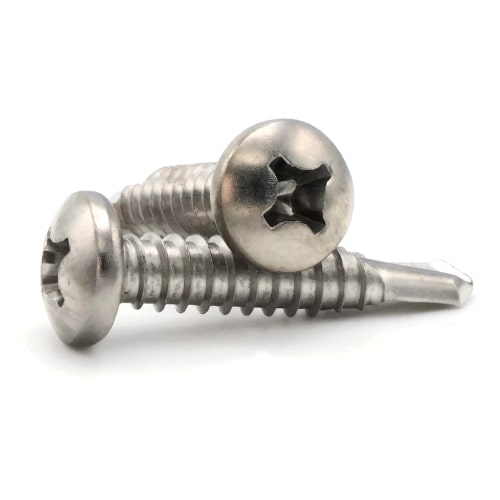
What are self tapping screws?
Self-tapping screws create or form their own mating threads as they are driven into a material. Unlike self-drilling screws, they do not have an integrated drill-point tip, so a properly sized pilot hole is commonly required, particularly in metal and harder materials.
Shop self tapping screws for sheet metal, plastic, wood and general assembly. Choose from Phillips, slotted, square, Torx®, hex washer and tamper-resistant drive styles in zinc-plated steel, 18-8 stainless steel, 316 stainless steel and other materials. Albany County Fasteners stocks self tapping sheet metal screws in a wide range of diameters, thread sizes, lengths, head styles and drive types, available by the piece or in bulk.
Self Tapping Screws & Self Drilling Sheet Metal Screws
.jpg?ts=1757453415 "Sheet Metal Screws")
Sheet Metal Screws
Fully threaded screws with sharp threads and a point that cut into sheet metal, plastic, or fiberglass, requiring a pilot or punched hole.
- Phillips Pan Head
- Phillips Flat Head
- Phillips Oval Head
- Phillips Truss Head
- Phillips Modified Truss Head
- Phillips Pancake Head
- Slotted Flat Head
- Slotted Round Head
- Slotted Hex Washer Head
- Square Drive Pan Head
- Square Drive Flat Head
- Square Drive Truss Head
- Button Head Torx Star Pin-In
- Flat Head Torx Star Pin In
- Flat Head Spanner
- Oval Head Spanner
- Pan Head Spanner
- Truss Head Spanner
- One Way
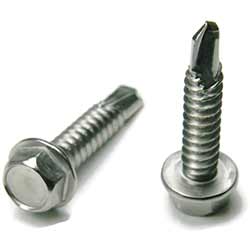
Self Drilling Screws
Screws with a built-in drill-point tip that bores its own hole and cuts threads in a single pass, eliminating pre-drilling in metal.
.webp?ts=1757453424 "Tamper Proof Drilling & Tapping Screws")
Tamper Proof Drilling & Tapping Screws
Self-drilling and self-tapping screws with security drives that resist removal by standard tools while still cutting their own hole or threads.
.jpg?ts=1757453424 "Drywall Screws")
Drywall Screws
Bugle-head construction screws with sharp threads designed to fasten drywall sheets to wood or metal studs without tearing the paper face.
Shop Related Categories

.jpg?ts=1755907166)

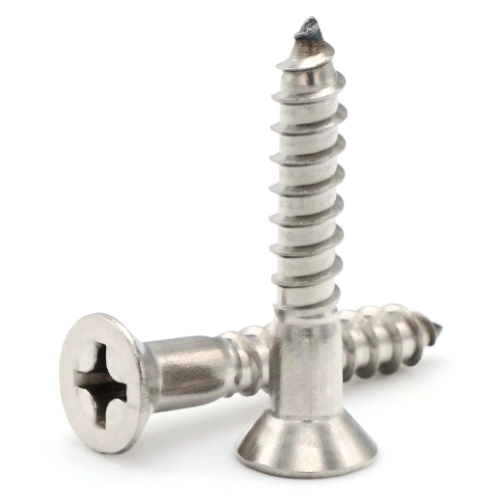
What Are Self Tapping Screws?
Self-tapping screws create their own mating threads in a pre-drilled pilot hole. They’re common for thin sheet metal, plastics (with the right point), and general assembly where pilots are easy to produce and head/drive choices need to be flexible. Unlike standard machine screws, self tapping screws eliminate the need to cut threads beforehand, making installation faster while providing a secure, vibration resistant connection.
What Are Self Drilling Screws?
Self-drilling screws include a drill point that makes the pilot and taps in one step, allowing them to drill their own pilot hole and cut mating threads in one operation. Also known as TEK® screws, they’re ideal for fastening to steel studs, roofing and metal building panels, or heavier gauges where skipping the pilot hole and pre-drilling saves time.
How to Install Self-Drilling TEK Screws
See self-drilling screws in action in our Fasteners 101 installation guide. Learn how TEK® screws drill and tap into metal in one operation and see proper installation technique for fastening metal.
Watch: Installing Self Drilling TEK Screws In Metal | Fasteners 101 →
What Are the Key Differences for Self Tapping & Self Drilling Screws?
- Hole prep — self-tapping needs a pilot; self-drilling makes its own.
- Speed — self-drilling reduces steps in metal; self-tapping can be faster when pilots are batch-drilled.
- Material fit — self-tapping suits thin sheet and plastics; self-drilling suits steel thicknesses matched to the drill-point number.
When Should You Use Self-Tapping & Self-Drilling Screws?
- Choose self-tapping for pre-drilled sheet, plastics, and mixed materials needing broad head/drive options.
- Choose self-drilling to fasten steel without pre-drilling—match the drill-point to total thickness.
What Head & Drive Options Fit Self Tapping & Self Drilling Screws?
- Pan / button / truss — wide bearing for thin sheet.
- Flat — sits flush in a countersink.
- Hex-washer — high-torque drive for framing, roofing, and panels.
- Drives — Phillips, combo, Torx/6-lobe, hex-socket, and security drives.
Materials & Finishes for Self-Tapping & Self-Drilling Screws
- Zinc-plated steel — economical protection for dry interiors.
- 18-8 / 304 stainless — dependable corrosion resistance for most outdoor/indoor use.
- 316 stainless — enhanced resistance for coastal or harsh environments.
- Black phosphate — low-glare indoor finish common on drywall screws.
How Do You Size & Specify Self-Tapping & Self-Drilling Screws?
Order by diameter × thread × length (e.g., #8-18 × 1″, #10-16 × 3/4″, M5-0.8 × 20 mm). Measure length from under the head (flat heads measured overall). For self-drillers, select the drill-point number rated for your material thickness.
Common Applications for Self-Tapping & Self-Drilling Screws
- Sheet-metal fabrication, HVAC, electrical, and appliance assembly
- Metal framing, roofing and wall panels, stitch fastening
- Drywall to wood or metal studs with bugle-head styles
- Public or utility installs using tamper-resistant drives
Installation Tips for Self-Tapping & Self-Drilling Screws
- Self-tapping — drill the recommended pilot and deburr for clean threads.
- Self-drilling — keep the driver square; let the drill point penetrate before applying full torque.
- Sealing — use sealing washers where exterior systems require them.
- Stainless care — consider compatible anti-seize to reduce thread galling.