

Marine Grade Nuts

What are marine grade nuts? Marine grade nuts are the threaded fasteners that pair with marine bolts and screws, made from materials that survive salt water and coastal air where ordinary steel and 304 corrode. The core grade is 316 stainless, which adds molybdenum to resist chloride pitting, with silicon bronze on select nuts for wooden and traditional work and metric 316 (A4) for metric assemblies. Matching the nut to the bolt keeps the whole joint corrosion consistent and avoids the galvanic problems of mixed metals. AlbanyCountyFasteners.com stocks finish, lock, cap, coupling, flange, and specialty nuts in marine materials.
Nuts, Marine Grade
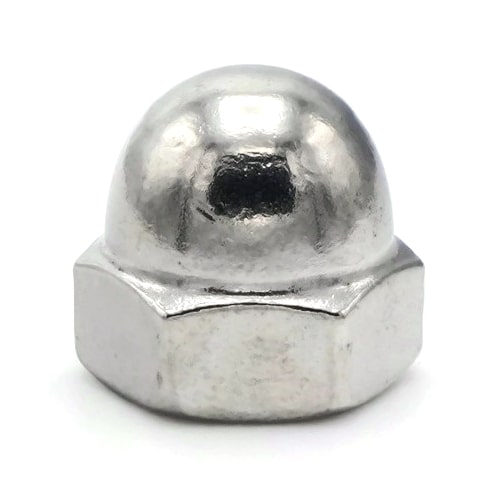
Cap Nuts, Marine Grade
Domed nuts that cover exposed thread for a finished look and no sharp edges. In 316 stainless.

Strut Channel Nuts, Marine Grade
Spring-loaded nuts that lock into strut channel anywhere along the slot. In 316 stainless.
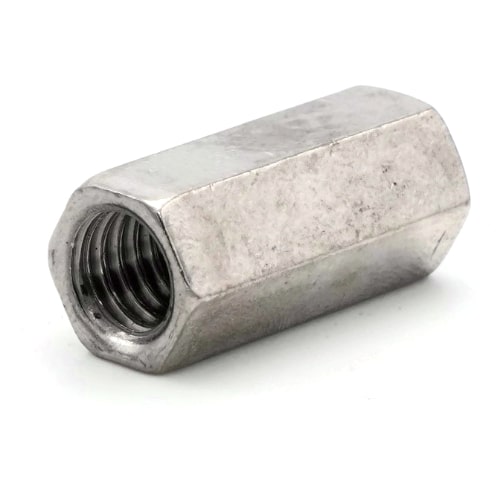
Coupling Nuts, Marine Grade
Long nuts that join two threaded rods or extend a thread, in marine-grade stainless.

Flange Nuts, Marine Grade
Built-in washer flange spreads load and resists loosening. In 316 stainless and metric A4.
.jpg?ts=1755906946 "Machine Screw Nuts, Marine Grade")
Machine Screw Nuts, Marine Grade
Small hex nuts sized for machine screws, in 316 stainless for marine assemblies.
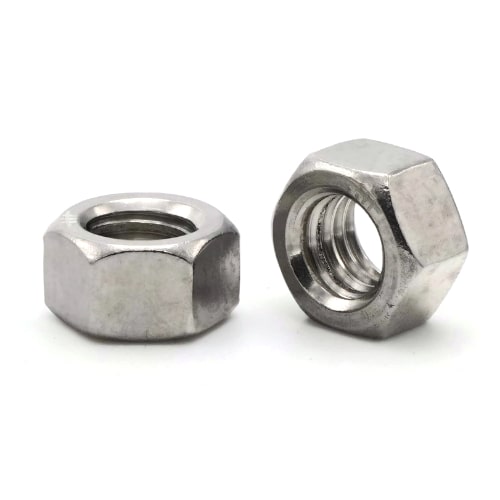
Hex Finish Nuts, Marine Grade
The standard everyday hex nut for general clamping. In 316 stainless, bronze and metric A4.
-min.jpg?ts=1757453418 "Heavy Hex Nuts, Marine Grade")
Heavy Hex Nuts, Marine Grade
Thicker, wider hex nuts for higher-strength structural connections. In 316 stainless.
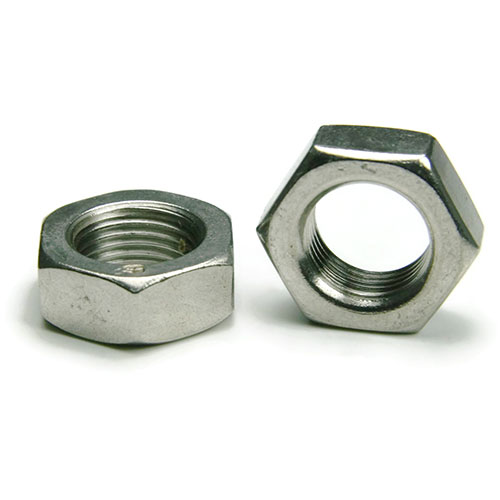
Hex Jam Nuts, Marine Grade
Thin hex nuts that lock against another nut or fit tight clearances. In 316 stainless, bronze and metric A4.

Nylon Insert Lock Nuts, Marine Grade
A nylon collar grips the thread to resist vibration loosening. In 316 stainless and metric A4.

Nylon Insert Jam Nuts, Marine Grade
Low-profile nylon lock nuts for tight clearances that still resist vibration, in marine stainless.

Two Way Lock Nuts, Marine Grade
All-metal lock nut that resists loosening without a nylon insert. In 316 stainless.
-min.jpg?ts=1757453419 "Square Nuts, Marine Grade")
Square Nuts, Marine Grade
Four-sided nuts that resist turning against a flat or seat in a channel. In 316 stainless.
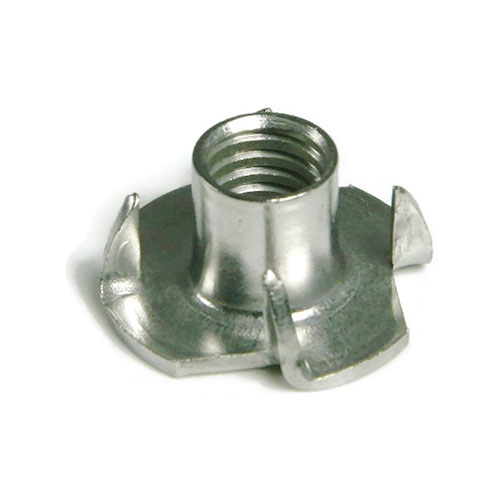
T-Nuts, Marine Grade
Prong or flanged nuts that embed into wood or panel to give a machine thread. In 316 stainless.
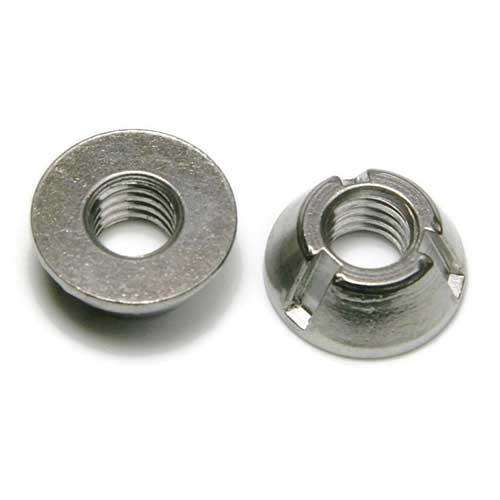
Tri-Groove Security Nuts, Marine Grade
Tamper-resistant nuts that need a special driver, in corrosion-resistant grades for exposed marine sites.

Wing Nuts, Marine Grade
Winged nuts for hand tightening and quick removal, no tools. In 316 stainless and metric A4.
Choosing the right nut for a marine joint
Nuts split into a few jobs, and marine work uses all of them. A plain hex finish nut is the everyday clamp, and its heavy hex and jam variants add strength or a thin locking profile. Lock nuts resist the vibration that boats and coastal equipment generate constantly, whether by a nylon insert or an all-metal two-way design. Cap nuts cover exposed thread for safety and a finished look, coupling nuts join threaded rod, and flange nuts bring a built-in washer face. Then there are the specialty nuts: square and T-nuts that seat into material, wing nuts for hand adjustment, and tamper-resistant security nuts for public installations. Across all of them the material decision is the same: 316 for the great majority of salt exposure, silicon bronze for wood and traditional joints, metric A4 where the assembly is metric. Whatever the type, the nut should match the fastener so the joint does not corrode from the nut outward.
Nut types we stock
- Hex finish, heavy hex, hex jam for general clamping, strength, and thin locking
- Nylon insert and two-way lock nuts to resist vibration loosening
- Cap, coupling, flange nuts for finishing, joining rod, and built-in bearing
- Square, T-nuts, wing nuts for seating into material and hand adjustment
- Machine screw and tri-groove security nuts for small threads and tamper resistance
Choosing the material
- 316 stainless for the majority of marine work, resisting chloride pitting
- Silicon bronze on select nuts for wood and traditional joints
- Metric 316 (A4) for metric assemblies, same corrosion resistance as 316
- Match the nut to the fastener to keep the joint galvanically consistent
Common applications
- Boat building, rigging, and fit-out
- Docks, piers, and waterfront structures
- Coastal construction and exposed hardware
- Marine railings, brackets, and equipment
- Metric marine machinery (A4)
- Any threaded connection in salt or spray
Marine Grade Nut FAQs
Why not use 304 stainless nuts?
304, or 18-8, lacks the molybdenum that gives 316 its chloride resistance, so it pits in salt. For anything near salt water, 316 is the marine grade. The cost difference is small against a seized or failed nut.
Should the nut match the bolt material?
Yes. Matching 316 to 316, or bronze to bronze, keeps the joint corrosion consistent and avoids galvanic couples between dissimilar metals in a wet salt environment. A mismatched nut becomes the corroding weak point.
When is silicon bronze the right nut?
For wooden construction and to match a bronze fastener. Bronze resists saltwater corrosion, including in sealed joints, and suits traditional marine work where it is the established metal.
Which lock nut should I choose?
Nylon insert nuts lock by a friction collar and suit general vibration duty within their temperature limit. Two-way all-metal lock nuts handle higher heat and reuse better. Choose by temperature, reuse, and how critical the joint is.
Is A4 the same as 316?
Yes. A4 is the metric designation for the 316-equivalent stainless, so corrosion resistance matches. The difference is the metric thread standard, not the material.
Do stainless nuts need anything special on assembly?
Stainless can gall on stainless under load, so use anti-seize, start threads by hand, and tighten smoothly. This keeps the nut removable and prevents the threads cold-welding.