


What Are Wood Drill Bits?
Wood drill bits are cutting tools designed specifically for drilling holes in lumber and other wood materials. Unlike general-purpose twist drills, purpose-built wood bits use cutting geometries designed to locate the hole accurately, cut wood fibers efficiently, and remove chips as the bit advances.
Different types of wood drill bits are designed for different jobs. Brad point drill bits prioritize accuracy and clean holes, spade drill bits quickly create larger-diameter holes, and ship auger drill bits are designed for deeper boring with efficient chip removal.
Types of Wood Drill Bits
Choosing the right drill bit for wood depends on the hole diameter, required depth, desired finish, and type of woodworking or construction application.
| Wood Drill Bit Type | Best For | Key Advantage |
|---|---|---|
| Brad Point Drill Bits | Furniture, cabinetry, doweling, and precision woodworking | Accurate starting and clean holes |
| Spade Drill Bits | Framing, electrical, plumbing, and general construction | Fast, larger-diameter holes |
| Ship Auger Drill Bits | Thick lumber, framing, timbers, and deep boring | Deep drilling and efficient chip removal |
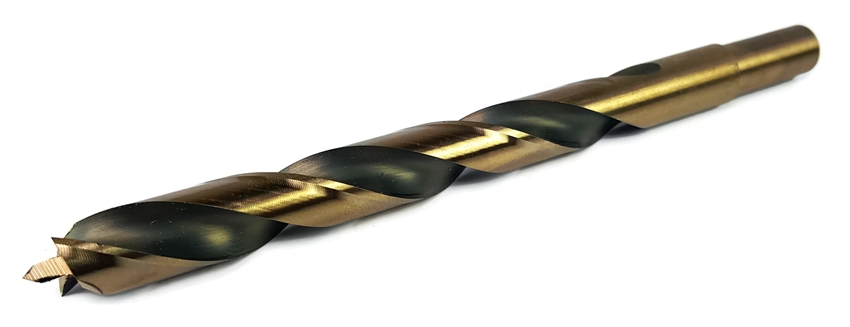
Brad Point Drill Bits for Wood
Brad point drill bits are designed for accurate drilling in wood. A pointed center helps locate the bit at the desired hole position and reduces wandering as drilling begins. Cutting edges around the perimeter help cut the wood fibers and produce a clean, controlled hole.
Brad point bits are a good choice when hole location and finish quality are important, including woodworking, furniture assembly, cabinetry, dowel holes, fixtures, and other precision wood-drilling applications.
When Should I Use a Brad Point Drill Bit?
Choose a brad point drill bit when you need a precisely positioned hole with clean edges. The center point makes these bits particularly useful for drilling accurately at marked locations where a conventional twist drill may be more likely to wander as it starts.
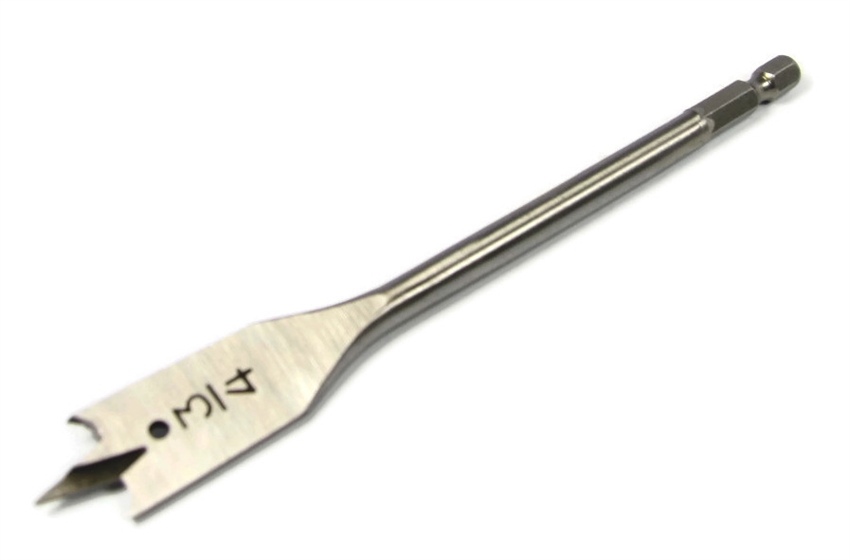
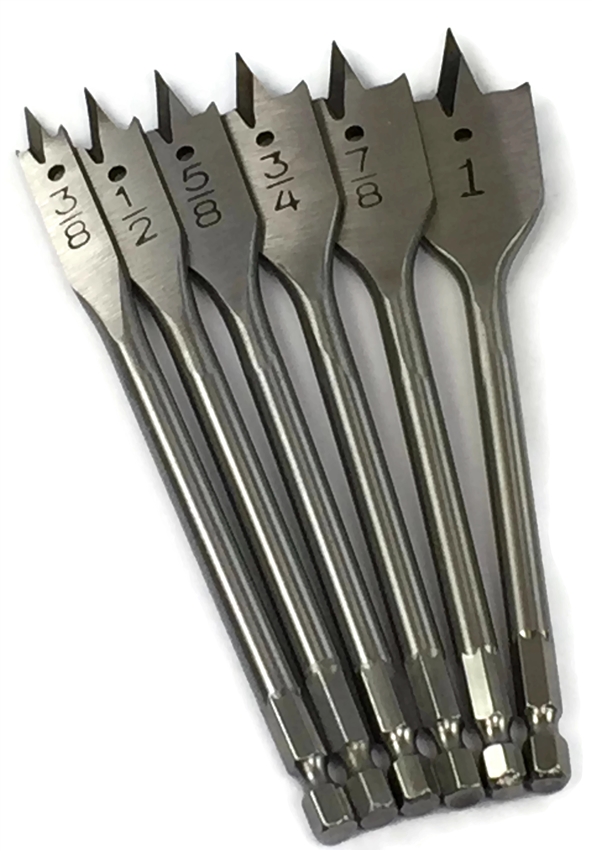
Spade Drill Bits for Wood
Spade drill bits, sometimes called paddle bits, are designed to drill larger-diameter holes quickly in wood. Their broad, flat cutting profile removes material rapidly, making them useful when drilling speed is more important than achieving the fine finish associated with precision woodworking bits.
Spade bits are commonly used for framing, construction, electrical work, plumbing, remodeling, and other applications that require holes through studs, joists, lumber, or wood panels.
When Should I Use a Spade Drill Bit?
Use a spade bit when you need to make a larger hole quickly and a precision-finished hole is not the primary requirement. They are especially useful for creating openings through framing lumber for wiring, cables, and other building applications.
Ship Auger Drill Bits for Wood
Ship auger drill bits are designed for deep drilling through wood and heavy lumber. Their spiral flute design helps carry wood chips out of the hole as drilling progresses, making them well suited for thick material and deeper holes.
Ship auger bits are commonly used in construction, framing, timber work, electrical installation, plumbing, and other applications where a deep, straight hole must be bored through substantial wood material.
When Should I Use a Ship Auger Drill Bit?
Choose a ship auger bit when drilling depth and chip removal are important. The long flute and auger-style geometry make these bits especially useful for boring through thick lumber, framing members, beams, and other deep wood sections.
Brad Point vs. Spade vs. Auger Drill Bits
Brad point, spade, and auger bits can all drill wood, but each is designed around a different priority.
- Choose a brad point drill bit when accuracy and clean hole edges are most important.
- Choose a spade drill bit when you need to create a larger hole quickly.
- Choose a ship auger drill bit when you need to drill deeper through thick lumber while efficiently removing chips.
For many shops and contractors, keeping more than one wood drill bit style available provides the flexibility to choose the correct cutting geometry for each application.
How to Choose the Right Drill Bit for Wood
Consider the required hole size, depth, finish quality, wood material, and drilling tool when selecting a wood drill bit.
- Determine the hole diameter: Select a bit that matches the required finished hole size.
- Determine the drilling depth: Make sure the bit provides enough usable length to complete the hole.
- Consider hole quality: Use a brad point bit when clean edges and accurate positioning are important.
- Consider drilling speed: Use a spade bit for fast larger-diameter holes where a fine finish is less critical.
- Consider chip removal: Use an auger-style bit for deeper holes where removing wood chips efficiently is important.
- Check the shank: Make sure the drill bit shank is compatible with the drill, driver, or chuck being used.
What Are the Best Drill Bits for Wood?
The best drill bit for wood depends on the type of hole you need to make rather than one bit style being best for every application.
For clean and accurately positioned holes, a brad point drill bit is often the preferred choice. For fast larger-diameter holes in framing and construction, a spade bit may be more efficient. For deeper holes through thick lumber or framing members, a ship auger drill bit is generally the better choice.
Drill Bits for Hardwood vs. Softwood
Both hardwood and softwood can be drilled successfully with the correct wood drill bit, but drilling technique may need to change with the material.
Harder woods generally require controlled feed pressure and a sharp cutting edge to produce clean holes without generating unnecessary heat. Softer woods may drill more quickly but can splinter or tear around the hole if the bit is dull or drilling technique is poor.
For finished woodworking where hole appearance matters, a sharp brad point bit can help produce a clean and accurately positioned hole in both hardwood and softwood.
How to Drill Clean Holes in Wood
- Mark the hole location: Clearly identify the center of the hole before drilling.
- Choose the correct bit: Match the wood drill bit style to the required hole diameter, depth, and finish.
- Secure the workpiece: Clamp the wood when necessary to prevent movement while drilling.
- Keep the drill straight: Hold the drill perpendicular to the work surface unless an angled hole is intentionally required.
- Use controlled pressure: Allow the cutting edges to remove material without forcing the bit excessively.
- Clear chips: When drilling deeper holes, periodically withdraw the bit if necessary to remove accumulated chips.
- Control breakthrough: Reduce pressure as the bit approaches the opposite side of the material to help minimize tear-out.
How Do I Reduce Splintering When Drilling Wood?
A sharp drill bit and controlled drilling technique can help reduce splintering. For precision holes, a brad point bit can score the wood fibers around the perimeter as the hole is formed.
When drilling completely through a finished piece of wood, supporting the back side with a sacrificial piece of scrap wood can also help reduce tear-out as the bit exits the workpiece.
Common Wood Drilling Problems
- Bit wandering: Use a brad point bit when accurate starting position is important.
- Splintering or tear-out: Use a sharp bit, control pressure at breakthrough, and support the back of the workpiece when appropriate.
- Slow drilling: Check the cutting edges for dullness and make sure the bit style is appropriate for the application.
- Chip buildup: Withdraw the bit periodically during deep drilling or choose an auger-style bit designed for efficient chip evacuation.
- Burning: Excessive speed, a dull cutting edge, or insufficient chip clearance can generate excess heat.
- Rough holes: Confirm the bit is sharp, straight, and appropriate for the desired hole finish.
Wood Drill Bit FAQs
What drill bits are best for wood?
The best wood drill bit depends on the application. Brad point bits are excellent for accurate, clean holes, spade bits are useful for quickly drilling larger holes, and auger bits are well suited for deep holes through thicker lumber.
What is a brad point drill bit?
A brad point drill bit is a wood-drilling bit with a pointed center that helps locate and guide the bit as drilling begins. Its cutting geometry is designed to produce accurate holes with clean edges.
What are brad point drill bits used for?
Brad point drill bits are commonly used for furniture making, cabinetry, doweling, fixtures, and precision woodworking where accurate hole location and a clean finish are important.
What is a spade drill bit?
A spade drill bit is a flat, paddle-shaped wood bit designed to remove material quickly and produce larger-diameter holes in lumber and other wood materials.
What are spade drill bits used for?
Spade drill bits are commonly used for framing, electrical, plumbing, remodeling, and construction applications where larger holes need to be drilled quickly through wood.
What is an auger drill bit?
An auger drill bit is a wood-boring bit with a spiral flute designed to cut into wood and carry chips out of the hole. Auger bits are particularly useful for deeper drilling through thick lumber.
What is the difference between a spade bit and an auger bit?
Spade bits are designed primarily for quickly creating larger-diameter holes, while auger bits are better suited for deeper drilling and efficient chip removal through thicker wood.
What is the difference between a brad point bit and a regular drill bit?
A brad point bit has a pronounced center point designed to locate the hole accurately in wood and reduce wandering. General-purpose twist drill bits do not have the same wood-specific centering and cutting geometry.
Can I use metal drill bits on wood?
Many general-purpose metal drill bits can make holes in wood, but a purpose-designed wood drill bit may provide better centering, faster material removal, or cleaner hole edges depending on the application.
What drill bit should I use for deep holes in wood?
An auger or ship auger drill bit is generally a good choice for deeper wood drilling because the spiral flute is designed to help remove chips as the hole gets deeper.
What drill bit should I use for holes through wall studs?
Spade bits are useful for quickly drilling larger holes through framing lumber. Auger bits are another option when deeper boring and efficient chip removal are priorities.
How do I keep a drill bit from wandering on wood?
Use a wood bit with a center point, such as a brad point drill bit, and clearly mark the hole location before drilling. Start the drill under control and keep the bit aligned with the desired hole.
How do I prevent wood from splintering when drilling through it?
Use a sharp drill bit, reduce feed pressure as the bit approaches the back of the workpiece, and support the exit side with scrap wood when appropriate. These steps can help reduce tear-out around the finished hole.