

Wood Screws
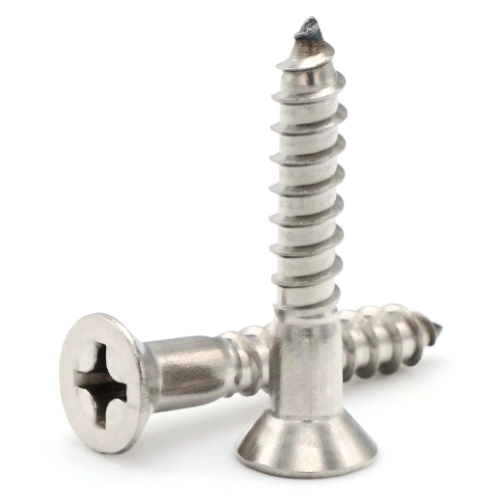
What are Wood Screws? Wood screws are threaded fasteners designed specifically for fastening wood to wood and attaching hardware or other materials to wood. They typically feature a sharp point, coarse threads for strong holding power, and may have a partially unthreaded shank that helps draw two pieces of wood tightly together. Albany County Fasteners carries wood screws in stainless steel, brass, silicon bronze and zinc plated steel, with multiple head styles, drive types, diameters and lengths for woodworking, furniture, cabinetry, construction and general-purpose applications.
Shop wood screws by head style and material below, including Phillips, slotted and square drive options. For exterior decking, docks and boardwalks, shop our dedicated Deck Screws collection.
Deck & Wood Screws

Phillips Flat Head
Wood screws with a countersunk flat head and Phillips drive that sink flush into wood for a clean, finished surface.

Slotted Flat Head
Wood screws with a countersunk flat head and single slot, driven with a flat blade for traditional or restoration work where a flush finish is needed.

Phillips Oval Head
Wood screws with a countersunk oval head and Phillips drive that sit nearly flush while leaving a slightly raised, decorative dome.

Slotted Oval Head
Wood screws with a countersunk oval head and single slot for a decorative raised finish, driven with a flat blade.

Slotted Round Head
Wood screws with a rounded head that sits above the surface and a single slot, used where the head is not countersunk and a wide bearing face helps hold trim or hardware.

Square Drive Flat Head
Wood screws with a countersunk flat head and square drive that resists cam-out, sinking flush for a clean finish under high torque.

Deck Screws
Corrosion-resistant wood screws with a tapered point and coated or stainless finish, built to fasten decking and outdoor framing.
Videos
Play videoShop Related Categories
.jpg?ts=1757453415)


What Are Wood Screws?
Wood screws are threaded fasteners designed specifically for fastening wood to wood and attaching hardware or other materials to wood. They typically feature a sharp point, coarse threads for strong holding power, and may have a partially unthreaded shank that helps draw two pieces of wood tightly together.
Albany County Fasteners carries wood screws in stainless steel, brass, silicon bronze, and zinc plated steel, with multiple head styles, drive types, diameters, and lengths for woodworking, furniture, cabinetry, construction, and general-purpose applications.
For exterior decking, docks, boardwalks, and other outdoor wood construction, use fasteners specifically designed for those environments and explore our dedicated Deck Screws selection.
What Are Wood Screws Used For?
Wood screws are used for fastening wood components and attaching hardware or other materials to wood. Common applications include:
- Furniture construction and assembly
- Cabinetmaking and millwork
- General carpentry and woodworking
- Shelving and storage construction
- Attaching hinges, brackets, latches, and other hardware to wood
- Interior trim and finish work
- Home repairs and renovations
- Wood-to-wood joinery and general assembly
Why Use Wood Screws?
- Strong holding power: Coarse threads provide excellent grip in wood.
- Secure wood-to-wood joints: Partially threaded styles can help draw mating pieces together.
- Easy installation: Sharp points and purpose-designed threads simplify fastening into wood.
- Multiple head styles: Flat, oval, and round heads accommodate flush, decorative, and general-purpose applications.
- Wide material selection: Choose stainless steel, brass, silicon bronze, or zinc plated steel based on the application and environment.
- Removable: Wood screws can generally be removed for maintenance, adjustment, or disassembly.
Wood Screw Head Styles
Wood screws are available in several head styles to suit different installation and appearance requirements:
- Flat head wood screws: Designed to sit flush with or below the wood surface when countersunk.
- Oval head wood screws: Provide a slightly raised, decorative finish while still seating into a countersunk hole.
- Round head wood screws: Sit above the surface and are often used where a countersunk finish is not required.
Wood Screw Materials
- 18-8 stainless steel: Provides dependable corrosion resistance for indoor and outdoor applications.
- Brass: Offers corrosion resistance and a decorative appearance for furniture, cabinetry, and architectural applications.
- Silicon bronze: Provides excellent corrosion resistance for marine, coastal, and specialty woodworking applications.
- Zinc plated steel: An economical choice for many dry indoor applications.
Wood Screw Sizes
Wood screws are commonly identified by a gauge number and length, such as #8 x 1-1/2". The gauge number indicates the screw's nominal body diameter, while length is generally measured from beneath the head to the tip. Flat head wood screws are measured overall, including the head.
Albany County Fasteners carries wood screws in a wide range of gauges and lengths for different materials and applications. Always choose a diameter and length appropriate for the thickness of the material being fastened and the required holding strength.
How to Choose the Right Wood Screw
The best wood screw depends on the application, wood species, required strength, environment, and desired finished appearance. Consider the following when selecting a wood screw:
- Wood type: Hardwood may require a pilot hole and can benefit from different thread or point designs than softwood.
- Head style: Choose flat head screws for a flush finish, or oval and round heads for a more visible or decorative appearance.
- Drive style: Phillips, slotted, and square drive options provide different levels of torque control and installation convenience.
- Material: Choose stainless steel, brass, silicon bronze, or zinc plated steel based on corrosion exposure and appearance.
- Length and diameter: Select a size that provides adequate penetration without passing unnecessarily through the workpiece.
Wood Screws vs. Sheet Metal Screws
Traditional wood screws typically have coarse threads, a sharp point, and may include a partially unthreaded shank that helps pull two pieces of wood tightly together. Sheet metal screws are generally fully threaded and are designed to form or cut mating threads in sheet metal and other materials.
Although some screw types can be used in more than one material, choosing a fastener specifically designed for the application generally provides better holding strength and installation performance.
Frequently Asked Questions
What type of screw is best for wood?
The best wood screw depends on the application, wood species, required holding strength, and environment. Flat head wood screws are commonly used when a flush finish is desired, while oval and round heads can provide a more decorative appearance. Stainless steel and silicon bronze are excellent choices where corrosion resistance is important, while zinc plated steel is economical for many dry indoor applications.
Do wood screws need a pilot hole?
A pilot hole is often recommended, especially in hardwoods, near the edge of a board, or when using larger-diameter screws. Pre-drilling can reduce the risk of splitting the wood, make installation easier, and help the screw track straight.
Can I use drywall screws for wood?
Drywall screws can penetrate wood, but they are not the best choice for most structural or general woodworking applications. They are typically more brittle than purpose-designed wood screws and may snap under higher loads or installation torque. For furniture, cabinetry, framing, and other wood assemblies, use a screw designed for wood.
How are wood screws measured?
Wood screws are typically specified by gauge and length, such as #10 x 2". The gauge identifies the nominal body diameter. Length is measured from beneath the head to the tip for most head styles, while flat head screws are measured overall because the head sits flush with the surface.
Why will a wood screw not drive all the way in?
A screw may stop before fully seating if the pilot hole is too small, the screw encounters a knot or harder material, the screw is too long for the application, or excessive friction builds during installation. Pre-drilling an appropriate pilot hole and selecting the correct screw size can make installation easier.