

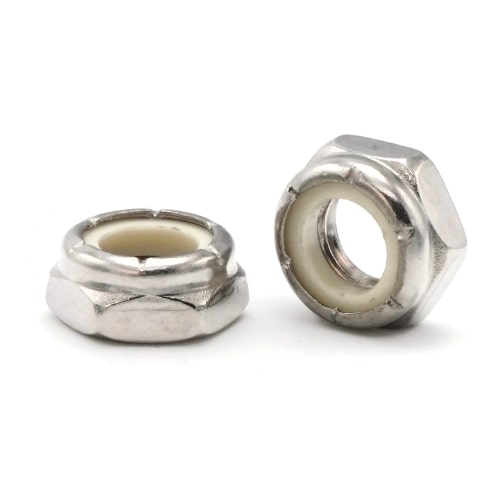
Why choose 316 for a jam nut?
316 stainless adds molybdenum for much better resistance to salt and chloride pitting than 304, so a 316 nylon insert jam nut is the choice where a thin, vibration-resistant lock nut also faces coastal, marine, or wash-down exposure. Its half-height body fits tight clearances and can jam against a standard nut to hold it in place. As with any thin lock nut, the reduced thread engagement means a lower torque rating, so do not use it in place of a full-height lock nut in structural joints.
Why choose 316 stainless nylon insert jam nuts
- Marine-grade corrosion resistance: molybdenum-alloyed for salt and chlorides.
- Low profile: about half the height for tight-clearance spaces.
- Vibration locking: the nylon insert grips the threads to resist loosening.
- Dual purpose: use in low clearance or to jam a standard nut.
Common applications for 316 nylon insert jam nuts
- Marine and coastal low-clearance hardware
- Wash-down and food-grade equipment
- Boats, docks, and saltwater exposure
- Locking a standard nut in harsh environments
For general corrosion resistance at lower cost, see 304 stainless nylon insert jam nuts, and browse full-height options on the main nylon insert lock nuts category.
316 Stainless Nylon Insert Jam Nuts FAQ
Why choose 316 over 304 for jam nuts?
316 adds molybdenum for much better resistance to salt and chloride pitting, making it the choice for coastal, marine, and wash-down use where 304 could corrode.
Can I use a jam nylon nut in a structural joint?
No. The reduced height means less thread engagement, so it should not replace a full-height lock nut in structural or high-load applications.
What is the temperature limit?
The nylon insert is limited to service under about 250 degrees Fahrenheit. For higher heat, choose an all-metal lock nut.