

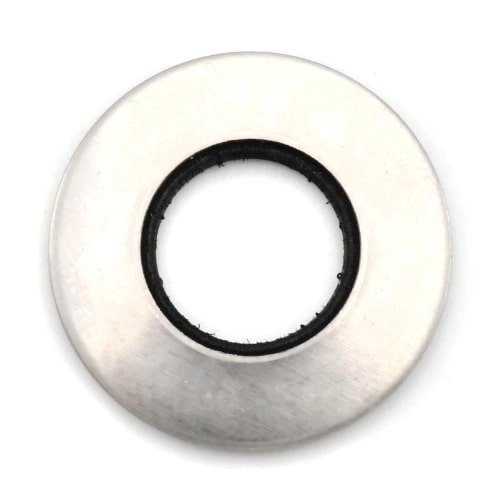
Neoprene EPDM Sealing Washers
What are neoprene EPDM sealing washers? Neoprene EPDM sealing washers, also called bonded sealing or roofing washers, are metal washers with a rubber ring permanently bonded to one face. Installed under a screw head, the rubber compresses around the hole to create a watertight seal while the metal backing carries clamping load.
How do bonded sealing washers work?
A bonded sealing washer pairs a stainless steel washer with an EPDM or neoprene rubber layer bonded to its underside. As the screw is driven, the rubber compresses around the shank and against the mating surface, sealing the hole against water and air while the steel provides structural strength and even clamping pressure. This makes them essential under self-drilling, self-tapping, and self-piercing screws in metal roofing, cladding, and solar mounting, where a plain washer would let moisture through. EPDM offers excellent UV and weather resistance for exterior use, while neoprene is favored indoors for chemical and oil resistance. Choose 18-8 stainless for general use and 316 for coastal and marine exposure.
Why choose neoprene EPDM sealing washers
- Watertight seal: bonded rubber seals the hole against moisture.
- Structural backing: stainless steel carries clamping load.
- Weather resistant: EPDM resists UV, ozone, and temperature swings.
- Dampens: rubber layer absorbs noise and vibration.
Common applications for neoprene EPDM sealing washers
- Metal roofing and cladding
- Solar panel mounting
- Self-drilling and self-tapping screw seals
- Outdoor and weatherproof connections
For a roofing panel washer, see Dekfast poly washers, and browse every option on the main sealing and cushioning washers category.
Neoprene EPDM Sealing Washers FAQ
What is the difference between EPDM and neoprene?
Both are synthetic rubbers. EPDM has excellent UV and weather resistance for exterior use, while neoprene is favored indoors for its chemical and oil resistance.
Which way does the rubber face?
The rubber faces down, toward the mating surface, so it compresses against the material and around the screw to seal out moisture.
What screws are these used with?
They install under the heads of self-drilling, self-tapping, and self-piercing screws, commonly in metal roofing and cladding.