

Washers
-min.jpg?ts=1755912206 "Washers")
What are Washers? Washers are thin discs with a center hole used under a nut or bolt head to spread load, protect surfaces, support consistent torque, and in some cases seal against fluids or resist loosening.
Washers
.jpg?ts=1755907166 "Flat Washers")
Flat Washers
Round, flat washers that distribute a fastener's load over a wider area and protect the surface from damage, the most common washer type.

Fender Washers
Flat washers with an oversized outer diameter relative to the hole, spreading load across thin or soft material like sheet metal and panels.
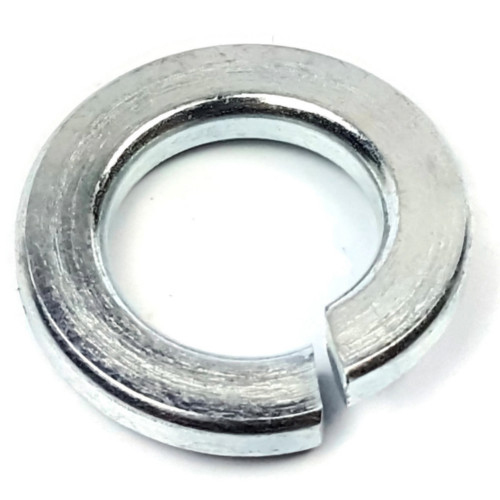
Lock Washers
Washers designed to resist loosening from vibration through spring tension or biting teeth that grip the fastener and surface.
.jpg?ts=1755911852 "Cup Washers")
Cup Washers
Recessed washers that cradle a countersunk or round screw head for a finished look while protecting the surface, common in cabinetry and trim.
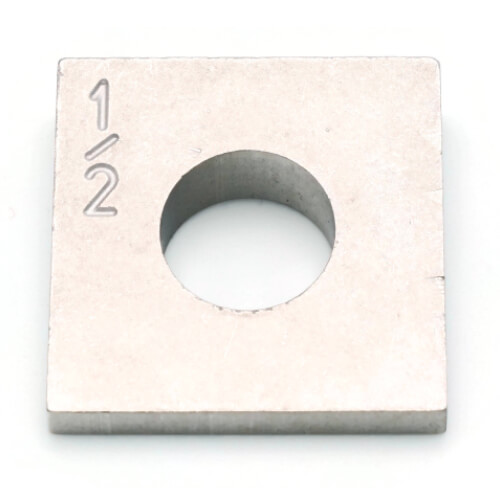
Square Washers
Four-sided washers with a large bearing area that resist pull-through and spinning in wood, timber, and structural connections.

Dock Washers
Extra-thick, large-diameter round or square washers built for heavy load bearing in docks, marine, and heavy-timber construction.
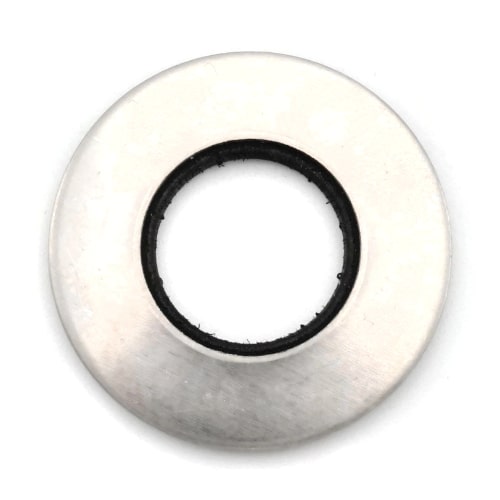
Sealing & Cushioning Washers
Washers with a rubber, EPDM, or bonded element that seals out water and cushions the joint against vibration and leaks.
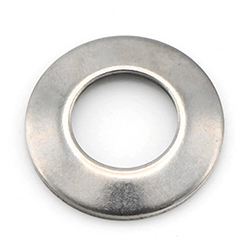
Bellevile Conical Washers
Cone-shaped spring washers that flex under load to maintain tension and resist loosening in high-vibration or thermal-cycling joints, also known as belleville washers.
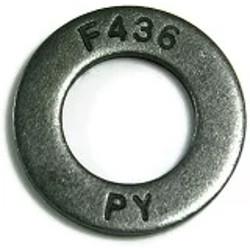
Structural Washers
Hardened, thick washers rated for high-strength structural bolt assemblies, preventing bolt heads and nuts from digging into steel.
Videos
Play videoWhat are Washers?
Washers are thin discs with a center hole used under a nut or bolt head to spread load, protect surfaces, support consistent torque, and in some cases seal against fluids or resist loosening.
Do you need washers for screws?
Often yes. Washers help on soft materials and anywhere you want better load spread or surface protection. Some screws have built-in flanges or features that reduce the need, but a simple flat washer is still useful in many installs.
- Soft materials such as wood, plastics, and drywall benefit from a washer under the head
- Enlarged or irregular holes are easier to bridge with a larger outside diameter
- Where vibration is present, choose a lock style or add a separate locking method
What types of washers are there?
- Flat washers for load distribution and surface protection
- Lock washers split or toothed styles that add resistance to rotation
- Fender washers extra large outside diameter to cover big or slotted holes
- Sealing washers metal backed with an elastomer to help prevent leaks
- Conical and cup styles spring action to help maintain preload
- Square and specialty shapes for channels, timber, or specific hardware
What size washer do I need? inch and metric
- Match the nominal washer size to the fastener size such as 1/4 in or M6
- Verify the inner diameter fits the shank without binding
- Choose the outside diameter and thickness for the load you need to spread
- Select standard, wide, or fender patterns based on hole size and clearance
Which washer material should I choose
18-8 and 304 stainless steel
General purpose corrosion resistance with a clean appearance for indoor and light outdoor use.
316 stainless steel
Preferred for marine, salty, or chemically harsh environments; pair with 316 hardware when possible.
Zinc plated steel
Economical for dry interiors with light corrosion protection.
Hot dip galvanized steel
Thick zinc layer for outdoor structural work; match with galvanized bolts and nuts.
Brass and silicon bronze
Conductive and corrosion resistant choices used in electrical and marine applications.
Aluminum
Lightweight with natural corrosion resistance; consider galvanic compatibility in mixed-metal joints.
When should I use a lock washer
Use a lock washer when movement or vibration could loosen the joint. Split and tooth styles add bite. For severe vibration, consider wedge-lock pairs or a liquid threadlocker.
How do I install washers correctly
- Place the washer under the rotating part, either the nut or the bolt head
- Keep bearing surfaces clean and flat for consistent preload
- Avoid over-torque on sealing types to protect the elastomer
- Re-check torque after initial run-in if soft materials compress
Washers vs alternatives what should I know
Washers help with load spread, surface protection, and in some cases sealing or anti-rotation. They do not replace good joint design. For high vibration or safety critical assemblies, add a locking feature or choose hardware designed to resist back-off.
Washer Specifications
AN960C Washer Specifications
| Washer Size | Inner Diameter (ID) | Outer Diameter (OD) | Thickness |
| #2 C2 | 0.099" | 1/4", 0.25" | 1/32", 0.0313" |
| #2 C2L | 0.099" | 1/4", 0.25" | 1/64", 0.015625" (Light) |
| #3 C3 | 0.109" | 1/4", 0.25" | 1/32", 0.21875" |
| #3 C3L | 0.109" | 1/4", 0.25" | 1/64", 0.015625" (Light) |
| #4 C4 | 0.125" | 0.312" | 1/32", 0.03125" |
| #4 C4L | 0.125" | 0.312" | 1/64", 0.015625" (Light) |
| #5 C5 | 0.140" | 0.438" | 3/64", 0.046875" |
| #6 C6 | 0.149" | 0.375" | 1/32", 0.03125" |
| #6 C6L | 0.149" | 0.375" | 1/64", 0.015625" (Light) |
| #8 C8 | 0.174" | 0.375" | 1/32", 0.03125" |
| #8 C8L | 0.174" | 0.375" | 1/64", 0.015625" |
| #10 C10 | 0.203" | 0.437" | 1/16", 0.0625" |
| #10 C10L | 0.203" | 0.437" | 1/32", 0.03125" (Light) |
| 1/4" C416 | 0.265" | 0.500" | 1/16", 0.0625" |
| 1/4" C416L | 0.265" | 0.500" | 1/32", 0.03125" (Light) |
| 5/16" C516 | 0.328" | 0.562" | 1/16", 0.0625" |
| 5/16" C516L | 0.328" | 0.562" | 1/32", 0.03125" (Light) |
| 3/8" C616 | 0.390" | 0.625" | 1/16", 0.0625" |
| 3/8" C616L | 0.390" | 0.625" | 1/32", 0.03125" (Light) |
| 7/16" C716 | 0.453" | 0.750" | 1/16", 0.0625" |
| 7/16" C716L | 0.453" | 0.750" | 1/32", 0.03125" (Light) |
| 1/2" C816 | 0.516" | 0.875" | 1/16", 0.0625" |
| 1/2" C816L | 0.516" | 0.875" | 1/32", 0.03125" (Light) |
| 9/16" C916 | 0.578" | 1.062" | 1/16", 0.0625" |
| 9/16" C916L | 0.578" | 1.062" | 1/32", 0.03125" (Light) |
| 5/8" C1016 | 0.641" | 1.187" | 1/16", 0.0625" |
| 5/8" C1016L | 0.641" | 1.187" | 1/32", 0.03125" (Light) |
| 3/4" C1216 | 0.766" | 1.312" | 3/32", 0.09375" |
| 3/4" C1216L | 0.766" | 1.312" | 1/32", 0.03125" (Light) |
| 7/8" C1416 | 0.890" | 1.500" | 3/32", 0.09375" |
| 1" C1616 | 1.016" | 1.750" | 3/32", 0.09375" |
Stainless Steel Extra Thick Flat Washer Specifications
| Washer Sizes | Inner Diameter (ID) | Outer Diameter (OD) | Thickness |
| 1/4" | 9/32" | 5/8", Max 0.630" - Min 0.5625" | Max 0.125" - Min 0.100" |
| 5/16" | 11/32" | 3/4", Max 0.760" - Min 0.700" | Max 0.125" - Min 0.100" |
| 1/2" | 17/32" | 1-1/4", Max 1.252" - Min 1.248" | Max 0.125" - Min 0.100" |
| 1/2" | 17/32" | 1-1/2", Max 1.500" - Min 1.4375" | Max 0.125" - Min 0.100" |
NAS Washer Specifications
| Washer Size | Inner Diameter (ID) | Outer Diameter (OD) | Thickness |
| #0 | Max 0.063" - Min 0.060" | Max 0.099" - Min 0.090" | Max 0.016" - Min 0.013" |
| #2 | Max 0.089" - Min 0.085" | Max 0.149" - Min 0.140" | Max 0.016" - Min 0.013" |
| #3 | Max 0.102" - Min 0.093" | Max 0.180" - Min 0.150" | Max 0.032" - Min 0.026" |
| #4 | Max 0.115" - Min 0.105" | Max 0.208" - Min 0.200" | Max 0.032" - Min 0.026" |
| #5 | Max 0.128" - Min 0.118" | Max 0.238" - Min 0.228" | Max 0.032" - Min 0.026" |
| #6 | Max 0.143" - Min 0.133" | Max 0.267" - Min 0.257" | Max 0.032" - Min 0.026" |
| #6L | Max 0.143" - Min 0.133" | Max 0.267" - Min 0.257" | Max 0.016" - Min 0.013" (Light) |
| #8 | Max 0.169" - Min 0.160" | Max 0.304" - Min 0.296" | Max 0.032" - Min 0.026" |
| #8L | Max 0.169" - Min 0.160" | Max 0.304" - Min 0.296" | Max 0.016" - Min 0.013" (Light) |
| #10 | Max 0.195" - Min 0.189" | Max 0.354" - Min 0.325" | Max 0.063" - Min 0.058" |
| #10L | Max 0.195" - Min 0.189" | Max 0.354" - Min 0.325" | Max 0.032" - Min 0.028" (Light) |
| #416 | Max 0.255" - Min 0.245" | Max 0.468" - Min 0.458" | Max 0.063" - Min 0.058" |
| #416L | Max 0.255" - Min 0.245" | Max 0.468" - Min 0.458" | Max 0.032" - Min 0.028" (Light) |