

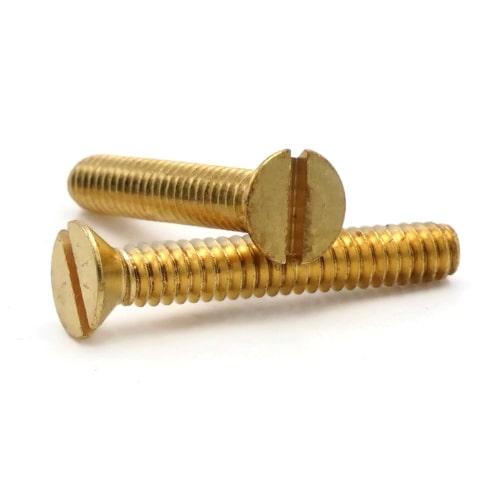
Machine Screws, Brass
What are brass machine screws? Brass machine screws are uniformly threaded screws in copper-zinc alloy that drive into a tapped hole or nut, chosen for electrical work where brass conducts, and for decorative and instrument work where the golden finish and non-magnetic behaviour matter. They machine to fine, precise threads and resist corrosion in most conditions. AlbanyCountyFasteners.com stocks slotted flat, oval, and round head styles in brass.
Where brass machine screws fit
Brass machine screws sit at the meeting point of three of the metal's strengths. First, conductivity: brass carries current well, so these are a standard for electrical terminals, connectors, and grounding points, where the golden color also visually separates the conductive fasteners from structural steel ones during assembly and service. Second, appearance: on visible fittings, instruments, and decorative panels the warm brass finish is a deliberate choice, and the slotted heads suit period and quality work. Third, the material's non-magnetic behaviour and clean machinability suit instruments and precision assemblies where magnetic interference or coarse threads would be a problem. The slotted flat, oval, and round heads cover flush, decorative-proud, and traditional-raised seating. As with all brass, the metal is soft: the fine threads want careful starting to avoid cross-threading and stripping, and the slots damage under power driving, so a correct-fitting driver and moderate speed protect the visible head. For an electrical, decorative, or non-magnetic connection into a tapped hole or nut, brass machine screws are the natural fit.
Why choose brass machine screws
- Conduct electricity for terminals, connectors, and grounding
- Golden color marks conductive fasteners apart from structural
- Warm finish for visible and decorative fittings
- Non-magnetic for instruments and precision work
- Slotted flat, oval, and round heads for varied seating
Common applications
- Electrical terminals, connectors, and grounding points
- Visible and decorative fittings
- Instruments and precision assemblies
- Non-magnetic connections
- Period and restoration hardware
- Light-duty tapped-hole and nutted joints
Brass Machine Screw FAQs
Why use brass machine screws for electrical work?
Brass conducts electricity, so it suits terminals, connectors, and grounding points. Its golden color also visually distinguishes the conductive fasteners from structural steel ones during assembly and maintenance.
Are these non-magnetic?
Yes, brass is non-magnetic, which suits instruments, electronics, and any assembly where a magnetic fastener would interfere with sensitive equipment.
Why are the heads slotted?
Slotted heads suit electrical, period, and decorative work where they look correct and drive simply. Take care with the drive, since brass slots damage under power.
Will brass machine screws strip?
The fine threads can cross-thread or strip if forced, since brass is soft. Start by hand, drive at moderate speed, and avoid overtightening to protect the threads.
Do they resist corrosion?
Yes, brass resists corrosion well in most atmospheric and indoor conditions, which suits electrical and decorative fittings. In aggressive or high-zinc conditions, dezincification is possible.
Which head style should I choose?
Flat countersinks flush, oval countersinks with a decorative rounded top, and round sits proud for a traditional look. Choose by seating and appearance.