

Machine Screws
Resources
What are machine screws?
Machine screws are precision-threaded fasteners designed to be used with a matching nut, tapped hole, or threaded insert. Unlike wood screws and many self-tapping screws, standard machine screws use uniform machine threads and are available in a wide range of sizes, head styles, drives, materials, and finishes.
Machine Screws
-min.jpg?ts=1758393079 "Standard Machine Screws")
Standard Machine Screws
Fully machine-threaded screws in a range of head and drive styles for fastening into tapped holes or securing with a nut.
- Phillips Pan Head
- Phillips Flat Head
- Phillips Truss Head
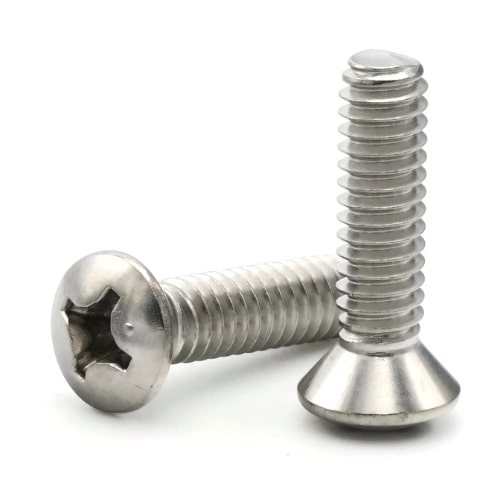
- Phillips Oval Head
- Square Drive Pan Head
- Star Drive Pan Head
- Star Drive Flat Head
- Star Drive Truss Head
- Slotted Pan Head
- Slotted Flat Head
- Slotted Oval Head
- Slotted Truss Head
- Slotted Round Head
- Slotted Binding Head
- Slotted Fillister Head
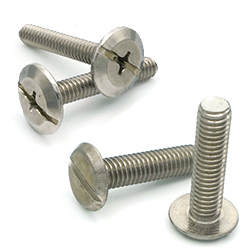
- Slotted/Phillips Truss Combo Head
- Knurled Thumb Head
.webp?ts=1757453412 "Tamper Proof Machine Screws")
Tamper Proof Machine Screws
Machine screws with security drive styles that resist removal by standard tools, used to deter tampering on public and shared fixtures.
Videos
Play videoShop Related Categories
-min.jpg?ts=1757453417)
.jpg?ts=1757453428)
.jpg?ts=1755907166)
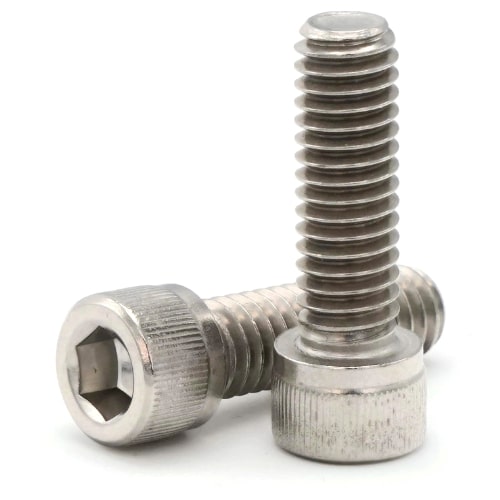
What Are Machine Screws?
Machine screws are precision-threaded fasteners designed to secure components using a matching nut, tapped hole, or threaded insert. Unlike wood screws and many self-tapping screws, standard machine screws have uniform machine threads designed to mate with corresponding internal threads.
Machine screws are widely used in machinery, electronics, appliances, automotive assemblies, metal fabrication, furniture, equipment, enclosures, and OEM manufacturing. They are available in a broad range of inch and metric sizes, head styles, drive types, materials, thread pitches, and finishes to accommodate everything from small electronic assemblies to industrial equipment.
Types of Machine Screws
Machine screws can be categorized by their head style, drive type, thread design, material, and intended application. Choosing the correct combination determines how the screw installs, how the finished assembly looks, and how the load is distributed across the fastened components.
Standard Machine Screws
Standard machine screws are used with nuts, tapped holes, and threaded inserts for general-purpose fastening. Common configurations include pan head, flat head, oval head, truss head, round head, binding head, and fillister head machine screws.
Drive options include Phillips, slotted, square, star or 6-lobe drives, and combination drives, allowing the fastener to be matched to the installation tool, torque requirements, and finished appearance.
Tamper Proof Machine Screws
Tamper proof machine screws use security drive designs that require a matching specialty driver for installation and removal. Common styles include pin-in star drives, spanner drives, and one-way drives.
Security machine screws are commonly used for public fixtures, electronics, access panels, signage, equipment, enclosures, and other applications where unauthorized removal or tampering needs to be discouraged.
SEMS Machine Screws
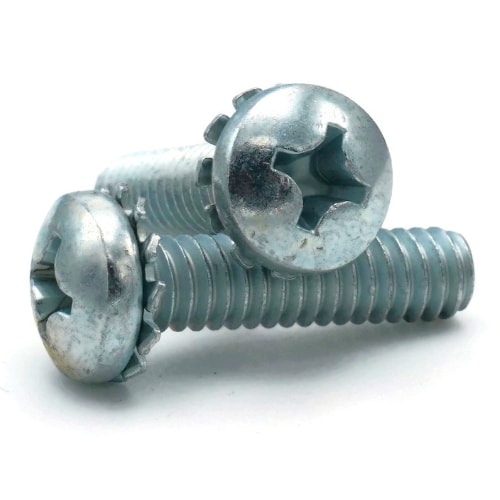
SEMS machine screws are pre-assembled fasteners that combine a machine screw with one or more captive washers. Because the washer is retained on the screw, SEMS assemblies can reduce loose hardware, simplify installation, and improve assembly efficiency.
SEMS screws are frequently used in electronics, appliances, automotive components, electrical equipment, machinery, and production assembly.
Thread Cutting and Thread Forming Screws
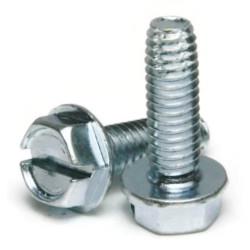
Thread cutting and thread forming screws are designed for applications where mating threads need to be created during installation. Depending on the design, the fastener may cut material away or displace material to form threads in the receiving component.
These screws can be useful in sheet metal, plastics, and other applications where creating a separately tapped hole may not be practical.
Machine Screw Head Types
The head style affects the screw's finished profile, bearing surface, installation method, and how the fastener sits against or within the assembled material.
- Pan Head: A versatile rounded head with a relatively broad bearing surface for general-purpose assembly.
- Flat Head: A countersunk head designed to sit flush with the surface when installed in a properly countersunk hole.
- Oval Head: A countersunk head with a rounded top that provides a more finished appearance than a flat head.
- Truss Head: A low-profile head with a wide bearing surface useful for distributing load over a larger area.
- Round Head: A traditional rounded profile used in many general-purpose and specialty applications.
- Binding Head: A moderately low-profile head with a broad bearing surface for applications requiring additional surface contact.
- Fillister Head: A taller cylindrical-style head that provides a deeper drive recess and distinctive profile.
Machine Screw Drive Types
Machine screws are available with several drive styles. Drive selection can affect tool engagement, installation speed, torque transfer, resistance to cam-out, and tamper resistance.
- Phillips: Common cross-shaped drive used for general-purpose fastening and production assembly.
- Slotted: Traditional straight-slot drive installed with a flat-blade screwdriver or bit.
- Square Drive: Recessed square drive providing positive tool engagement.
- Star / 6-Lobe: Multi-lobed drive designed for strong bit engagement and efficient torque transfer.
- Combination Drive: Accepts more than one compatible driver style for installation flexibility.
- Security Drives: Specialty configurations such as pin-in star and spanner drives designed to discourage removal with standard tools.
Machine Screw Sizes and Thread Sizes
Machine screw sizes are specified by diameter, thread pitch or threads per inch, and length. For example, an inch machine screw may be specified as #6-32 x 1" or 1/4"-20 x 2", while a metric machine screw may be specified as M4-0.7 x 20 mm.
In an inch machine screw designation such as 1/4"-20, 1/4" represents the nominal screw diameter and 20 represents the number of threads per inch. In a metric designation such as M4-0.7, M4 represents the nominal diameter in millimeters and 0.7 represents the distance between adjacent threads in millimeters.
Common Inch Machine Screw Sizes
Machine screws are available in numbered and fractional diameters. Common sizes include #2, #4, #6, #8, #10, #12, 1/4", 5/16", and 3/8", with coarse and fine thread options available depending on diameter and product style.
Always match the screw diameter and thread pitch to the mating nut, tapped hole, or threaded insert. Two machine screws with the same nominal diameter may not be interchangeable if their thread pitches are different.
Metric Machine Screw Sizes
Metric machine screws use metric diameters and thread pitches. A designation such as M5-0.8 identifies a 5 mm nominal diameter with a 0.8 mm thread pitch.
Metric and inch threads are different systems and should not be mixed. Always confirm the thread standard and pitch of the mating component before selecting a machine screw.
How Is Machine Screw Length Measured?
Machine screw length is measured differently depending on the head style.
- Pan, truss, round, binding, and similar non-countersunk heads: Measure from directly underneath the head to the end of the screw.
- Flat head machine screws: Measure the entire screw from the top of the head to the end because the head is designed to sit flush with the surface.
- Oval head machine screws: Length is measured from the point where the countersunk portion begins to the end of the screw, with the rounded crown extending above the finished surface.
Correct length measurement is important when replacing an existing machine screw or matching a fastener to a specific assembly.
Machine Screw Materials and Finishes
18-8 Stainless Steel Machine Screws
18-8 stainless steel machine screws provide good general corrosion resistance and are widely used for indoor, outdoor, industrial, equipment, and general-purpose applications.
316 Stainless Steel Machine Screws
316 stainless steel machine screws provide increased resistance to chloride-related corrosion and are commonly selected for marine, coastal, saltwater, and other demanding environments.
Zinc Plated Steel Machine Screws
Zinc plated steel provides an economical machine screw option with a protective zinc coating. These fasteners are commonly used for indoor and general-purpose applications.
Black Oxide Machine Screws
Black oxide provides a dark finished appearance and limited corrosion protection. Black oxide machine screws are commonly used in interior applications where appearance, glare reduction, or compatibility with dark components is desired.
Brass and Silicon Bronze Machine Screws
Brass and silicon bronze machine screws provide alternatives for applications where corrosion resistance, appearance, electrical properties, or compatibility with other materials is important.
Machine Screws vs. Bolts
Machine screws and bolts both use machine threads and can sometimes serve similar fastening functions, but the terms generally describe different fastener configurations and installation methods.
Machine screws are typically installed using a screwdriver, bit, or other drive that engages a recess or slot in the head. Bolts more commonly use an external wrenching head and are frequently paired with a nut. However, terminology can overlap depending on fastener size, head style, standard, and industry.
Machine Screws vs. Sheet Metal Screws
The primary difference between machine screws and sheet metal screws is how they engage the mating material.
A standard machine screw is designed to engage existing internal threads in a nut, tapped hole, or threaded insert. A sheet metal screw is generally designed to form or engage threads directly in sheet metal or another compatible material during installation.
Do not substitute one for the other solely because the screws appear similar. Thread design, diameter, pitch, point style, and intended mating material should match the application.
Machine Screws vs. Self-Tapping Screws
Standard machine screws require compatible mating threads, while self-tapping screws are designed to create or form mating threads as they are installed into a suitable material.
Thread-cutting and thread-forming machine screw styles are exceptions because they are specifically designed to create mating threads during installation.
Where Are Machine Screws Used?
Machine screws are among the most versatile threaded fasteners and are commonly used in:
- Machinery and industrial equipment
- Electrical enclosures and panels
- Electronics and appliances
- Automotive and transportation equipment
- HVAC equipment
- Metal fabrication
- Furniture and fixtures
- Architectural hardware
- Plastic components with threaded inserts
- OEM and production assemblies
- Maintenance and repair applications
How to Choose the Right Machine Screw
When selecting a machine screw, consider the complete fastening system rather than the screw alone.
- Diameter: Match the required hole, nut, or threaded insert.
- Thread pitch: Confirm that the threads match the mating component.
- Length: Select enough thread engagement without interfering with surrounding components.
- Head style: Consider bearing area, clearance, countersinking, and finished appearance.
- Drive type: Match the installation tool and torque requirements.
- Material: Consider strength, corrosion resistance, and compatibility with the mating materials.
- Finish: Account for environmental exposure and appearance.
- Vibration: Consider locking nuts, washers, threadlockers, or other retention methods where appropriate.
Machine Screw Nuts, Washers, and Related Hardware
Machine screws are frequently installed with compatible machine screw nuts, hex nuts, lock nuts, flat washers, lock washers, and threaded inserts.
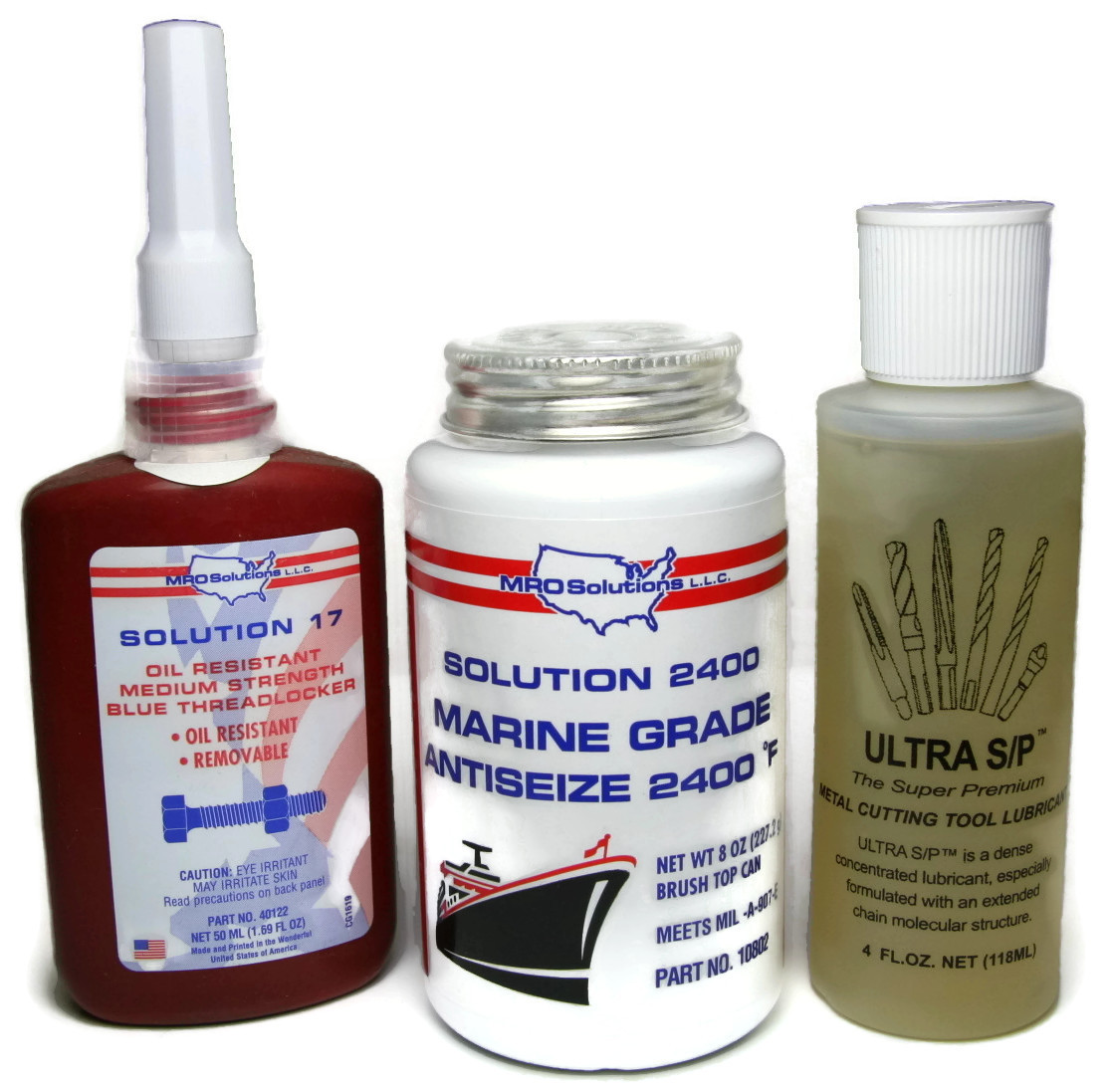
Washers can distribute load, protect the assembled surface, or provide locking functionality depending on the washer style. Lock nuts and threadlocking products can help resist loosening in applications subject to vibration or repeated movement.
Machine Screw FAQs
What is a machine screw?
A machine screw is a precision-threaded fastener designed to engage a matching nut, tapped hole, or threaded insert. Machine screws are available in numerous diameters, thread pitches, lengths, head styles, drive types, materials, and finishes.
Do machine screws need nuts?
Not always. A machine screw can be used with a nut, but it can also thread directly into a tapped hole or compatible threaded insert.
What is the difference between a machine screw and a regular screw?
Machine screws typically use uniform machine threads designed to mate with corresponding internal threads. Other screw types, such as wood screws and sheet metal screws, use thread and point designs intended to engage directly with their respective base materials.
How do I know what size machine screw I need?
Identify the required diameter, thread pitch, and length, then confirm the head style and drive type required by the assembly. If replacing an existing screw, match its thread specification rather than relying only on outside diameter.
What do machine screw numbers such as #6-32 and #8-32 mean?
The first number identifies the nominal screw size, while the second number identifies the number of threads per inch. A #6-32 machine screw is a #6 diameter screw with 32 threads per inch.
What is the difference between coarse and fine machine screw threads?
Coarse and fine threads have different pitches. For the same nominal diameter, a coarse thread has fewer threads per inch, while a fine thread has more threads per inch. The correct pitch must match the mating nut or tapped hole.
Can machine screws be used in wood?
Machine screws are not designed to thread directly into ordinary wood like wood screws. They can be used in wood assemblies when paired with a compatible threaded insert, T-nut, cross dowel, or other internally threaded component.
Can machine screws be used in plastic?
Yes, when the plastic component contains compatible molded threads or a threaded insert. Thread-forming screws designed specifically for plastics may also be used where appropriate.
How is machine screw length measured?
Most machine screws are measured from underneath the head to the end of the screw. Flat countersunk screws are measured overall because the head sits within the material. Oval countersunk heads are measured from the beginning of the countersunk portion to the end of the screw.
Are machine screws fully threaded?
Many machine screws are fully threaded, particularly in smaller sizes, but thread length can vary by fastener type, size, length, and applicable specification. Check the individual product specifications when full threading is required.
What materials are machine screws available in?
Machine screws are available in materials including stainless steel, carbon steel, brass, silicon bronze, and other alloys. Available materials and finishes depend on the particular head style, drive, size, and product series.
What machine screws should I use outdoors?
Choose a material appropriate for the environment. Stainless steel is commonly selected for outdoor applications because of its corrosion resistance, while 316 stainless steel provides increased resistance for coastal, marine, and chloride-rich environments.