

Machine Screw Specifications
Complete sizing charts, thread specifications, drive types, and head styles for US and metric machine screws


Downloadable Reference Guides
Quick access to all machine screw specification charts and guides
US Machine Screw Sizes
Machine screws are fully threaded fasteners used with nuts or threaded holes. US sizes range from #0 (smallest) to 3/8" diameter, with both coarse (UNC) and fine (UNF) thread options.
| Size | Major Diameter | Coarse Thread (UNC TPI) |
Fine Thread (UNF TPI) |
Tap Drill (Coarse) |
Tap Drill (Fine) |
|---|---|---|---|---|---|
| #0 | 0.060" (1.52mm) | 80 | - | 3/64" | - |
| #1 | 0.073" (1.85mm) | 64 | 72 | 53 | 53 |
| #2 | 0.086" (2.18mm) | 56 | 64 | 50 | 50 |
| #3 | 0.099" (2.51mm) | 48 | 56 | 47 | 45 |
| #4 | 0.112" (2.84mm) | 40 | 48 | 43 | 42 |
| #5 | 0.125" (3.18mm) | 40 | 44 | 38 | 37 |
| #6 | 0.138" (3.51mm) | 32 | 40 | 36 | 33 |
| #8 | 0.164" (4.17mm) | 32 | 36 | 29 | 29 |
| #10 | 0.190" (4.83mm) | 24 | 32 | 25 | 21 |
| #12 | 0.216" (5.49mm) | 24 | 28 | 16 | 14 |
| 1/4" | 0.250" (6.35mm) | 20 | 28 | 7 | 3 |
| 5/16" | 0.3125" (7.94mm) | 18 | 24 | F | I |
| 3/8" | 0.375" (9.53mm) | 16 | 24 | 5/16" | Q |
Thread Standards Explained
- UNC (Unified National Coarse): General purpose threads for most applications
- UNF (Unified National Fine): Finer threads for precision work and thinner materials
- TPI (Threads Per Inch): Number of thread peaks in one inch of length
- Tap Drill Size: Drill size needed to create properly sized threaded holes
Download US Machine Screw Charts
Print these charts for easy reference in your workshop
Metric Machine Screw Sizes
Metric machine screws follow ISO standards with sizes designated by "M" followed by the diameter in millimeters. Thread pitch options include coarse (standard) and fine threads.
| Size | Diameter | Coarse Pitch | Fine Pitch | Tap Drill (Coarse) |
Tap Drill (Fine) |
|---|---|---|---|---|---|
| M1.6 | 1.6mm | 0.35mm | - | 1.25mm | - |
| M2 | 2.0mm | 0.40mm | - | 1.6mm | - |
| M2.5 | 2.5mm | 0.45mm | - | 2.05mm | - |
| M3 | 3.0mm | 0.50mm | 0.35mm | 2.5mm | 2.65mm |
| M3.5 | 3.5mm | 0.60mm | - | 2.9mm | - |
| M4 | 4.0mm | 0.70mm | 0.50mm | 3.3mm | 3.5mm |
| M5 | 5.0mm | 0.80mm | 0.50mm | 4.2mm | 4.5mm |
| M6 | 6.0mm | 1.00mm | 0.75mm | 5.0mm | 5.25mm |
| M8 | 8.0mm | 1.25mm | 1.00mm | 6.8mm | 7.0mm |
| M10 | 10.0mm | 1.50mm | 1.25mm | 8.5mm | 8.75mm |
| M12 | 12.0mm | 1.75mm | 1.25mm | 10.2mm | 10.8mm |
Metric Property Classes
Metric machine screws are marked with property classes indicating strength:
- 4.8: Low-strength carbon steel (400 MPa tensile strength)
- 8.8: Medium-strength carbon steel (800 MPa tensile strength)
- 10.9: High-strength alloy steel (1000 MPa tensile strength)
- 12.9: Very high-strength alloy steel (1200 MPa tensile strength)
- A2-70, A4-80: Stainless steel grades for corrosion resistance
Download Metric Machine Screw Chart
Print this chart for easy reference in your workshop
Metric Machine Screw Chart (PDF)Machine Screw Head Styles
Machine screws come in various head styles, each suited for different applications and aesthetic requirements.

Pan Head
Profile: Rounded top with flat bearing surface
- Most common general-purpose head
- Low profile design
- Large bearing surface
- Available in slotted and Phillips
- Good for sheet metal and electronics

Flat Head (Countersunk)
Profile: Conical head, sits flush when countersunk
- 82° countersunk angle (standard)
- Flush or below surface when installed
- Requires countersinking
- Clean, finished appearance
- Ideal for hinges and hardware

Round Head
Profile: Domed top, larger than pan head
- Higher profile than pan head
- Decorative appearance
- Strong bearing surface
- Common in older machinery
- Often slotted drive

Oval Head
Profile: Combination of flat and round
- Countersunk with rounded top
- Decorative appearance
- Partially visible when installed
- Used in furniture and cabinets
- Also called raised countersunk

Fillister Head
Profile: Cylindrical with flat top
- Deep slot or socket drive
- High torque capacity
- Used in machinery
- Good for precision work
- Small head diameter

Truss Head
Profile: Extra wide, low-profile head
- Very large bearing surface
- Low profile
- Prevents pull-through
- Ideal for soft materials
- Also called mushroom head

Socket Head Cap Screw
Profile: Cylindrical head with hex socket
- Very high torque capacity
- Hex socket drive (Allen key)
- Precision machined
- High strength applications
- Clean, industrial appearance

Button Head (Socket)
Profile: Low-profile dome with hex socket
- Lower profile than socket cap
- Hex socket drive
- Aesthetic appearance
- Good for visible locations
- Moderate torque capacity
Flat Socket Head
Profile: Countersunk with hex socket
- Flush installation
- High torque capacity
- Hex socket drive
- Clean, modern look
- Ideal for machinery
Download Head Styles Reference
Print this guide for easy head style identification and comparison
Head Styles Reference Guide (PDF)Machine Screw Drive Types
The drive type determines what tool is used to install the screw. Choose based on torque requirements, tool availability, and application needs.

Phillips Drive
Symbol: + (cross shape)
- Sizes: #0, #1, #2, #3, #4
- Most common: #2 for #6-#12 screws
- Pros: Self-centering, widely available
- Cons: Can cam-out under high torque
- Best for: General assembly, electronics

Slotted (Flat)
Symbol: — (single slot)
- Oldest drive type
- Simple tooling required
- Pros: Universal, inexpensive
- Cons: Easily damaged, hard to center
- Best for: Decorative, traditional applications

Hex Socket (Allen)
Symbol: Hexagon recess
- Sizes: 0.050" - 3/8" (or metric equivalents)
- Common: 5/64", 3/32", 1/8", 5/32", 3/16"
- Pros: Very high torque, no cam-out
- Cons: Requires hex key
- Best for: Machinery, high-torque applications

Torx (Star)
Symbol: ✶ (6-point star)
- Sizes: T6 through T55
- Common: T10, T15, T20, T25, T30
- Pros: Excellent torque transfer, no cam-out
- Cons: Requires Torx driver
- Best for: Automotive, electronics, machinery

Square (Robertson)
Symbol: □ (square recess)
- Sizes: #0, #1, #2, #3, #4
- Most common: #2
- Pros: Excellent torque, holds bit well
- Cons: Less common in US
- Best for: Woodworking, construction
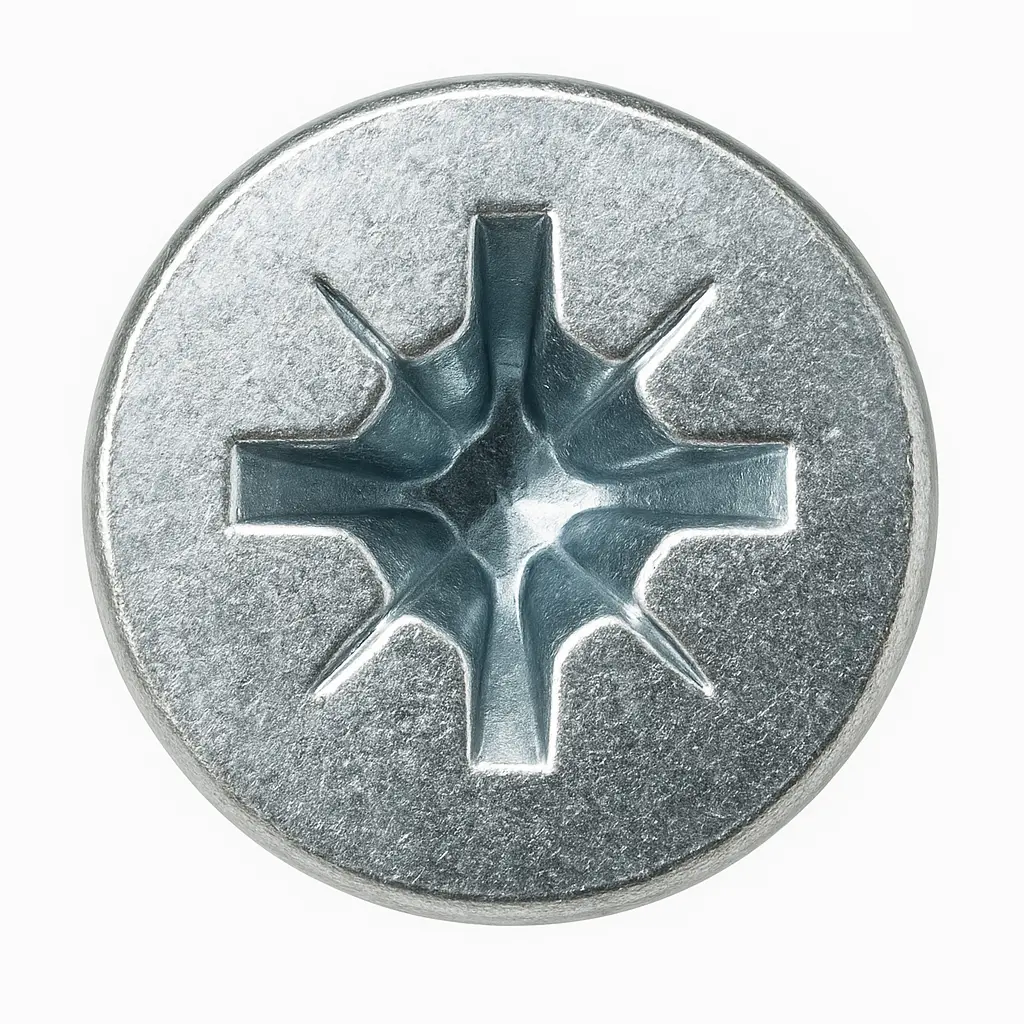
Pozidriv
Symbol: + with additional marks
- Improved Phillips design
- Better torque transfer
- Pros: Less cam-out than Phillips
- Cons: Not compatible with Phillips
- Best for: European applications, cabinetry
Choosing the Right Drive Type
- High Torque: Hex socket or Torx for best results
- General Purpose: Phillips #2 is most versatile
- Precision Work: Hex socket for consistency
- Limited Space: Low-profile heads with hex socket
- Preventing Tampering: Consider security drives
Download Drive Types Comparison
Print this comparison chart for easy reference when selecting drive types
Drive Types Comparison Chart (PDF)How to Measure Machine Screws
Measuring Length
Key Rule: Measurement depends on head style
- Flat/Oval Head: Measure total length (includes head)
- Pan/Round/Truss: Measure from under head to tip
- Socket Head: Measure from under head to tip
- Length does NOT include any unthreaded shank
- Always measure in same units as screw size
Measuring Diameter
Key Rule: Measure the major diameter (thread peak)
- Use calipers or thread gauge
- Measure at widest point of threads
- US sizes: Gauge numbers (#0-#12) or fractions
- Metric sizes: Diameter in millimeters (M3, M4, etc.)
- Compare to sizing charts for verification
Identifying Thread Pitch
Key Rule: Count threads per inch (US) or measure pitch (metric)
- US: Count threads in 1 inch (TPI)
- Metric: Measure mm between threads
- Use thread pitch gauge for accuracy
- Coarse threads = fewer TPI
- Fine threads = more TPI
Machine Screw Notation
US Format Example: #6-32 x 3/4" Pan Head Phillips
- #6 = Size (diameter)
- 32 = Threads per inch (TPI)
- 3/4" = Length
- Pan Head = Head style
- Phillips = Drive type
Metric Format Example: M3 x 0.5 x 10mm Socket Head Cap
- M3 = 3mm diameter
- 0.5 = 0.5mm thread pitch
- 10mm = Length
- Socket Head Cap = Head style
Machine Screw Applications & Best Practices
Best Uses for Machine Screws
- Electronics and computer assembly
- Machinery and equipment manufacturing
- Automotive and aerospace applications
- Furniture and cabinet assembly
- Metal-to-metal fastening
- Precision assemblies requiring nuts
- Repairs where threads exist
- Removable assemblies
When NOT to Use Machine Screws
- Directly into wood (use wood screws)
- Self-tapping into thick metal (use self-tapping screws)
- Heavy structural loads (use bolts)
- Outdoor exposure without coating
- High-vibration without locking method
- Very thin materials (consider rivets)
Installation Tips
Tapping Threads
- Use correct tap drill size from charts
- Keep tap perpendicular to work
- Use cutting fluid for metal
- Back out chips frequently
- Full thread depth = 1.5x diameter
Preventing Loosening
- Use lock washers or split washers
- Apply thread-locking compound
- Use nylon insert lock nuts
- Consider thread-locking patches
- Proper torque is crucial
Material Selection
- Steel: General purpose, high strength
- Stainless: Corrosion resistance
- Brass: Electrical, decorative
- Nylon: Insulation, light loads
- Alloy steel: High-stress applications
Important Safety Notes
- Always use correct size driver to prevent stripping
- Don't over-torque - follow torque specifications
- Ensure proper thread engagement (minimum 1x diameter)
- Never reuse self-locking fasteners
- Inspect threads before installation
Shop Machine Screws
Find the perfect machine screws for your project