

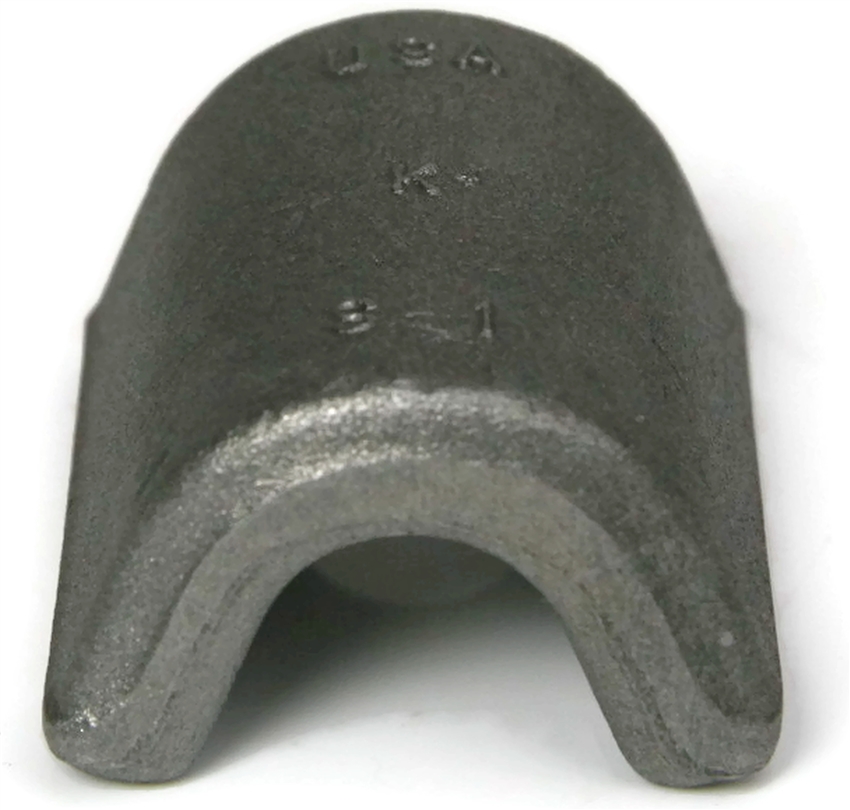
C1018-C1020 Carbon Steel D-Ring Weld-On Clips
What are C1018-C1020 D-ring weld-on clips? These are D-ring mounting brackets in C1018-C1020, a low carbon steel with roughly 0.18 to 0.20 percent carbon. That low carbon content is the whole point of the specification: it is what allows the clip to be welded cleanly, without the heat affected zone cracking that higher carbon steels are prone to. Since the entire function of a weld-on clip depends on the quality of that weld, weldability matters more than raw strength. AlbanyCountyFasteners.com stocks these in 1/2, 5/8, 3/4, and 1 inch.
Why weldability beats strength in a clip
It seems backwards at first: the bracket holding a load bearing anchor is made from a weaker steel than the ring it holds. But consider where each part can fail. The ring fails in tension if it is not strong enough, so it gets C1045. The clip's likely failure is not the bracket tearing, it is the weld cracking, and carbon content is the main driver of that risk. Higher carbon steel hardens in the heat affected zone as the weld cools, and that hardened, brittle band is where cracks start, often days after welding rather than immediately. Low carbon steel does not do this. So the clip trades strength it does not need for the weld integrity the whole assembly depends on.
Why choose C1018-C1020 weld-on clips
- Low carbon content welds cleanly with no heat affected zone cracking
- No preheat or special procedure required for a sound weld
- Permanent mounting that cannot loosen under road vibration
- Higher capacity than bolted mounting in equivalent size
- Sized to match our C1045 D-ring range
Sizes stocked
- 1/2 inch, for 1/2 inch D-rings
- 5/8 inch, for 5/8 inch D-rings
- 3/4 inch, for 3/4 inch D-rings
- 1 inch, for 1 inch D-rings
- D-rings sold separately, order both in matching sizes
Common applications
- Flatbed and equipment trailer anchor points
- Commercial fleet trailers and truck bodies
- Heavy equipment and machinery transport decks
- Shipping containers and marine deck lashing
- Steel structures where a permanent anchor is required
- Retrofit anchor points on existing steel decks
Order matching C1045 D-rings alongside these. Where welding is not practical, D-ring bolt-on clips mount with hardware instead.
Related Categories
- D-Ring Weld-On Clips
- C1045 Carbon Steel D-Rings
- C1018-C1020 D-Ring Bolt-On Clips
- D-Rings & Clips
- Lifting Hardware
C1018-C1020 Weld-On Clip FAQs
What does C1018-C1020 mean?
AISI grade designations for plain carbon steel with approximately 0.18 and 0.20 percent carbon respectively. Both sit in the low carbon range, which is what gives them good weldability and formability at the expense of strength.
Do I need to preheat before welding?
Low carbon steels generally do not require preheat for typical section sizes, which is part of why they are specified here. Follow your welding procedure and consider ambient conditions, since very cold material can benefit from warming regardless of grade.
What weld process should I use?
MIG, stick, and TIG all weld low carbon steel readily. The process matters less than the result: full penetration at the joint, sound fusion, and no undercut. Since this is a load bearing connection, weld quality is the specification.
Where should the clip be welded?
To structural members, not thin deck plate. The load has to travel from the anchor into the frame, and welding to sheet decking simply transfers it into material that will tear before the anchor gives way.
Should I coat these?
After welding, yes. Plain carbon steel corrodes outdoors and the weld zone is bare metal. Paint, powder coat, or plate once the weld is complete and inspected, never before.
Can I use a stronger steel clip instead?
You would be trading weldability for strength the clip does not need, and increasing crack risk in the weld. The material split between C1045 rings and C1018-C1020 clips is deliberate and puts each property where it belongs.