

Square Washers
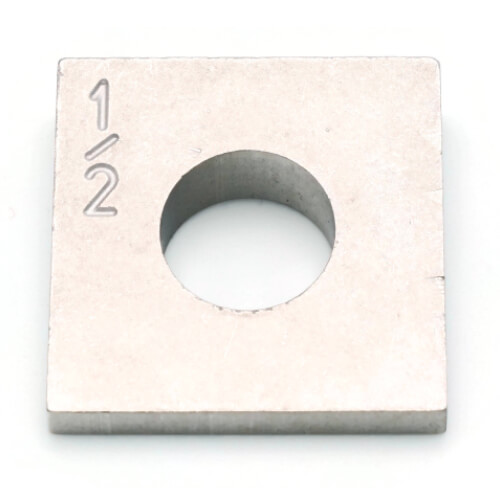
Square Washers

Square Plate Washers
Thick, flat square washers that spread heavy loads across wood or steel in timber framing and structural anchoring.
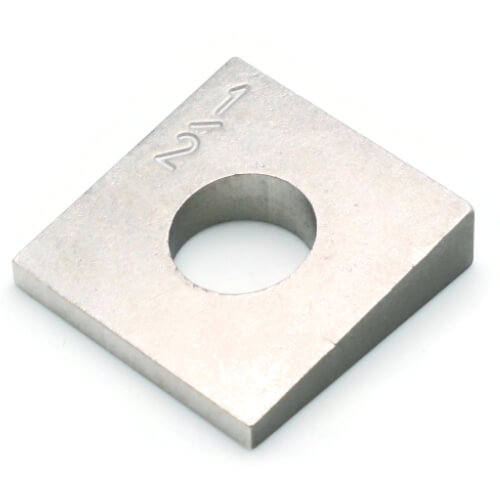
Square Beveled Washers
Square washers with an angled face that seats flat against sloped flanges on beams and channel.

Strut Washers
Square washers shaped to seat in strut channel, distributing load and holding a fastener in framing systems.
What are Square Washers?
Square washers are flat washers with a square outside shape and a centered hole. The flat sides provide more edge contact in channels and timber, and the larger bearing area helps spread load and reduce pull-through on softer or irregular materials.
What are square washers used for?
- Spreading clamp force on wood framing, strut channel, and plate steel
- Reducing pull-through on oversized or slotted holes
- Keeping hardware from spinning in channels where flat sides register against edges
- Providing a larger footprint than standard round flat washers
Square washer vs flat and fender washer what is the difference?
A standard flat washer is round with a smaller outside diameter and is best where clearance is tight. A fender washer is round with an extra large outside diameter for maximum coverage. A square washer offers a broad footprint plus flat sides that seat well in channels and against wood grain for added stability.
When should I use beveled square washers?
Beveled square washers are used under nuts and bolt heads on sloped or tapered flanges, such as I beam flanges, so the bearing surface sits level. The bevel compensates for the angle, improving seating and preload.
What size square washer do I need? inch and metric
- Match the nominal washer size to your bolt or rod, for example 1/2 in or M12
- Confirm the inner diameter clears the shank without excess play
- Select the outside dimensions to fully cover the hole with margin
- Choose thickness based on load and the stiffness you need in wood or structural work
- Available in common inch and metric sizes to pair with US and metric fasteners
Materials and finishes
304 and 316 stainless steel
Corrosion resistant with a clean appearance. Use 316 for marine or harsh chemical exposure, 304 for general service.
Hot dip galvanized steel
Thick zinc coating suited to outdoor and structural applications. Pair with galvanized bolts and nuts.
Malleable iron and plain carbon steel
Durable choices for heavy plate and timber connections. Finish selection should match the environment.
Installation tips
- Seat the flat sides parallel to channel edges or with grain direction in wood for stability
- Use beveled patterns on angled flanges so the nut or bolt head bears on a level surface
- Tighten to the fastener’s recommended torque and re-check after initial set in wood
- Keep materials compatible in wet areas to limit galvanic corrosion
Applications
- Timber framing, sill plates, and anchor bolt connections
- Strut channel systems and base plates
- Outdoor structural hardware with galvanized fasteners
- Equipment mounting where wide bearing area is needed