

D-Rings & Clips
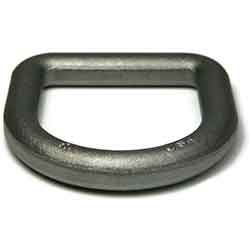
What are D-rings and clips? D-rings and clips are a two part tie-down anchor system. The D-ring is the load bearing loop that a strap, chain, or hook attaches to. The clip is the mounting bracket that holds it, either welded to the deck or bolted through it, and it lets the ring pivot flat when nothing is attached so it does not snag or catch. Sold separately, the two are sized to match: a 1/2 inch ring pairs with a 1/2 inch clip. AlbanyCountyFasteners.com stocks D-rings in C1045 carbon steel and both weld-on and bolt-on clips in C1018-C1020 carbon steel.
D-Rings & Clips - USA MADE
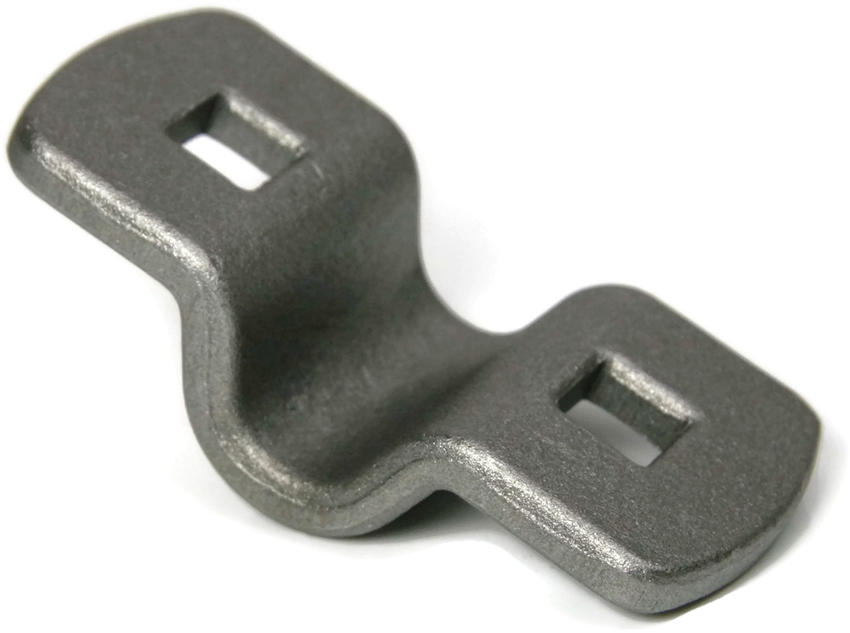
D-Ring Bolt-On Clips
Mounting brackets that install with hardware instead of welding. No welder needed and you can move them later.
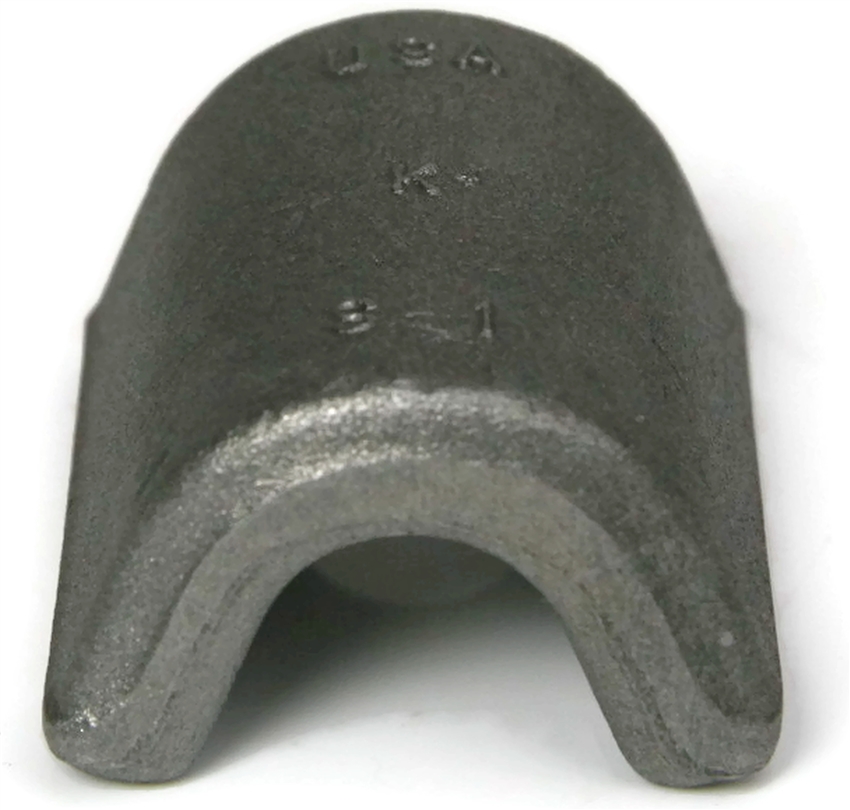
D-Ring Weld-On Clips
Mounting brackets welded to the deck. Stronger than bolt-on and they can't work loose from vibration, but the installation is permanent.
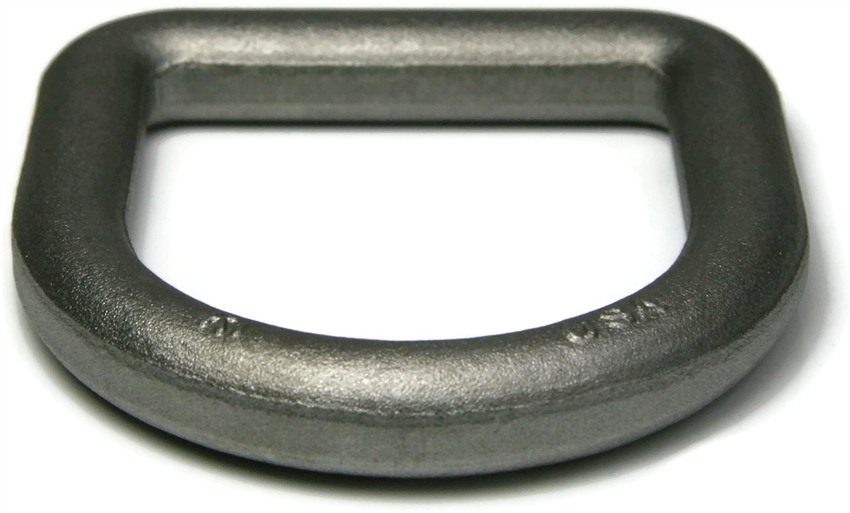
D-Rings
Mounting brackets that install with hardware instead of welding. No welder needed and you can move them later.
How the ring and clip work together
They are two different jobs, which is why they are two different steels. The ring carries the load in tension, so it is made from C1045, a medium carbon steel that can be heat treated to develop real strength. The clip's job is to be welded or bolted to a deck, so it is made from C1018-C1020, a low carbon steel chosen because it welds cleanly without the cracking risk that higher carbon content brings. Put a C1045 ring in a C1018 clip and each part is doing what its material suits it for. That also explains why you cannot simply substitute one for the other, and why a clip should never be used as the load path on its own.
Weld-on or bolt-on?
- D-ring weld-on clips, permanently attached, generally higher strength, and they cannot loosen under vibration. The right choice for commercial and heavy duty use
- D-ring bolt-on clips, faster to install with no welding equipment, and they can be repositioned or replaced without cutting the deck
- Weld-on requires a qualified welder for the rating to mean anything
- Bolt-on requires bolting all the way through the mounting surface to develop full capacity
What we stock
- D-rings in C1045 carbon steel, 3/8, 1/2, 5/8, 3/4, and 1 inch
- D-ring weld-on clips in C1018-C1020 carbon steel, 1/2, 5/8, 3/4, and 1 inch
- D-ring bolt-on clips in C1018-C1020 carbon steel, 3/8 and 1/2 inch
- Match ring and clip sizes, and order both since they are sold separately
Common applications
- Flatbed and utility trailer tie-down points
- Truck beds and pickup cargo securement
- Equipment transport, including machinery, ATVs, and motorcycles
- Enclosed trailer and van interior anchor points
- Shipping containers and marine deck lashing
- Retrofitting additional anchor points to existing trailers
For the load bearing rings themselves, see our D-rings. For mounting, choose between D-ring weld-on clips and D-ring bolt-on clips.
Related Categories
D-Ring & Clip FAQs
Do the ring and clip come together?
They are sold separately here, so order both. Match the sizes, since a 1/2 inch ring is designed to sit in a 1/2 inch clip. Buying only the ring leaves you with nothing to mount it to.
How strong does my anchor point need to be?
Under FMCSA regulations covering cargo securement, anchor points must be at least as strong as the tie-down attached to them. In practice that means matching or exceeding the working load limit of your strap or chain, so the anchor is never the weak link.
Which is stronger, weld-on or bolt-on?
Weld-on generally develops higher capacity and cannot work loose under vibration, which is why it dominates commercial and heavy duty use. Bolt-on capacity depends heavily on installation, particularly whether the bolts pass all the way through the mounting surface with proper backing.
Can I install weld-on clips myself?
Only if you are a qualified welder. Published ratings for weld-on anchors assume a sound, properly executed weld, and an inadequate weld makes the rating meaningless. This is a load bearing connection, so it is not the place to learn.
Why do the rings and clips use different steels?
Different jobs. The ring carries the load, so it uses C1045 medium carbon steel that can be heat treated for strength. The clip gets welded or bolted, so it uses C1018-C1020 low carbon steel that welds cleanly without cracking.
Are these rated for overhead lifting?
No. D-rings and lashing clips are cargo securement hardware, not lifting hardware, despite sitting in the same family. For overhead lifting use rated lifting hardware such as eye bolts, hoist rings, or shackles with published working load limits for that purpose.