

Videos
Play videoWhat are T-Nuts?
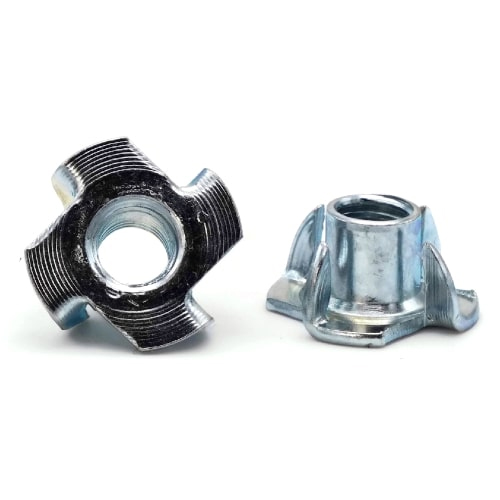
T-nuts—also called tee nuts or blind nuts—are threaded inserts with a thin flange and prongs that bite into wood, particle board, plastic, or composite from the blind side. Once seated, they provide a strong, reusable machine-thread in soft materials while sitting flush with the surface.
Benefits of T-Nuts
- Flush, clean finish: Flange seats below or level with the surface for snag-free furniture and fixtures.
- High pull-out resistance: Prongs lock into the material to resist vibration and loosening.
- Fast, repeatable assembly: Create durable machine threads in soft stock for easy service or swaps.
- Cost-effective: Eliminates time-consuming inserts or through-bolting in many builds.
Common Applications for T-Nuts
- Cabinetry, furniture, and woodworking jigs
- Climbing walls, stage & exhibit builds, and sports equipment
- Automotive interiors and light composite assemblies
- Fixtures in MDF, plywood, and particle board
Materials & Finishes for T-Nuts
- 304 Stainless Steel: General outdoor/freshwater corrosion resistance.
- 316 Stainless Steel: Marine and highly corrosive environments.
- Plain Steel: For dry, controlled interiors where finishing is handled elsewhere.
- Zinc Plated Steel: Economical light-to-moderate corrosion protection.
How to Install T-Nuts (Quick Guide)
- Drill a pilot hole sized for the barrel OD.
- Insert the T-nut from the blind side with prongs facing the material.
- Draw the flange flush by tightening the mating bolt from the show side; the prongs bite as the nut seats.
- For hardwoods, lightly tap to start seating before tightening if needed.
Tip: Use a flat washer under the bolt head to protect the show surface while drawing the T-nut in.
Choosing the Right T-Nut Size
Match thread size and pitch to your fastener (e.g., 1/4"-20, 5/16"-18, M6, M8). Confirm the barrel length won’t break through the show face, and choose prong count (3-prong for harder woods, 4-prong for softer materials) for best bite and pull-out strength.