

Socket Cap Screws
Resources
What are socket cap screws?
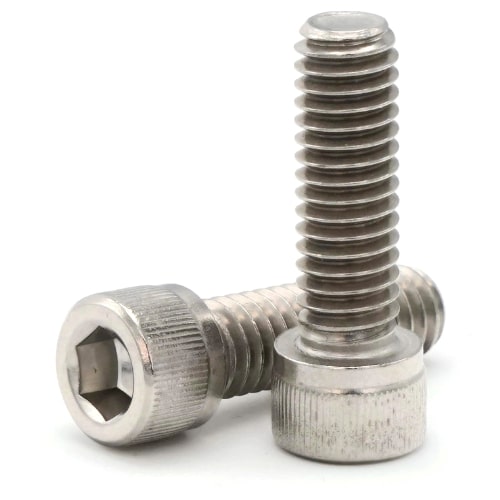
Socket cap screws are high strength precision fasteners featuring a cylindrical head with an internal hex (Allen®) drive, allowing them to be tightened with a hex key or hex bit. Designed for applications requiring high clamping force and reliable performance, socket cap screws are commonly used where limited clearance makes traditional wrench tightened fasteners impractical. Their compact head design and deep internal drive enable higher torque while maintaining a clean, professional appearance. Socket cap screws are widely used in machinery, automation equipment, robotics, aerospace, automotive assemblies, tooling, electronics, industrial equipment, and precision manufacturing. Available in a variety of head styles, thread sizes, materials, grades, and finishes, they provide dependable fastening for applications where strength, accuracy, and repeatable assembly are critical. Whether you're assembling machinery, securing mechanical components, mounting equipment, or building precision assemblies, socket cap screws offer exceptional strength, excellent clamping performance, and easy installation in confined spaces.
Socket Cap Screws
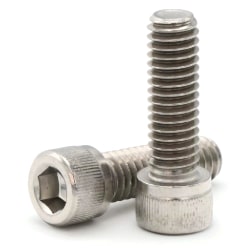
Standard Socket Head Cap Screws
Socket cap screws with a tall cylindrical head and internal hex drive for high-strength fastening in counterbored holes.
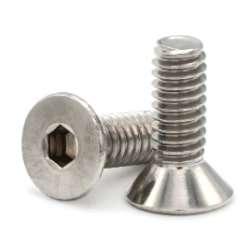
Flat Head Socket Cap Screws
Countersunk socket cap screws with an internal hex drive that sit flush with the surface for a clean, high-strength finish.
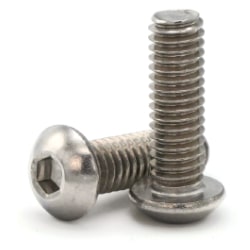
Button Head Socket Cap Screws
Socket cap screws with a low domed head and internal hex drive for a finished look where clearance is limited.
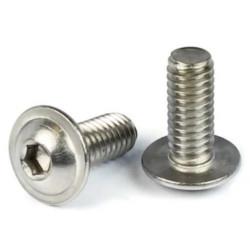
Flange Button Head Socket Cap Screws
Button-head socket cap screws with a built-in flange that spreads clamping load like a washer.
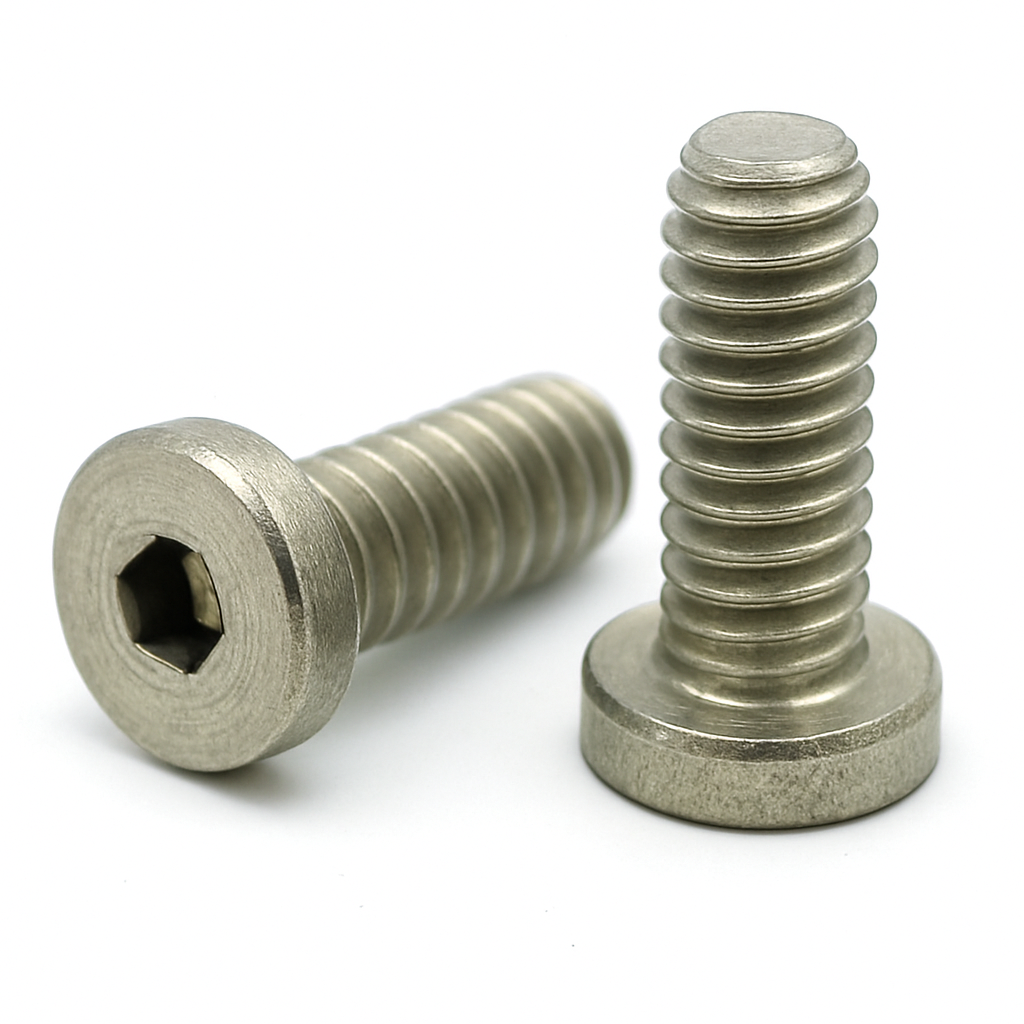
Low Profile Socket Head Cap Screws
Socket cap screws with a shorter head for tight-clearance applications where a standard head won't fit.
Videos
Play videoShop Related Categories
-min.jpg?ts=1757453408)


What Are Socket Cap Screws?
Socket cap screws, also called socket head cap screws, hex socket screws, or Allen head screws, are precision-threaded fasteners with an internal hex drive. They are commonly used where high clamping force, compact head dimensions, and strong tool engagement are required.
Unlike external hex bolts that require wrench clearance around the head, socket cap screws are tightened through an internal hex recess. This makes them especially useful in machinery, equipment, robotics, tooling, automation, automotive assemblies, and other applications where access is limited.
Types of Socket Cap Screws
Standard Socket Head Cap Screws
Standard socket head cap screws have a tall cylindrical head and deep internal hex socket. This design provides strong wrench engagement and allows high tightening torque in a relatively compact footprint.
They are commonly used in machinery, tooling, fixtures, equipment, structural brackets, and precision assemblies.
Button Head Socket Cap Screws
Button head socket cap screws have a rounded, low-profile head that provides a clean finished appearance and reduces head projection compared with a standard socket head.
They are useful where clearance is limited or where a smoother external profile is preferred. Because the head and socket are smaller than a standard socket head cap screw, allowable tightening torque may also be lower depending on the fastener specification.
Flat Head Socket Cap Screws
Flat head socket cap screws have a countersunk head designed to sit flush with the surrounding surface when installed in a properly prepared countersunk hole.
They are commonly used in equipment, fixtures, panels, machinery, and assemblies where a protruding screw head would interfere with movement, appearance, or clearance.
Flange Button Head Socket Cap Screws
Flange button head socket cap screws combine a low-profile rounded head with an integrated flange that increases the bearing surface beneath the head.
The flange can help distribute clamping force over a larger area and may reduce the need for a separate washer depending on the application.
Low Profile Socket Head Cap Screws
Low-profile socket head cap screws use a shorter head height than standard socket head cap screws and are designed for applications where vertical clearance is limited.
Because the reduced head height can also reduce socket depth and available drive engagement, always confirm the applicable torque and load requirements for the specific fastener.
Socket Head Cap Screw Styles Compared
| Head Style | Profile | Best For | Key Feature |
|---|---|---|---|
| Standard Socket Head | Tall cylindrical | Machinery and high-clamp applications | Deep socket and strong tool engagement |
| Button Head | Low rounded | Finished assemblies and reduced clearance | Smooth profile and reduced projection |
| Flat Head | Countersunk | Flush surfaces | Sits flush in a countersunk hole |
| Flange Button | Low rounded with flange | Wider bearing area | Integrated flange spreads load |
| Low Profile | Short cylindrical | Tight vertical clearance | Reduced head height |

Socket head cap screw selection guide comparing head styles, clearance, bearing surfaces, length measurement, materials, and socket head cap screws vs. hex bolts.
Allen Screws, Hex Socket Screws, and Socket Cap Screws
The terms Allen screw, hex socket screw, and socket cap screw are often used interchangeably in everyday use.
“Allen” refers to the internal hex drive style and matching hex key. “Socket cap screw” more specifically describes the threaded fastener with an internal socket drive and a defined head style, such as standard socket head, button head, or flat head.
Socket Cap Screw Materials and Finishes
Alloy Steel Black Oxide
Alloy steel socket cap screws provide high strength and are commonly used in machinery, tooling, equipment, and industrial assemblies. Black oxide gives the fastener a dark appearance and limited corrosion resistance, making it best suited to dry interior environments unless additional protection is provided.
18-8 / 304 Stainless Steel
18-8 and 304 stainless steel socket cap screws provide good general corrosion resistance for many indoor, outdoor, industrial, and equipment applications.
316 Stainless Steel
316 stainless steel socket cap screws provide increased resistance to chloride-related corrosion and are commonly selected for marine, coastal, saltwater, and other demanding environments.
Zinc Plated and Coated Steel
Zinc plated and other coated steel socket cap screws provide an economical option with protective surface finishes for compatible general-purpose applications.
Metric Class 12.9 Alloy Steel
Metric Class 12.9 socket head cap screws are high-strength alloy steel fasteners commonly used in machinery and engineered assemblies requiring high tensile strength and clamp load.
Socket Cap Screw Sizes
Socket cap screws are specified by diameter, thread pitch, and length.
Inch examples include 1/4"-20 x 1-1/2" and #10-32 x 3/4". Metric examples include M6-1.0 x 25 mm.
In an inch designation such as 1/4"-20, 1/4" is the nominal screw diameter and 20 is the number of threads per inch. In a metric designation such as M6-1.0, M6 identifies the nominal diameter and 1.0 is the thread pitch in millimeters.
How Is Socket Cap Screw Length Measured?
Length measurement depends on the head style.
- Standard socket head, button head, flange button, and low-profile heads: Measure from directly underneath the head to the end of the screw.
- Flat head socket cap screws: Measure the total length from the top of the countersunk head to the end of the screw.
Always verify the head style before comparing screw lengths because two screws with the same listed length may have different overall dimensions depending on the head design.
Socket Cap Screws vs. Hex Bolts
Socket cap screws and hex bolts can both provide strong threaded connections, but their head and drive designs are different.
Socket cap screws use an internal hex drive, allowing installation in confined spaces where there may not be enough room for a wrench around the head.
Hex bolts and hex cap screws use an external six-sided head and require clearance around the head for a wrench or socket.
Socket head cap screws are often preferred in machinery and precision assemblies where compact installation, high tool engagement, and clean geometry are important.
Socket Cap Screws vs. Machine Screws
Both socket cap screws and machine screws use machine threads designed to mate with a nut, tapped hole, or threaded insert.
Socket cap screws typically use an internal hex drive and are commonly selected where higher clamp loads, compact wrenching access, and more robust head geometry are required.
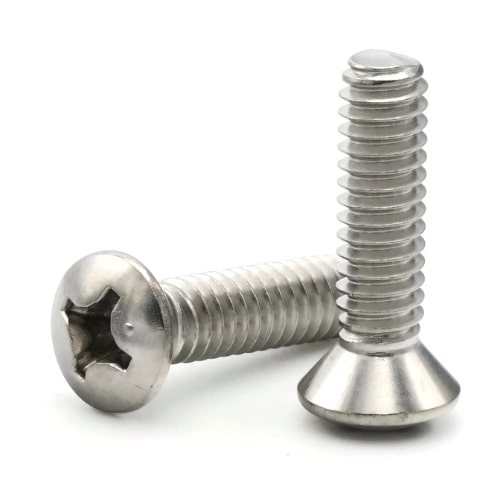
Machine screws are available in a broader range of smaller head and drive styles, including Phillips, slotted, truss, oval, and pan heads.
For additional options, browse our Machine Screws.
Why Choose Socket Head Cap Screws?
- High clamping capability: Commonly used in machinery and engineered assemblies.
- Compact wrench access: Internal hex drive requires less clearance around the head than an external hex fastener.
- Strong tool engagement: Deep internal socket helps transfer installation torque.
- Multiple head styles: Standard, button, flat, flange button, and low-profile options allow the fastener to match clearance and appearance requirements.
- Wide material selection: Available in alloy steel, stainless steel, metric high-strength steel, and coated finishes.
Common Applications for Socket Cap Screws
Socket cap screws are widely used in:
- Industrial machinery
- Robotics and automation
- Tooling and fixtures
- Motion-control systems
- Automotive and equipment assembly
- Electronics and instrumentation
- Structural brackets and guards
- Precision manufacturing
- OEM equipment
- Applications with limited wrench clearance
How to Choose the Right Socket Cap Screw
Consider the following when selecting a socket cap screw:
- Diameter: Match the required tapped hole, nut, or threaded insert.
- Thread pitch: Confirm UNC, UNF, or metric pitch compatibility with the mating component.
- Length: Provide adequate thread engagement without interfering with surrounding components.
- Head style: Choose standard, button, flat, flange button, or low profile based on clearance and surface requirements.
- Material: Select the required strength and corrosion resistance.
- Finish: Match the environmental exposure and appearance requirements.
- Drive size: Use the correct Allen key or hex bit for the socket.
How to Install Socket Cap Screws
- Confirm the thread size: Match the screw diameter and pitch to the tapped hole, nut, or insert.
- Use the correct hex key: Make sure the tool fully engages the internal socket.
- Start the screw by hand: This can help reduce the risk of cross-threading.
- Tighten evenly: Apply the torque appropriate for the fastener size, material, and application.
- Check head seating: Make sure the underside of the head bears properly against the mating surface.
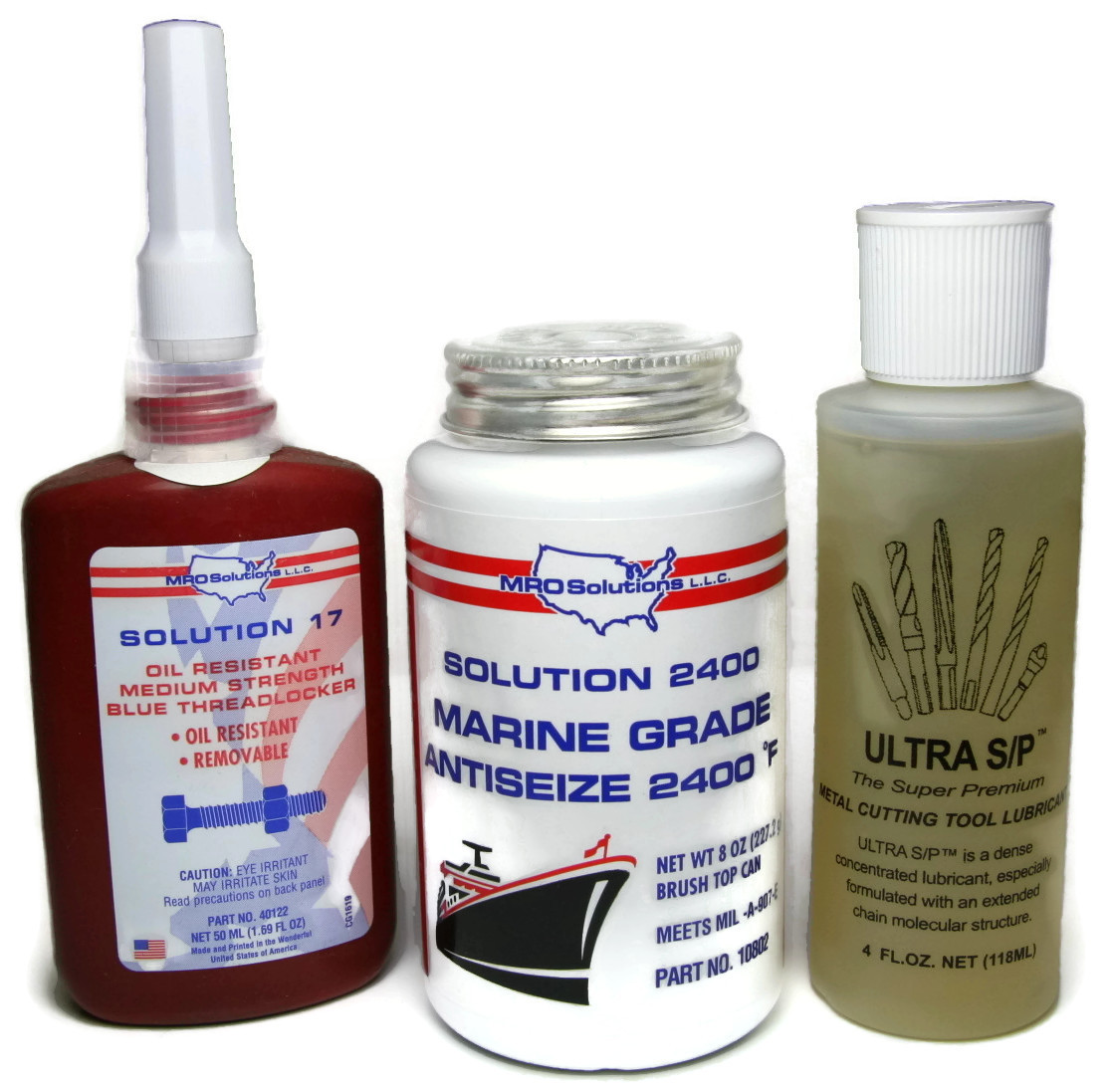
- Use locking methods where required: Threadlocker or another specified locking method may be appropriate in vibration-prone assemblies.
Socket Cap Screw Installation Tips
- Fully seat the hex key: Partial engagement can round the internal socket.
- Do not substitute incorrect metric and inch tools: A poorly fitting key can damage the drive recess.
- Use the correct countersink for flat heads: The head should have full bearing contact rather than bottoming unevenly.
- Do not exceed recommended torque: Excessive torque can damage the screw, threads, or mating component.
- Consider galling with stainless steel: Appropriate installation speed, lubrication, or anti-seize may be useful where stainless components are prone to galling.
Socket Cap Screw FAQs
What is a socket head cap screw?
A socket head cap screw is a precision-threaded fastener with an internal hex drive, commonly used in machinery, equipment, tooling, and engineered assemblies.
Are socket cap screws and Allen screws the same thing?
The terms are often used interchangeably. Allen screw generally refers to a screw with an internal hex drive, while socket cap screw more specifically describes the fastener and head style.
What is the difference between a socket head cap screw and a button head screw?
A standard socket head cap screw has a taller cylindrical head and deeper socket. A button head socket cap screw has a lower rounded head for reduced projection and a smoother finished appearance.
What is the difference between a socket head cap screw and a flat head socket screw?
A standard socket head cap screw sits above the assembled surface, while a flat head socket cap screw is countersunk so the head can sit flush with the surface.
Why use socket cap screws instead of hex bolts?
Socket cap screws require less clearance around the outside of the head because the tool engages an internal hex socket. This makes them useful in machinery and assemblies where external wrench access is limited.
How do I measure a socket cap screw?
Standard, button, flange button, and low-profile socket cap screws are measured from underneath the head to the end of the screw. Flat head socket cap screws are measured overall from the top of the head to the end.
What tool is used for socket cap screws?
Socket cap screws are typically installed with an Allen key, hex key, or hex driver bit sized to the internal socket.
Are socket head cap screws stronger than regular screws?
Many socket head cap screws are available in high-strength alloy steel and high-property-class metric materials, but actual strength depends on the specific fastener material, grade, size, and applicable standard. Always compare published mechanical properties rather than relying only on the head style.
Can stainless steel socket cap screws be used outdoors?
Yes, when the stainless grade is appropriate for the environment. 18-8 / 304 stainless provides good general corrosion resistance, while 316 stainless is commonly selected for marine, coastal, and chloride-rich exposure.
What does Class 12.9 mean on a metric socket cap screw?
Class 12.9 is a metric property class associated with high-strength alloy steel fasteners. Use the published product specifications and applicable engineering requirements when selecting high-strength socket cap screws.
Can socket cap screws loosen from vibration?
Like other threaded fasteners, socket cap screws can loosen in certain vibration conditions. Proper preload, tightening torque, threadlocker, locking hardware, or other specified retention methods may be used depending on the application.
What socket cap screw material should I use near saltwater?
316 stainless steel is commonly selected for marine and coastal environments because of its increased resistance to chloride-related corrosion. Always confirm compatibility with the surrounding materials and service environment.