

Screws & Bolts, Brass
.jpg?ts=1757453411 "Screws & Bolts, Brass")
What are brass screws and bolts? Brass screws and bolts are threaded fasteners in copper-zinc alloy, chosen where the fastener will be seen and a warm golden finish matters, or where conductivity and corrosion resistance are wanted. They machine cleanly for fine threads and crisp heads, resist corrosion in most conditions, and are non-magnetic. Brass is softer than steel, so they suit decorative and light-duty work over structural loads. AlbanyCountyFasteners.com stocks wood screws and machine screws in brass.
Screws & Bolts, Brass
Wood Screws, Brass
Golden brass wood screws for visible and decorative joinery. A range of head styles and drives.
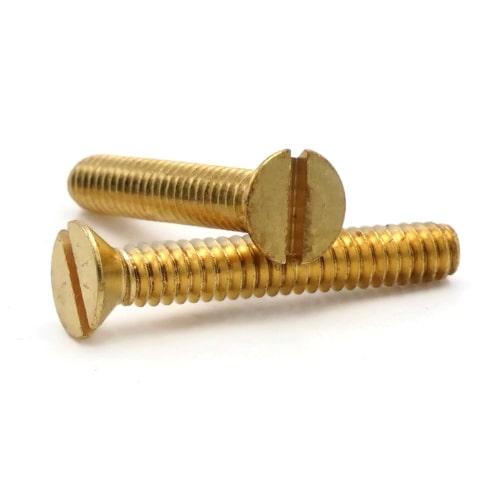
Machine Screws, Brass
Golden brass machine screws for electrical, decorative and light assembly work. Slotted flat, oval and round heads.
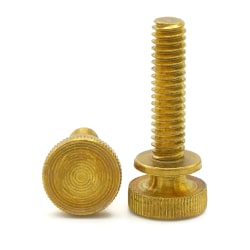
Thumb Screws, Brass
Screws with a flat or knurled head for hand tightening and loosening without tools, used where frequent adjustment is needed.
Screws that are meant to be seen
Most screws are hidden, and the ones that are not are exactly where brass belongs. On visible woodwork, cabinetry, furniture, marine trim, and restoration, the warm gold of a brass screw is a finish choice as much as a fastening one, and no plated steel screw matches the depth and durability of solid brass color, which is the metal all the way through rather than a coating that wears. Brass machines to clean, crisp heads and fine threads, so a slotted brass screw looks right in period and quality work where a modern drive would look wrong. Beyond looks, brass conducts, so brass machine screws serve electrical terminals and connectors, their color also marking conductive fasteners apart from structural ones. The honest limits are strength and softness: brass screws drive into softer materials and light assemblies well, but they can shear or strip if overtightened or forced into hard material, so a pilot hole in wood and correct torque protect them. Where the screw is decorative, conductive, or in a light joint, brass does the job and looks the part.
Why choose brass screws and bolts
- Warm golden finish on visible woodwork and hardware
- Solid brass color throughout, not a coating that wears
- Machines cleanly for fine threads and crisp heads
- Conducts for electrical terminals and connectors
- Non-magnetic and corrosion resistant in most conditions
Common applications
- Visible woodwork, cabinetry, and furniture
- Decorative and architectural fittings
- Antique and marine restoration
- Electrical terminals and connectors (machine screws)
- Non-magnetic assemblies
- Light-duty joints where appearance matters
Brass Screw & Bolt FAQs
Why use brass screws?
For their golden appearance on visible work, and for conductivity and corrosion resistance. The color is solid through the metal, not a coating, so it does not wear off like plated finishes.
Do I need a pilot hole for brass wood screws?
Yes, always. Brass is soft and can shear if forced, so a correctly sized pilot hole lets the screw seat without twisting off, especially in hardwoods. It also protects the slotted head from damage.
Are brass screws strong?
Softer and weaker than steel, so they suit decorative and light-duty work. For structural loads, steel or stainless carries more; brass is chosen for looks, conductivity, and corrosion resistance.
Will brass screws match antique hardware?
Yes, the golden color and slotted styles suit period and restoration work where modern plated or drive-recess screws would look wrong. Brass develops a patina that blends with aged hardware.
Can I drive brass screws with a power driver?
With care. Brass slots and heads damage easily under power, so lower speed, correct fit, and a pilot hole help. Many prefer finishing by hand to protect the visible head.
Are brass machine screws good for electrical work?
Yes, brass conducts electricity, so brass machine screws suit terminals and connectors, and their color visually distinguishes conductive fasteners from structural ones in an assembly.