

Concrete Screws
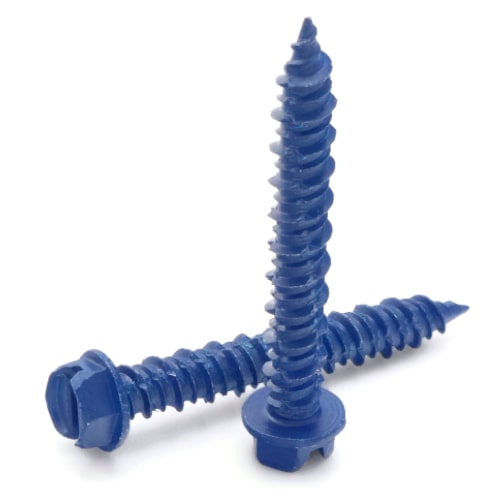
What Are Concrete Screws?
Concrete screws are self-tapping masonry fasteners that cut mating threads into a pre-drilled hole in concrete, brick, block, or mortar. They provide a one-piece anchoring solution without requiring a separate plug or expansion anchor. Albany County Fasteners carries concrete screws in flat head and hex washer head styles, with options including 410 stainless steel, blue Climaseal, white Ruspert, and zinc plated finishes for indoor, outdoor, and corrosion-resistant applications.
Concrete Screws
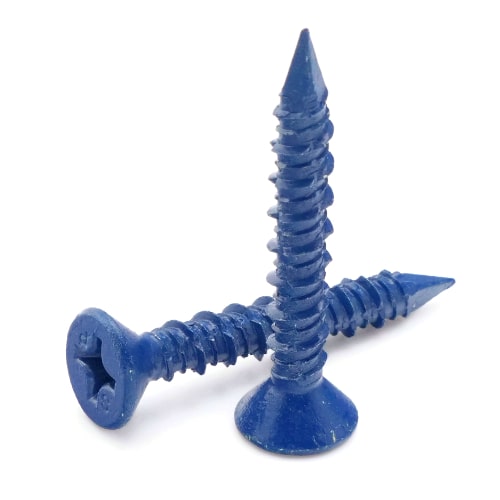
Phillips Flat Head
Concrete screws with a countersunk flat head and Phillips drive that sit flush with the surface, used for trim, framing, and fixtures against masonry.
Slotted Hex Washer Head
Concrete screws with a built-in washer face and hex head with a slot, driven with a nut driver or flat bit for a wide bearing surface against the material.
.png?ts=1755912782 "Hex Washer Head")
Hex Washer Head
Concrete screws with an integrated washer under a hex head, driven with a nut driver for high torque and a broad, secure clamp against masonry.
-min.jpg?ts=1755912063 "Sammys Concrete Rod Hangers")
Sammys Concrete Rod Hangers
Threaded rod anchors that screw into concrete to hang pipe, conduit, and fixtures from a threaded stud without separate anchors.
Videos
Play videoShop Related Categories


Concrete Screw Installation Guide
Proper concrete screw installation starts with the correct masonry bit, hole depth, and hole preparation. Use our step-by-step guide below for help selecting and installing concrete screws in concrete and masonry.

What Are Concrete Screws Used For?
Concrete screws are one-piece masonry fasteners designed for fastening directly into a pre-drilled hole in concrete, brick, block, or mortar. They cut or form mating threads in the base material and do not require a separate sleeve, plug, or expansion anchor.
Albany County Fasteners carries concrete screws in flat head and hex washer head styles, with options including 410 stainless steel, blue coated steel, white corrosion-resistant coated steel, and zinc plated steel for a variety of indoor and outdoor applications.
- Anchoring sill plates, furring strips, ledgers, and bottom plates to concrete or block
- Mounting electrical boxes, conduit straps, brackets, shelves, and fixtures
- Light- to medium-duty fastening where a clean finish and repeatable placement are important
- Attaching wood, metal, and other materials to concrete or masonry
- Temporary or serviceable installations where the fastener may need to be removed
Benefits of Concrete Screws
- One-piece installation: No separate anchor sleeve or plug is required.
- Fast installation: Concrete screws use relatively small pilot holes and standard driving tools.
- Removable: Many concrete screws can be removed for service or relocation, depending on the fastener and manufacturer requirements.
- Multiple head styles: Hex washer heads provide strong driving engagement, while flat heads can sit flush in countersunk applications.
- Multiple materials and coatings: Choose the material or finish based on the installation environment and corrosion exposure.
Concrete Screw Sizes and Types
Concrete screws are available in multiple diameters, lengths, head styles, materials, and finishes. Common diameters include 3/16" and 1/4", although available sizes vary by product line.
Choose the screw length by considering the fixture thickness, required embedment, base material, and manufacturer installation requirements.
- 410 stainless steel: Hardened stainless steel that combines corrosion resistance with the strength required for masonry fastening. Verify suitability for highly corrosive, coastal, or chemical environments.
- Blue coated steel: Coated carbon steel commonly used for general masonry fastening applications.
- White corrosion-resistant coated steel: Multi-layer coated steel designed to provide enhanced corrosion protection compared with standard zinc plating.
- Zinc plated steel: An economical option for many dry interior applications.
How to Install Concrete Screws
Watch our Fasteners 101 concrete screw installation guide, viewed more than 400,000 times, to learn how to properly drill the pilot hole and install Tapcon® masonry concrete screws.
Watch: How to Install Tapcon Masonry Concrete Screws →
- Select the correct screw and masonry bit: Use the drill-bit diameter specified by the concrete screw manufacturer for the screw size and base material.
- Drill the pilot hole: Use a hammer drill and carbide-tipped masonry bit where appropriate. Drill to the depth specified for the fastener.
- Clean the hole: Remove concrete or masonry dust with a vacuum, blower, or other approved cleaning method.
- Install the screw: Drive the fastener square to the surface and tighten it snugly without over-torquing or stripping the hole.
- Follow embedment requirements: Minimum and maximum embedment vary by concrete screw design, diameter, base material, and manufacturer.
Always follow the specific manufacturer's installation instructions, published load data, and applicable building codes or engineering requirements.
How to Choose a Concrete Screw Material or Finish
- Dry interior applications: Zinc plated steel may be suitable where significant moisture or corrosion exposure is not expected.
- General indoor and outdoor applications: Coated carbon steel options can provide additional corrosion protection, depending on the specific coating and manufacturer rating.
- Stainless steel applications: 410 stainless steel provides corrosion resistance while maintaining the hardness required for masonry fastening. Confirm compatibility with the specific exposure conditions.
- Pressure-treated lumber: Use a fastener material or coating specifically approved for compatibility with the treated lumber being installed.
Concrete Screws vs. Concrete Anchors
Concrete screws are one-piece threaded masonry fasteners installed directly into a pre-drilled hole. Other concrete anchors, including wedge anchors, sleeve anchors, drop-in anchors, and hammer drive anchors, use different anchoring mechanisms and may be better suited for heavier loads, different base materials, or specific installation conditions.
The correct fastening method depends on the base material, fixture thickness, required load, edge distance, spacing, environmental exposure, and applicable code or engineering requirements.
For other anchoring options, browse our Concrete & Masonry Anchors.
Frequently Asked Questions About Concrete Screws
Do concrete screws need a pilot hole?
Yes. Most concrete screws require a properly sized pre-drilled hole in the concrete, brick, block, or masonry before installation. Use the drill-bit diameter, hole depth, and installation procedure specified by the fastener manufacturer.
What drill bit do I need for concrete screws?
The required masonry bit depends on the concrete screw diameter and fastener design. Do not assume one drill-bit size applies to every concrete screw. Check the manufacturer's installation specifications for the exact screw being used.
Can concrete screws be removed?
Many concrete screws can be removed after installation, which can make them useful for serviceable or temporary applications. Whether a fastener can be reused depends on the specific product and manufacturer requirements. When in doubt, install a new screw rather than reusing a previously installed fastener.
Can concrete screws be used in brick or block?
Many concrete screws are designed for use in concrete, brick, and concrete block, but suitability depends on the specific fastener and base material. Always verify the manufacturer's approved substrates and installation instructions before use.
Are concrete screws the same as Tapcon® screws?
Tapcon® is a brand of concrete and masonry screw anchor. The name is sometimes used informally to describe similar blue concrete screws, but not all concrete screws are Tapcon products. Different manufacturers may use different materials, coatings, dimensions, drill-bit sizes, load ratings, and installation requirements.
How deep should a concrete screw be installed?
Required embedment depends on the screw diameter, product design, base material, and manufacturer specifications. Too little embedment may reduce holding strength, while excessive embedment can increase installation torque or damage the fastener or base material. Always follow the published minimum and maximum embedment requirements for the specific concrete screw.
Can concrete screws be used outdoors?
Yes, when the fastener material or coating is rated for the intended exposure. For outdoor, wet, treated-lumber, coastal, or corrosive environments, confirm that the specific concrete screw material or coating is approved for those conditions.