

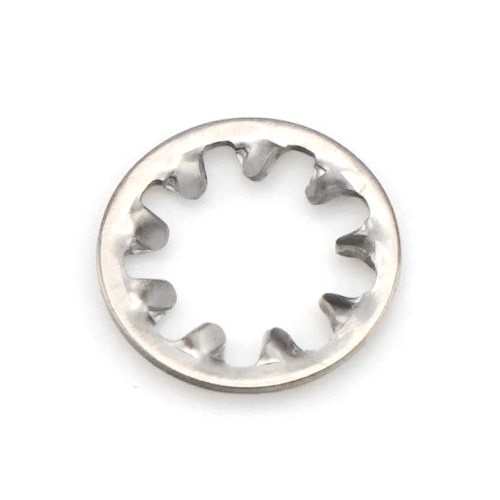
Stainless Steel Internal Tooth Lock Washers
What are internal tooth lock washers? Internal tooth lock washers have teeth on the inner edge that bite into the fastener to resist loosening, with the teeth hidden for a cleaner look. Made from 316 and 410 stainless, plus some 18-8, they resist rust in wet, coastal, and outdoor use.
When to choose internal over external teeth
Internal tooth washers hide their teeth under the fastener head, giving a neater appearance while still gripping to resist loosening, which suits smaller screw heads and visible assemblies. External tooth washers place the teeth on the outer edge for a wider grip and better electrical grounding, but they show. Choose internal teeth for a clean look and external for maximum grip or grounding. Match the grade to the environment, with 316 for coastal exposure.
Why choose internal tooth lock washers
- Hidden teeth: cleaner look under the fastener head.
- Biting grip: teeth dig into the fastener to resist loosening.
- Corrosion resistance: 316 and 410 hold up in wet and outdoor use.
- Small-head fit: suits smaller screw heads.
Common applications for internal tooth lock washers
- Visible assemblies needing a clean look
- Smaller screw heads
- Machinery and equipment under vibration
- Marine and coastal hardware (use 316)
For a wider grip or grounding, external tooth washers are the alternative, and you can browse every lock washer type on the main lock washers category. For split styles, see stainless split ring lock washers.
Internal Tooth Lock Washers FAQ
What grades do internal tooth washers come in?
316 and 410 stainless, plus some 18-8. Use 316 for coastal and saltwater exposure.
Internal or external tooth washer?
Internal teeth hide for a cleaner look and suit smaller heads. External teeth grip a wider surface and provide better electrical grounding.
Do tooth washers grip better than split ring?
Tooth washers often grip harder through multiple biting points, while split ring washers rely on spring tension. Tooth styles suit vibration and grounding.