

Why Choose Marine Grade Pins?
Marine grade pins are used in assemblies where a pin is needed for retaining, alignment, locating, positioning or securing parts in outdoor or moisture-prone environments. They are commonly selected for dock hardware, equipment, brackets, linkages, fixtures, machinery, repair work and coastal maintenance applications.
For marine and coastal environments, stainless steel pins are often chosen because they offer better corrosion resistance than many plain steel or zinc plated options. The correct pin style, diameter, length and stainless grade should always be matched to the assembly and exposure level before installation.
Choosing the Right Marine Grade Pin
The right pin depends on whether the application needs retention, alignment or positioning. Cotter pins and dowel pins are used differently, so compare the pin style, material, diameter, length and installation method before ordering.
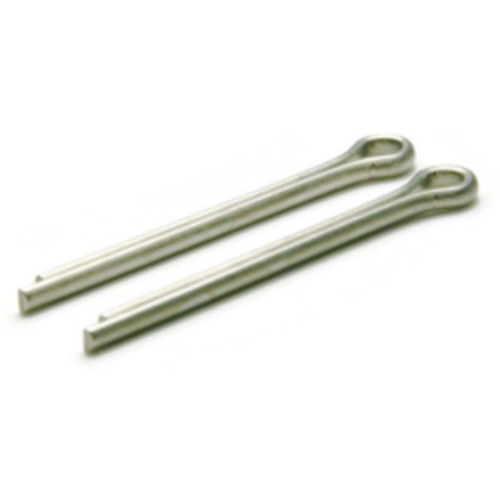
Cotter Pins
Cotter pins are split retaining pins that pass through a drilled hole in a bolt, shaft, clevis pin or similar part. After installation, the legs are bent to help keep the mating part in place. Cotter pins are generally treated as single-use after bending and should be replaced when removed.
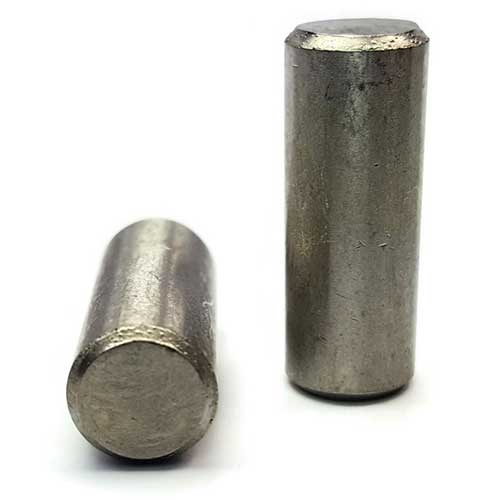
Dowel Pins
Dowel pins are solid cylindrical pins used for alignment, locating and positioning. They are not threaded and are commonly used in fixtures, machinery, assemblies, repairs and applications where parts need to line up accurately. Dowel pin material should be selected based on corrosion resistance, hardness, wear and strength requirements.
Stainless Steel Pin Materials
316 stainless steel is commonly selected for marine, coastal and chloride-exposed environments because it offers stronger corrosion resistance than many general-purpose stainless grades. 18-8 stainless steel is suitable for many general outdoor and moisture-prone applications, but harsher salt air or waterfront conditions often require closer material review.
Marine Grade Pin Installation Considerations
Before installing marine grade pins, confirm the hole size, pin diameter, pin length, material and fit. Cotter pins should be sized so they pass through the drilled hole correctly and have enough length for proper bending. Dowel pins should be matched to the intended hole and fit requirements for the assembly.
In wet, coastal or salt-exposed environments, consider the full assembly material. Contact between dissimilar metals can contribute to corrosion concerns, especially when moisture or salt exposure is present. Compare the material of the pin, surrounding fasteners, brackets, shafts and hardware before use.
Related Marine Grade and Pin Categories
Browse related marine grade and pin categories to compare stainless materials and pin styles.
- Marine Grade Fasteners
- 18-8 Stainless Steel Cotter Pins
- 316 Stainless Steel Cotter Pins
- 18-8 Stainless Steel Dowel Pins
- 316 Stainless Steel Dowel Pins
- Zinc Plated Steel Cotter Pins
Marine Grade Pins FAQs
What are marine grade pins used for?
Marine grade pins are used for retaining, aligning, locating, positioning and securing parts in outdoor, coastal, dock, marine and moisture-prone applications.
Are marine grade pins always 316 stainless steel?
Not always. Marine grade pins may include 316 stainless steel, 18-8 stainless steel or another corrosion-resistant material depending on the product listing. Confirm the listed material before purchasing.
What is the difference between cotter pins and dowel pins?
Cotter pins are split retaining pins that are inserted through a drilled hole and bent after installation. Dowel pins are solid cylindrical pins used for alignment, locating and positioning parts.
Can cotter pins be reused?
Cotter pins are generally treated as single-use after bending. If a cotter pin is removed, replacing it with a new correctly sized pin is usually the better choice.
What should I check before buying marine grade pins?
Check the pin type, material, diameter, length, hole size, fit requirements, package quantity and whether the stainless grade is suitable for the exposure level of the application.